Introduction
Some questions seem simple.
Like, “What water is best for my dog or cat?”
The answer should seem pretty straightforward. Water. That’s it.
But if you talk to a few pet owners, the story isn’t quite so clean and simple.
One says her cat only drinks from the tap.
Another worries that tap water can cause kidney disease.
And one obsessively changes the water bowl every day, as if she’s preparing a drink for an ICU patient.
The truth is, the issue of “good water for dogs and cats” isn’t just about a glass of water.
It’s more about how these animals’ bodies understand water, how they consume it, and how they can quietly and silently become dehydrated.
And here’s an even bigger point…
Sometimes the problem isn’t the water at all. It’s our perception of water.
What exactly is good water for dogs and cats?
To put it simply, a dog’s or cat’s body isn’t looking for anything fancy or complicated. It’s not looking for “luxury” water, or special water with fancy names on the bottle. It’s looking for something much more down-to-earth: clean, consistent, and predictable water.
But that’s exactly the problem. The “simplicity of the definition” doesn’t work so well in the real world of pets.
An animal’s body treats water like an intelligent system. It doesn’t just ask if it’s water or not, it’s constantly evaluating: Is this water familiar? Is this smell normal? Has this taste ever been there before?
And it’s these little evaluations that make the final decision.
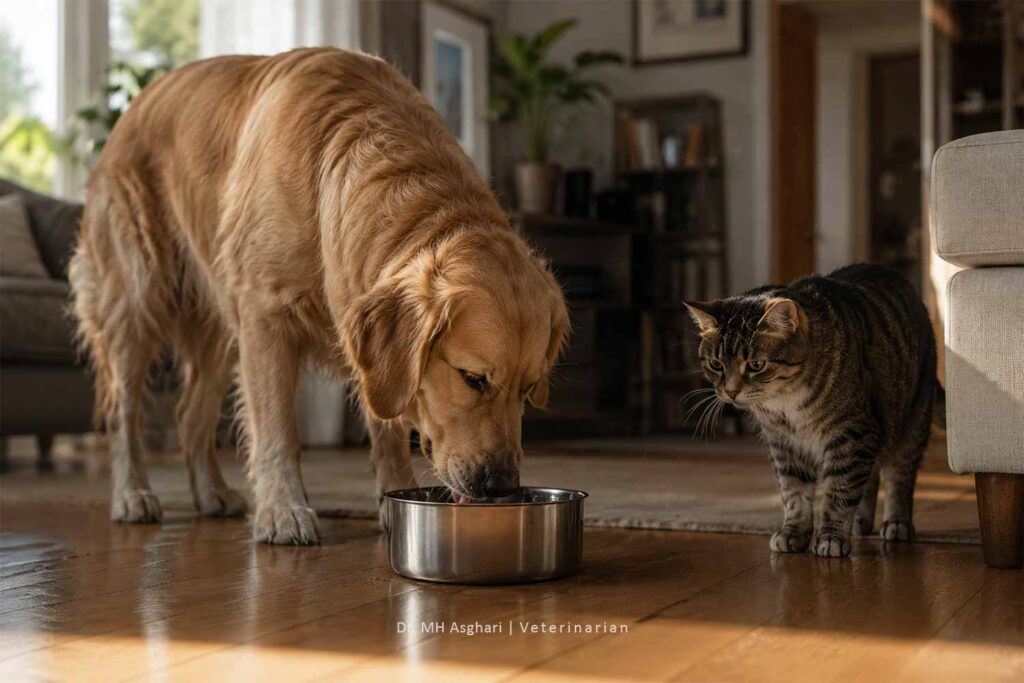
A dog might sit by a water bowl, drink from it several times a day, and have no problem. Its body just recognizes it as “acceptable,” and that’s it.
But the same water, in the next house or even in the same house, may be experienced completely differently by a cat. The cat approaches the container, sniffs, pauses… and then prefers to go to the sink or even a glass of water on the table. Not out of stubbornness, but because its sensory system has received a different message.
This is where many people make the mistake of thinking that the issue is only the chemical quality of the water. That is, if the water is healthy, then everything is solved. But in fact, the animal’s body makes its decision long before the laboratory.
Smell is one of the most important factors. What is almost unimportant to humans can be decisive for a cat. A very small amount of chlorine, the smell of a plastic container, or even the smell of water left a few hours ago, is enough for the animal to prefer not to drink at all.
Temperature also plays its role. Very cold water may be attractive to us, but for some animals it feels “unnatural”. In contrast, water at the same temperature as the environment is usually accepted without resistance, as if it has always been that way.
The right water bowl for dogs and cats is also a different story. Metal, ceramic, plastic… each creates a different experience for the animal. Some cats clearly avoid plastic, even if the water inside is perfectly healthy. The reason is simple: the smell and feel of the surface of the bowl.
And perhaps the strangest part of the story is the location of the right water for dogs and cats. A bowl next to dry food does not always have the same appeal. The same goes for a bowl on a busy route or in a crowded place. Animals prefer to experience water in a “calm and reliable” place, not where something changes around them at any moment.
That is why two homes can have exactly the same water, but the result can be completely different. In one, the animal drinks well, in the other, dehydration slowly builds up, without anyone noticing.
So when we say water is good for dogs and cats, we’re not just talking about the chemical composition of the water. We’re talking about the whole experience: the taste, the smell, the temperature, the container, and even the sense of security that that part of the house gives the animal.
And perhaps it’s this simple but precise look that can tell the difference between a hydrated animal and one on the verge of dehydration.
Tap water; is it good or not?
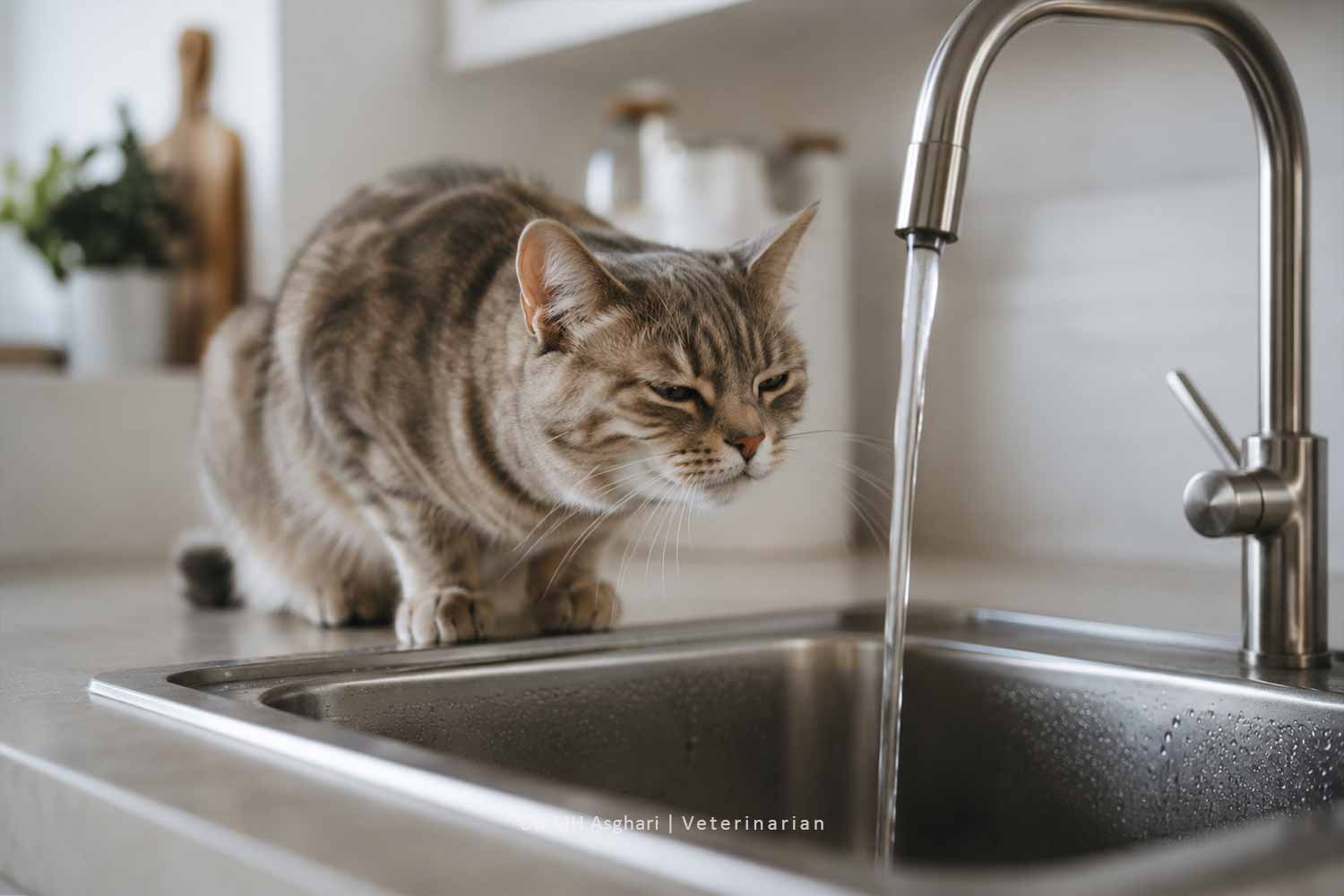
The truth is that most pets in the world grow up with exactly this water. City water. Something we use every day without thinking.
Tap water is usually disinfected before it reaches our homes, and one of the main methods is the use of chlorine. It is this chlorine that makes the sanitary system feel comfortable, but for a cat’s sensitive nose, the story is a little different.
On the other hand, depending on the city you live in, the hardness of the water can vary. In some places the water is lighter, in others it has more salts. Something that we may not even notice, but animals perceive in the form of “taste and smell”.
For dogs, the story is usually much simpler. They often drink water without any particular sensitivity and their bodies are adapted to these conditions. But cats… cats are always one step more complicated.
Some cats react to the very faint smell of chlorine or even a faint metallic taste. This reaction is usually not dramatic. They don’t throw the bowl or register a formal protest. They just drink less. That’s it.
And that’s exactly the problem. Low water intake in cats isn’t always obvious. It’s quiet, it’s silent, and when we notice it, it’s when the body enters a state of dehydration.
Not that tap water is “bad.” The problem is that it’s not always equally appealing to all animals.
Purified Water; Does It Really Make a Difference?
This is usually the first place pet owners see a real change, not a theory.
Purified or filtered water makes a few simple but important changes: the chlorine smell is reduced, the taste is smoother, and the “unnatural” feeling that some pets have about city water is somewhat reduced.
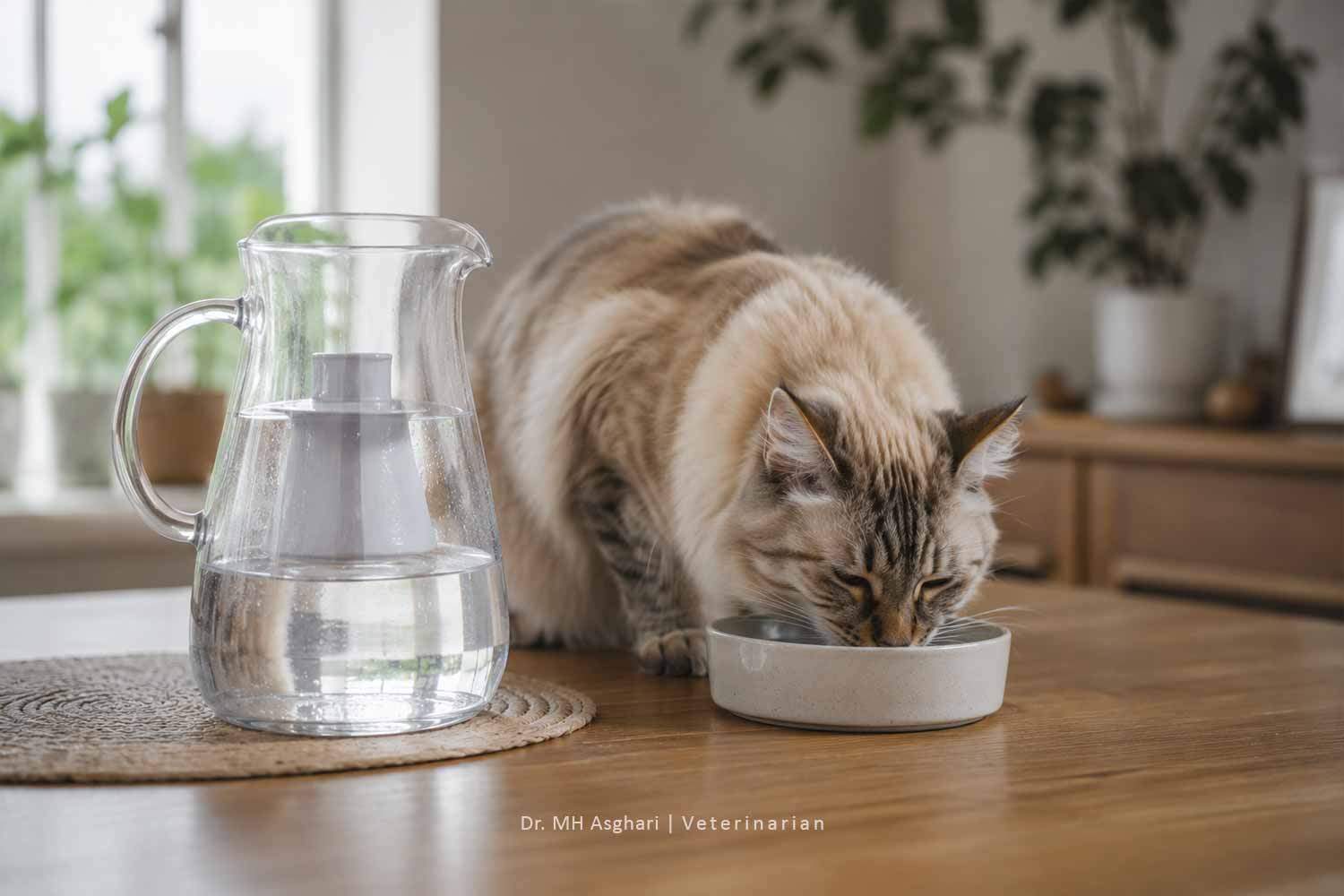
These may seem like small details. But in the animal world, these same details decide whether the water bowl is ignored or visited every few hours.
Many pet owners will repeat a phrase after switching to purified water:
“It’s like my pet drinks more water without me forcing him.”
This is not an exaggeration, but rather a behavioral observation. Because when the smell and taste are less bothersome, the choice becomes easier: drink.
This is also scientifically confirmed. The more sensory neutral the water is, the more likely it is to be accepted by more sensitive animals like cats.
Mineral water; a choice that doesn’t always make sense
Mineral water usually enters the home with a good feeling. Stylish packaging, reliable names, and the idea that “the more natural, the better.”
But the pet’s body doesn’t work exactly according to the same human logic.
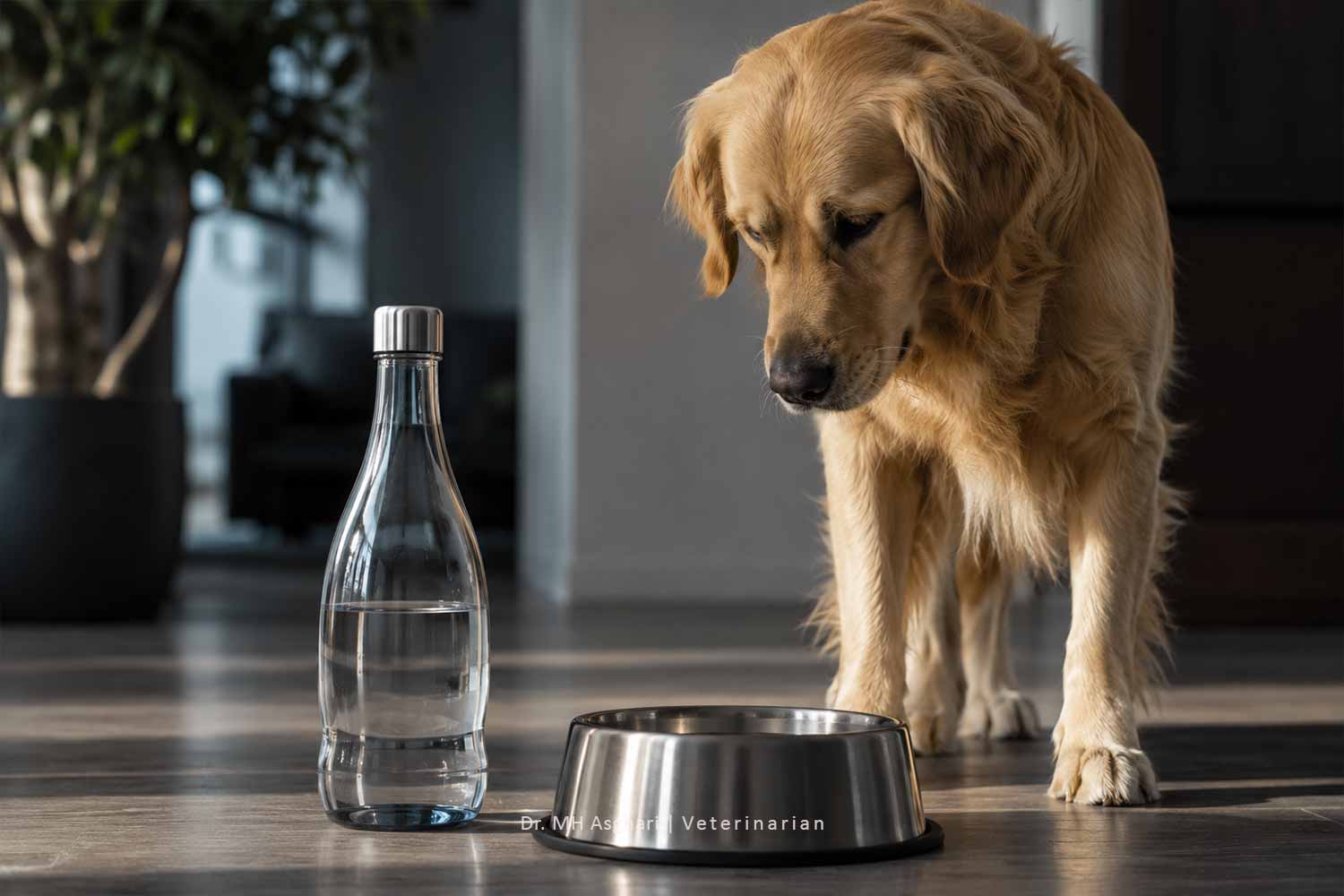
The main problem with mineral water is the amount and type of salts it contains. Some brands are higher in sodium, calcium, or magnesium. This is not a problem for humans, as our bodies are designed to regulate these. But for animals, especially cats, who have sensitive kidneys, it’s a different story.
This doesn’t mean there’s an immediate danger. No one is going to have a crisis from a bottle of mineral water. But when this choice becomes a daily, long-term habit, the extra strain on the kidneys can become significant in the long run.
Interestingly, “looking better” doesn’t always mean “being better.” Mineral water sometimes falls into this exact category.
Boiled, cooled water; the simplest option that is often overlooked
If we were to name a simple, accessible and logical choice among all the options, boiled, cooled water is one of them.
Boiling water is not a complicated task, but it does an important job: it reduces the risk of microbial contamination. After cooling, a stable and reliable water is obtained that is acceptable to most animals.
The important point here is that in many cases, we get too involved in the “best water in the world”, while the animal only wants one thing: water that it does not make it avoid.
Many veterinarians also have a simpler view. If the water is drinkable and clean for the human in the house, it is usually suitable for the animal as well. This simple view works better in practice than many complex and obsessive decisions.
And perhaps more importantly: The problem for many animals is not the “type of water” but the “consistency of water.” That is, having something predictable available all the time, not a new change every day that their bodies have to get used to again.
Cold or lukewarm water? It’s not what you think
On hot days, some people think that very cold water is the best choice.
But animals’ bodies don’t always agree with this logic.
- Very cold water: may reduce drinking
- Water at room temperature: usually better accepted
- Cool, mild water: best in summer
Here’s the funny thing:
Sometimes the problem with dehydration is not the quality of the water that’s right for your dog or cat… it’s the wrong temperature in the water bowl.
A major misconception: Should water be “sterile” or just “clean”?
Many people, when it comes to water for their pets, subconsciously think of extreme sensitivity:
“Can’t it have bacteria? Can’t it be dangerous? Can’t we make a completely special water for it?”
The reality is that the dog and cat’s body is not a super-sterile laboratory system that only works with perfect water.
What is important is that the water is not contaminated or stale, not that it is completely free of microorganisms.
Water that is consumed under normal conditions at home (healthy city water, boiled and cooled water, or purified domestic water) is perfectly acceptable for animals.
The problem usually starts when the water:
- Left in the container for hours or days
- The container is not cleaned
- Or is exposed to heat and environmental pollution
These are the things that can create a breeding ground for bacteria, not the “right type of water for dogs and cats” itself.
Water Hardness; Something We Worry About More Than We Really Need
A common concern is, “Is the water in our area hard? Is it bad for my pet?”
In most cases, the answer is simpler than we think:
For a healthy animal, the typical hardness of city water usually doesn’t cause a serious problem.
Dogs and cats’ bodies are largely adapted to changes in water hardness. What’s more important is adequate water intake, not obsessing over the number and milligrams of salts.
Sometimes focusing too much on water hardness can lead to forgetting a more important point:
whether the animal is actually drinking enough water.
Practical Veterinary Perspective: The Same Water You Drink
A simple piece of advice that many veterinarians (including Dr. Azghari’s daily clinical experience) give to pet owners is:
If the water is drinkable, clean, and safe for you, the same water is suitable for your pet.
This statement may seem very simple, but there is an important logic behind it:
We are not going to create a standard for our pets that is separate from the reality of life.
If we try to be too strict, the result is usually:
- Frequent changes in the type of water
- Obsession with choices
- And ultimately, more confusion for the animal itself
While in practice, the consistency and cleanliness of the water are much more important than its “specific” type.
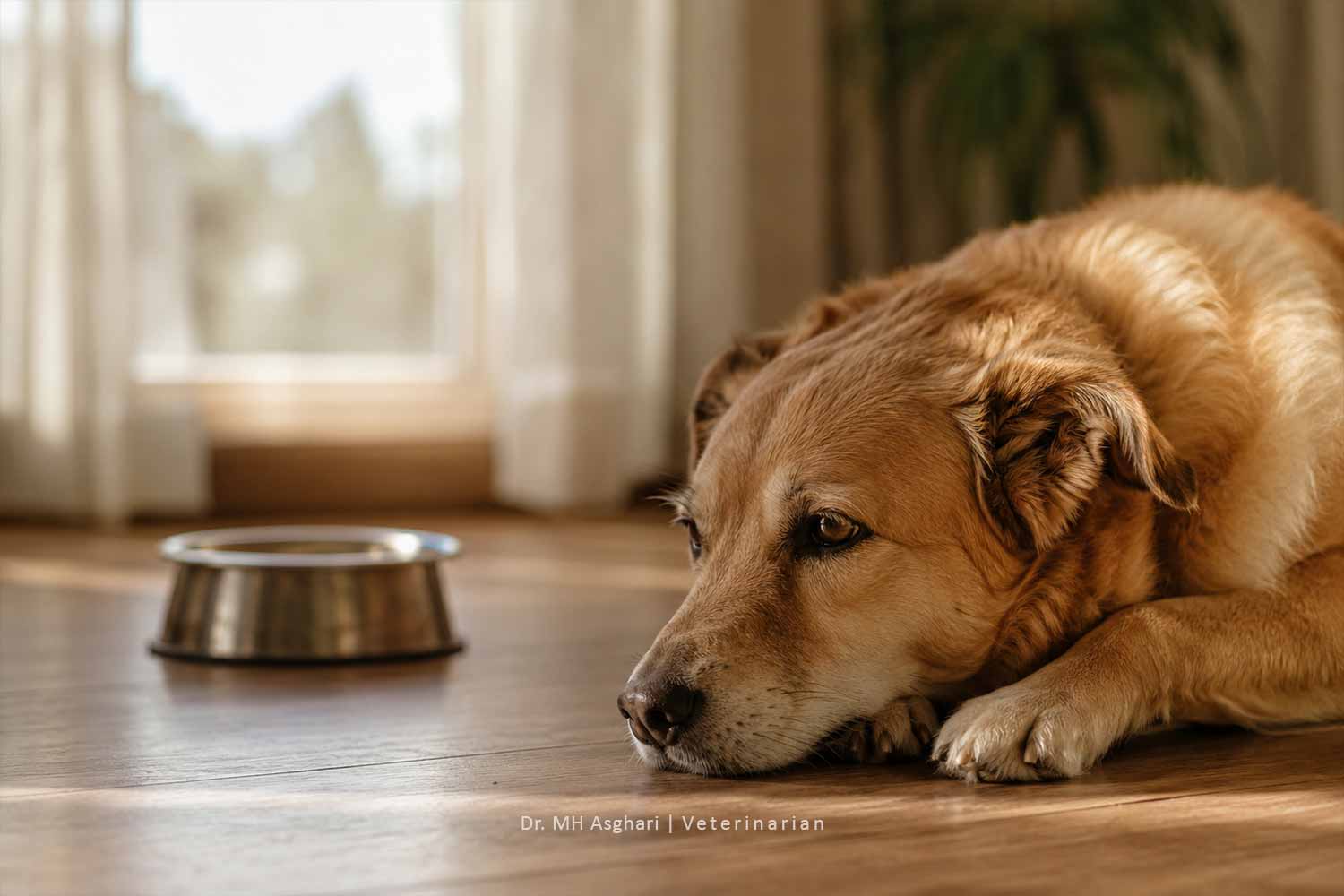
To summarize all of this in a simple picture:
- The right water for dogs and cats should not be contaminated or stale
- Obsessing over water hardness is usually not necessary
- And in most homes, the same water that humans drink is acceptable for animals
And perhaps the most important point is that we sometimes overcomplicate water, while for dogs and cats, the main issue is something else:
That they drink water safely and adequately, not that their water is controlled to the level of a laboratory.
Why do cats always have a different story?
Cats are not like dogs when it comes to drinking. Not even close.
They come from desert ancestors.
Their bodies are used to being dehydrated. Too used to it.
In the wild, they got a lot of their water from hunting, not from drinking directly.
Now at home:
- Dry food
- Warm air
- A constant water dish
The combination of these can lead to chronic dehydration, sometimes without any obvious symptoms.
And chronic dehydration in cats is no joke.
The kidneys are the first place to be stressed.
Dehydration doesn’t just make you thirstier. If this situation continues during the hot summer days, it can set the stage for late-onset heatstroke or even heatstroke. That’s why veterinarians always emphasize that choosing the right water for your dog or cat is just one part of their daily care. Providing a cool environment, constant access to fresh water, and limiting physical activity during the hottest hours of the day all play a role in protecting your pet. If you’d like to learn more about all the prevention strategies, we recommend reading our article “How to Prevent Heatstroke in Pets?”
How do you know if your dog is drinking enough water?
This is where most pet owners get stuck.
Signs of dehydration aren’t always loud. They’re subtle:
- Gums a little drier than usual
- Small or concentrated urine
- Mild lethargy
- Disinterest in food
- ess elastic skin
And one more important thing that many people get wrong:
A sudden increase in water intake isn’t always a good thing.
Sometimes the body is compensating for a problem, not just thirst.
Sometimes symptoms like lethargy, panting, restlessness, or a rise in body temperature aren’t just related to dehydration and can be signs of heatstroke in dogs and cats. In such cases, simply providing the right amount of water for your dog or cat is not enough, and the animal’s condition should be assessed as soon as possible. Knowing the difference between simple dehydration and heat stroke can prevent serious damage to vital organs.
How to get your cat to drink more water?
There’s no one-size-fits-all solution here, but a few simple changes can really make a difference:
Sometimes just changing the water bowl can make a difference.
Or placing another bowl in a different spot in the house.
Some cats will only drink from a stainless steel bowl, not a plastic one.
Some prefer “fresh” water, not water that’s been sitting for hours.
Even wet food can be a big help, especially in the summer.
If your cat or dog suddenly becomes very weak, vomits, loses balance, becomes unconscious, or has trouble breathing, despite having access to clean water, don’t waste time. These symptoms could indicate an emergency that requires immediate action. Taking the right first aid measures until you can get to the vet can go a long way in reducing heat-related illness. We have explained these measures in detail in the article “Emergency Treatment of Heat Stroke”.
Conclusion
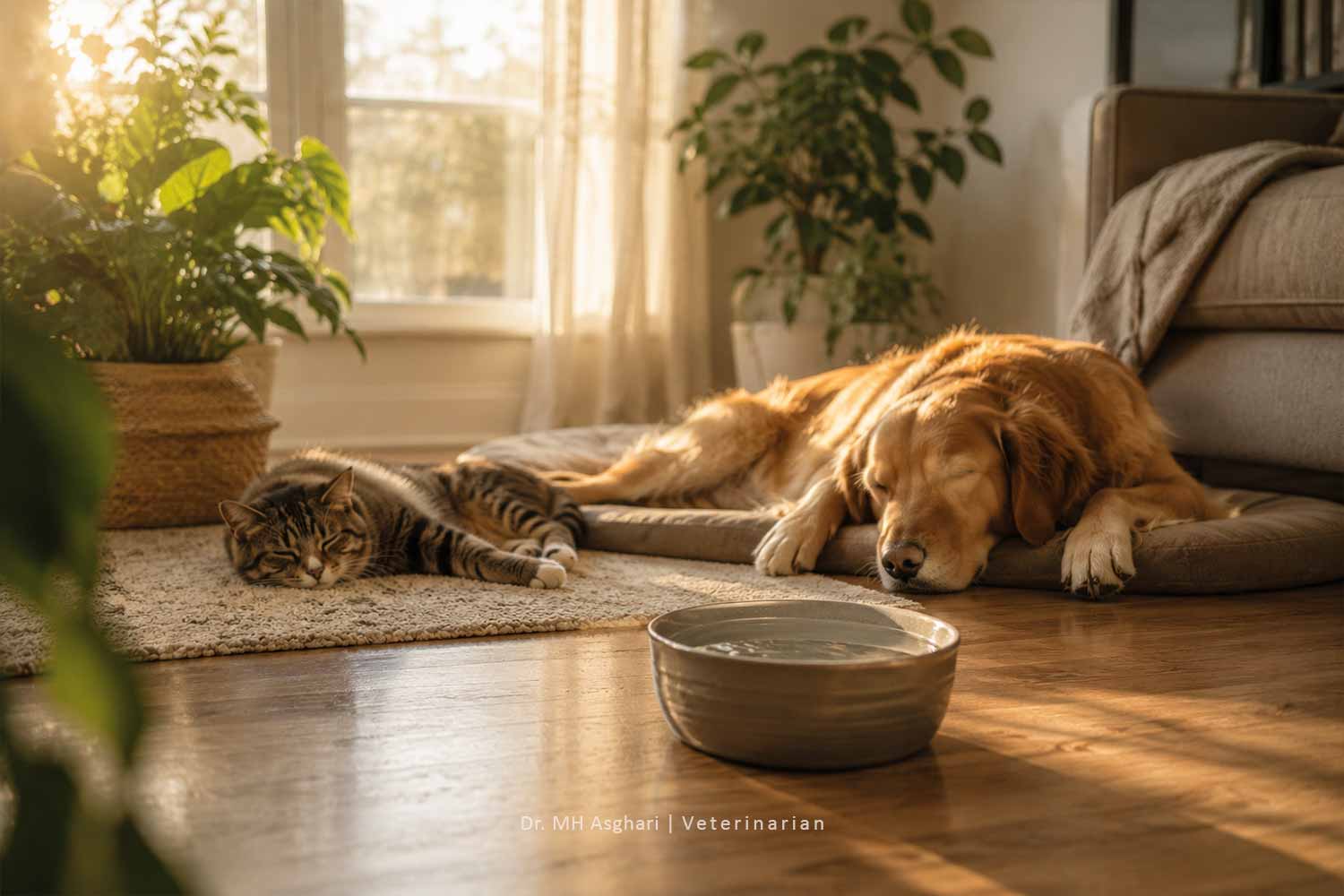
Ultimately, the question of “what water is best for dogs or cats?” does not have a single answer.
But it does have one thing in common:
Water that is clean, predictable, and acceptable to the animal.
The right water for dogs and cats is not supposed to be complicated.
It is supposed to be drinkable.
If your pet is drinking less water than usual, the problem is not always a disease, but it is not always trivial either.
Sometimes just a small change in the type of water or container can restore the balance.
Other times, it is a sign that needs to be looked into more closely.
Ultimately, choosing the right water for your dog or cat is one of the simplest but most effective things any pet owner can do to keep their pet healthy. Of course, it should not be forgotten that drinking enough water is only one part of care, and during the hot season, special attention should be paid to the signs of heatstroke in cats, as well as signs of heatstroke in other pets. The sooner these signs are recognized, the greater the chance of preventing serious complications.
Frequently Asked Questions
۱.Is tap water dangerous for dogs and cats?
Usually not, but it can reduce water intake in some sensitive animals.
۲. Is mineral water good for animals?
It is okay for short-term consumption, but it is not recommended as a permanent choice.
۳. What is the best water for cats?
Clean, low-odor water, preferably filtered or boiled and cooled.
۴. Is cold water bad for animals?
Very cold water may reduce the desire to drink.
۵. What should I do if my animal is dehydrated?
First, check the type of water, the container, and the location. If it persists, a veterinary examination is necessary.
Resources
- https://www.avma.org/resources/pet-owners/petcare/dehydration-pets
- https://vcahospitals.com/know-your-pet/water-intake-in-dogs
- https://www.petmd.com/cat/nutrition/how-much-water-should-cat-drink