The Role of Cats in Reducing Human Stress
Health Benefits of Living with a Cat for Humans
Introduction
Some days, stress does not have a clear shape. It is not a panic attack, nor a heavy sadness. It is just an invisible pressure that stays with you from morning to night. Phone calls, news, unfinished work, words that were never said.
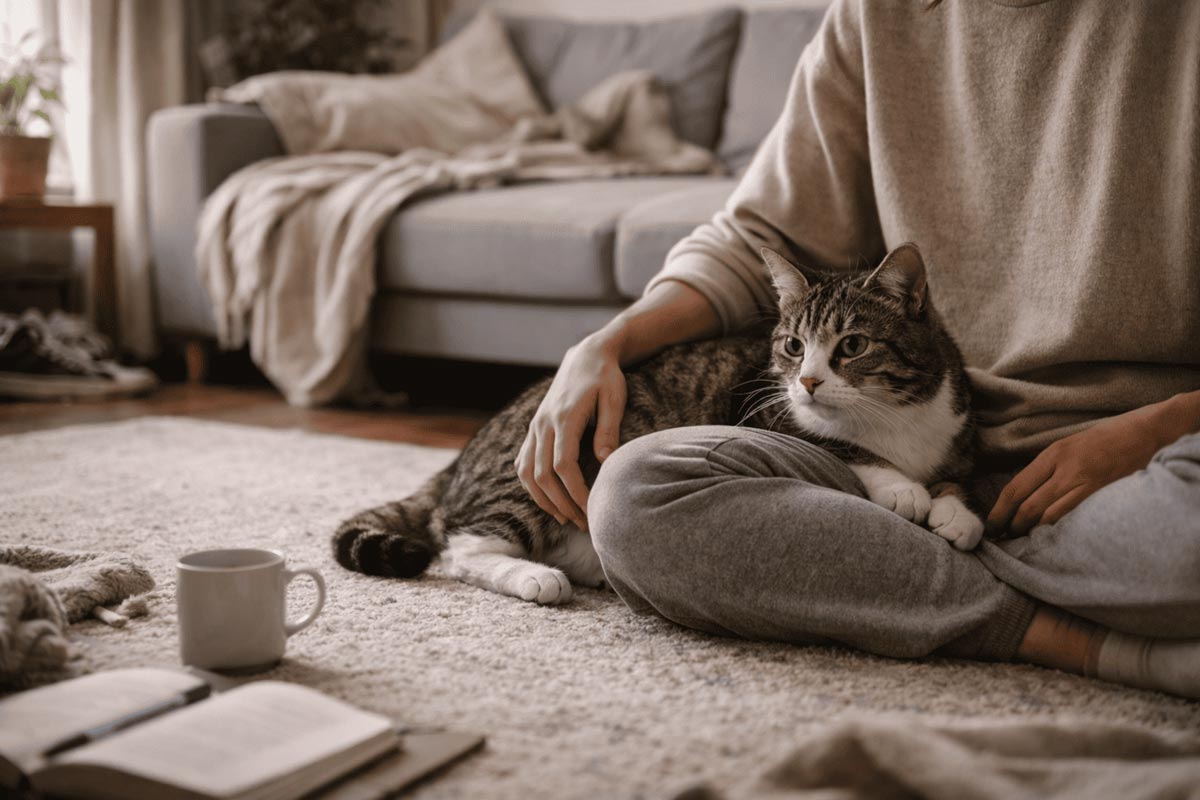
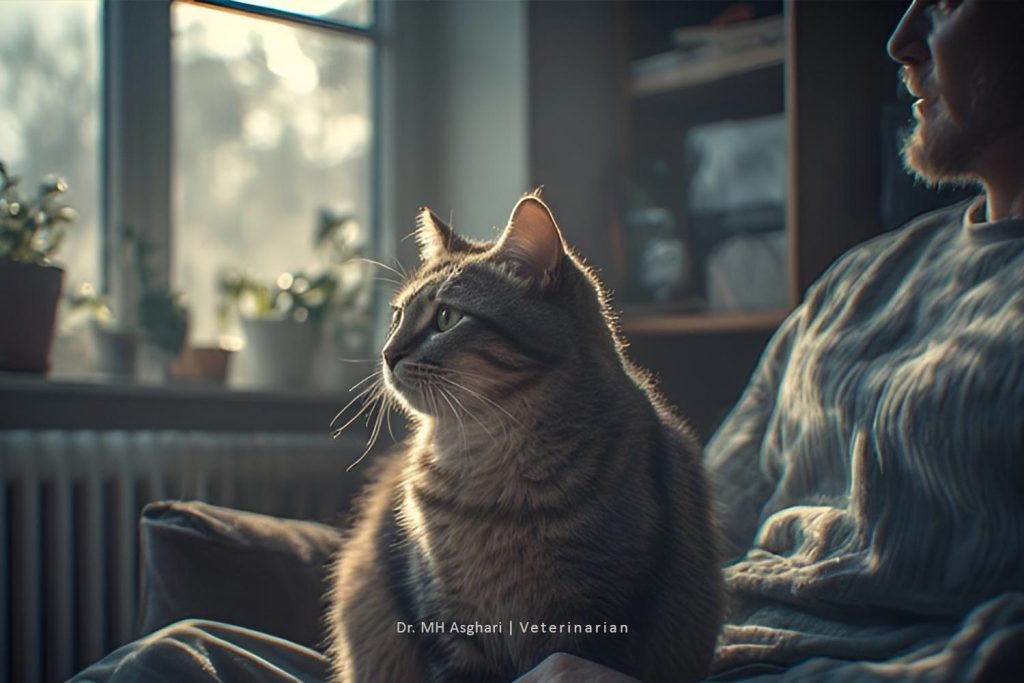
On a day like that, your cat may come over without invitation, lie down next to you, or suddenly start purring for no particular reason. And then you notice that your shoulders have dropped. Your breathing has become deeper. Your mind, for a few minutes, runs a little less.
Many people have experienced this moment and then wondered to themselves:
“Am I exaggerating? Is this just suggestion?”
This is exactly where the discussion about stress reduction through living with a cat becomes serious. Not as a slogan, not as a magical cure, but as a real phenomenon with both lived human experience and scientific support.
This article is not going to claim that cats cure depression or eliminate anxiety. The goal is to understand why being around a cat is genuinely calming for many people, and where that sense of calm actually comes from.
The Benefits of Keeping a Cat for Humans
Beyond Being Cute
The first common mistake is seeing the benefits of living with a cat as purely emotional. Cute, soft, charming. End of story.
Reality is more complex.
Various studies have shown that living with a pet can affect the following:
- Reduced levels of the stress hormone cortisol
- Increased feelings of psychological safety
- Reduced sense of loneliness, especially in people who live alone
But the important point is this:
These effects are not automatic and are not the same for everyone.
Stress reduction through living with a cat is more often seen in people who:
- Have a genuine emotional bond with their cat
- Interact daily, not just share the same living space
- Do not have unrealistic expectations of their cat
A cat is not meant to replace a human. It is not meant to be affectionate all the time. And it is precisely this relative unpredictability that makes the relationship feel more real.
The Impact of Cats on Mental Health
When Calm Enters Quietly
One reason the effect of cats on the human mind and psyche is often overlooked is that it is calm and gradual. There is no sudden shock, no revolutionary moment.
Living with a cat usually means:
• A steady rhythm in the home
• Regular times for feeding, sleeping, and play
• A living being that senses your presence and responds to it
For a mind that constantly wanders between the past and the future, this simple rhythm acts as a real anchor. This is where stress reduction through living with a cat shows itself. Not as a complete treatment, not as a magical solution, just as a quiet support.
In people with mild anxiety or mild depression, this regular and tangible presence can:
• Reduce the daily sense of aimlessness
• Create minimal motivation to get out of bed
• Keep the feeling of being needed alive
These small, simple moments form the foundation of stress reduction through living with a cat. And their effect, though gradual, is real.
The Human–Cat Relationship
A Relationship Without Instructions
Contrary to popular belief, the relationship between humans and cats is entirely mutual.
Cats are independent creatures. That independence is what gives their attention meaning
When a cat sits next to its owner, it has usually
- Chosen to do so
- Not been forced
- And that choice creates a sense of being valued
For someone whose day is full of duties, obligations, and “musts,” this small choice has a big impact.
In the context of stress reduction through living with a cat, this point is essential:
Calm does not come from control. It comes from acceptance.
Psychological Calm from Having a Cat
The Role of Touch, Sound, and Presence
Three main factors play a role in creating psychological calm and reducing stress through living with a cat:
- Physical touch
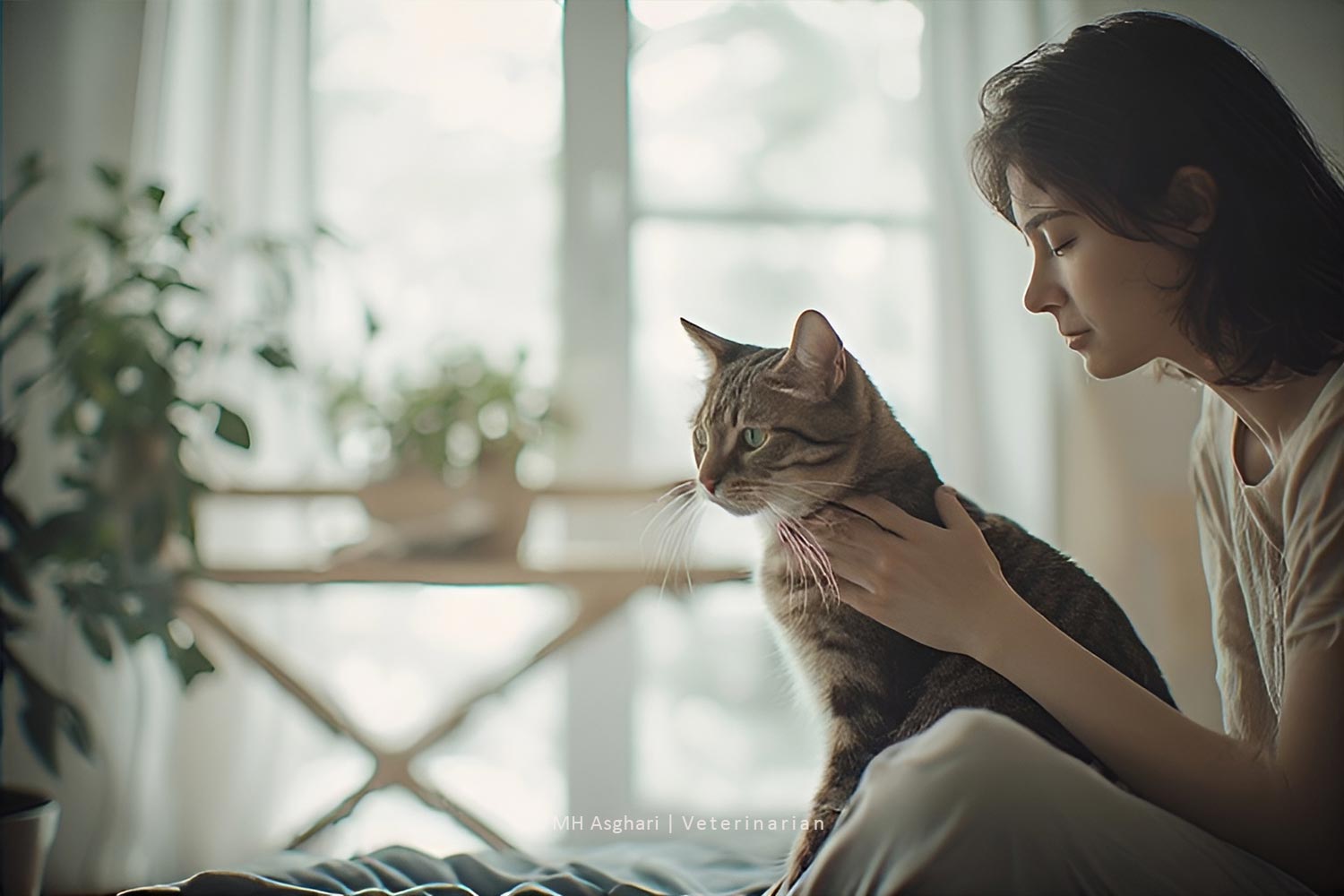
Petting a cat, especially with slow and repetitive movements, can activate the parasympathetic nervous system, the part responsible for relaxation.
Not every type of petting and not every moment is effective, but when the conditions are right, this simple touch can account for a significant part of stress reduction through living with a cat. -
Cat purring
A cat’s purr is not just a cute sound. Its specific frequency has been linked to calming the human nervous system.
It does not perform miracles, but for many people, this steady sound is enough to shift the mind out of alert mode and allow another part of stress reduction through living with a cat to occur. -
Non-judgmental presence
A cat does not ask questions, analyze, or give advice.
It simply exists. This uncomplicated, non-judgmental presence is another pillar of stress reduction through living with a cat.
Sometimes, just being there is enough to make psychological calm tangible.
The Role of Pets in Reducing Anxiety
Why Are Cats More Suitable for Some People?
Not all pets have the same effect.
The role of pets in reducing anxiety depends on the owner’s personality and the type of animal.
For people who:
-
Need quiet
-
Become exhausted by constant social interaction
-
Or are highly sensitive to stimulation
A cat may be a more suitable option than some other animals.
In these individuals, stress reduction through living with a cat usually comes through:
- Shared solitude
- Selective interaction
- Respect for boundaries
An Important Point That Is Usually Not Mentioned
A Cat Is a Responsibility, Not a Stress-Relief Tool
If this section is left out, the article would be dishonest.
Living with a cat is not always calming.
Sometimes:
- The cat gets sick
- Keeps you awake at night
- Comes with financial costs
- And takes psychological energy
If someone gets a cat solely to reduce stress, the result may be the opposite.
Stress reduction through living with a cat happens when:
- Responsibility is accepted
- Expectations are realistic
- And the relationship is genuine, not consumptive