How Do Cats Communicate?
Introduction
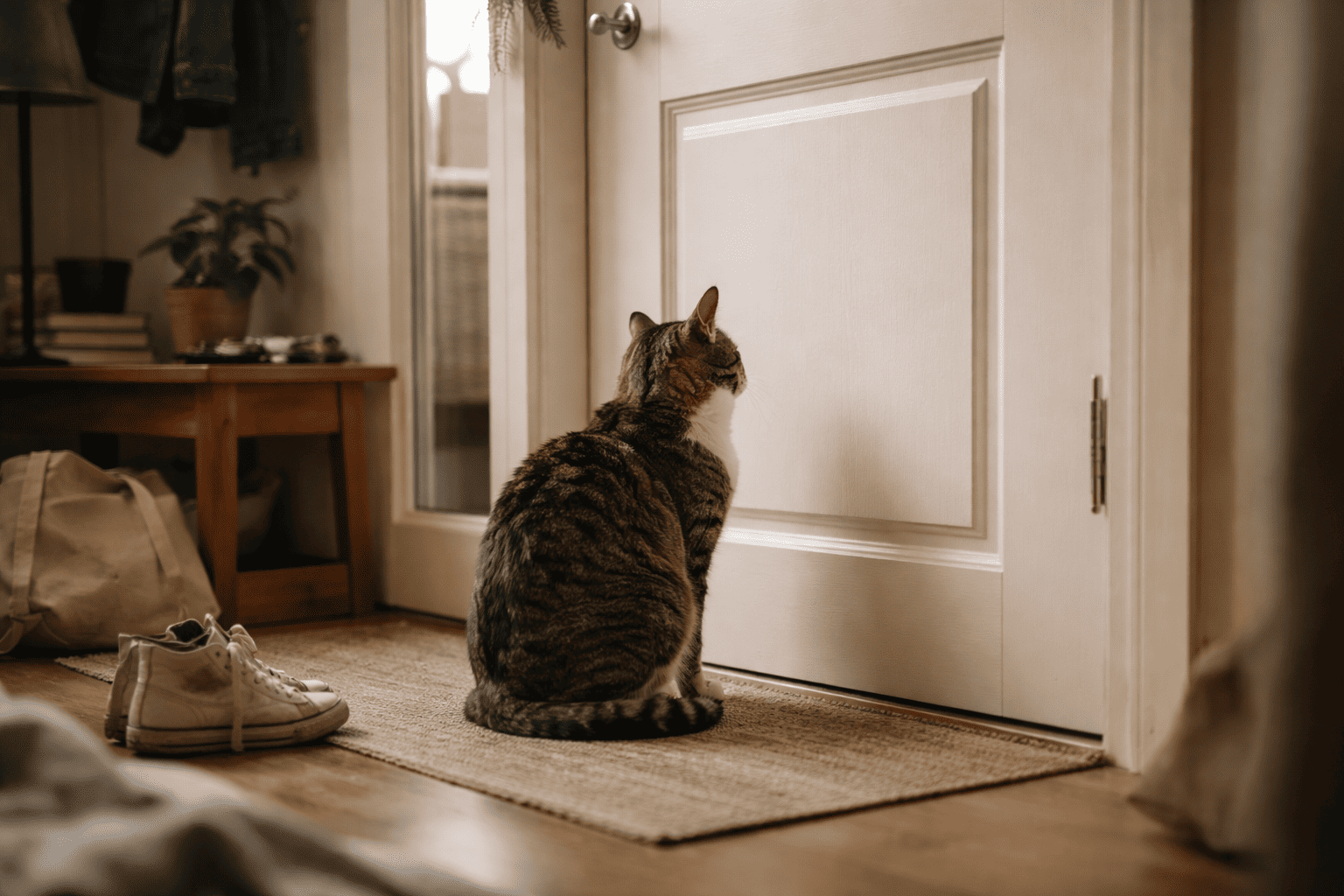
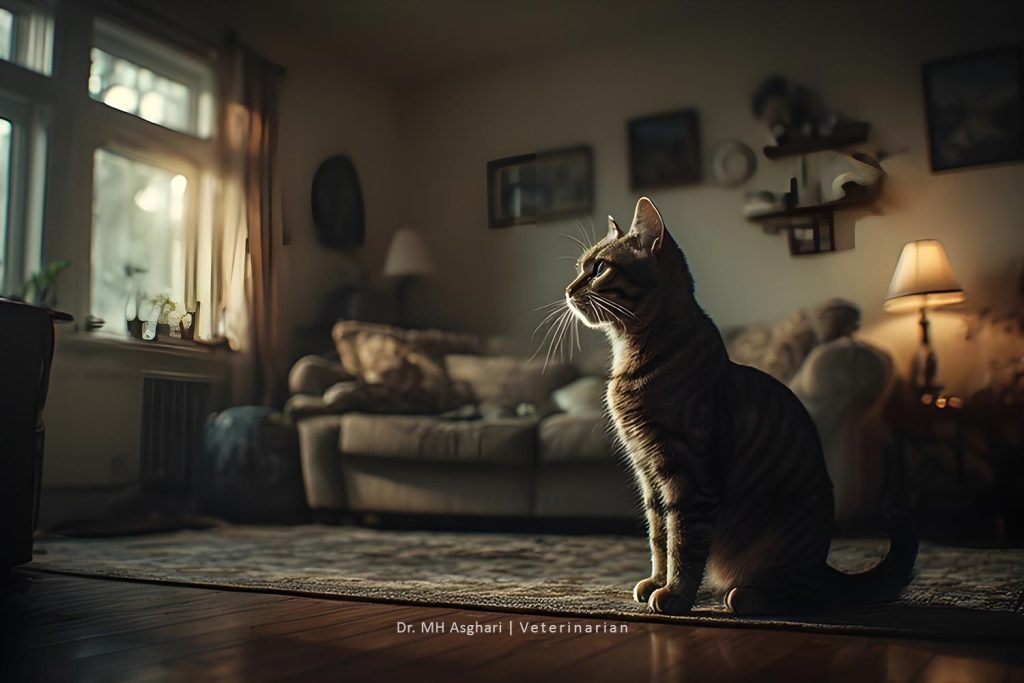
You have probably experienced this: waking up in the middle of the night because your cat is standing in the middle of the house, making a meowing sound unlike anything you have heard from them before.
They are not hungry, they are not asking for the door, and they do not even seem upset. They are just… making noise.
In moments like this, most cat owners share the same question:
“What is this actually telling me about my cat right now?”
Cat language, much like human language, does not have a fixed dictionary. A single “meow” does not always carry one clear meaning. The same sound that signals a request for attention today might indicate stress or confusion tomorrow.
That is why many owners either worry too much or, on the other hand, completely ignore important vocal cues in feline communication.
This article is not here to tell you exactly what every sound means. Instead, its goal is to show you how to listen to cat sounds in the right context, alongside body language, situation, and the relationship you have with your cat.
If, after reading this, you misunderstand your cat just one time less, it has done its job.
Does Every “Meow” Have a Specific Message?
No. There is no such thing as a universal meow that always means the same thing.
Cat language works much like human language: the same word or sound can take on different meanings depending on the situation, past experiences, and emotional state.
Why is meowing mostly directed at humans?
Adult cats usually meow less to other cats, but they do meow to humans because they have learned that this sound affects us.
Cat language shows that your cat has learned a specific tone gets your attention or triggers a response.
A real-life example
Imagine two cats, Mina and Leo:
- Mina makes a short, soft meow when she is bored and wants a bit of petting.
- Leo makes the exact same sound when the environment feels unsafe to him and he is stressed.
From an audio perspective, the sounds are similar. In the language of cats, however, the messages are completely different.
If you only listen to the sound and ignore the context, you will probably misinterpret it.
What Helps You Understand a “Meow”?
۱. Body posture
- Is the body relaxed or tense?
- Is the back arched or standing straight?
- What is the position of the legs and shoulders?
۲. Tail and ear position
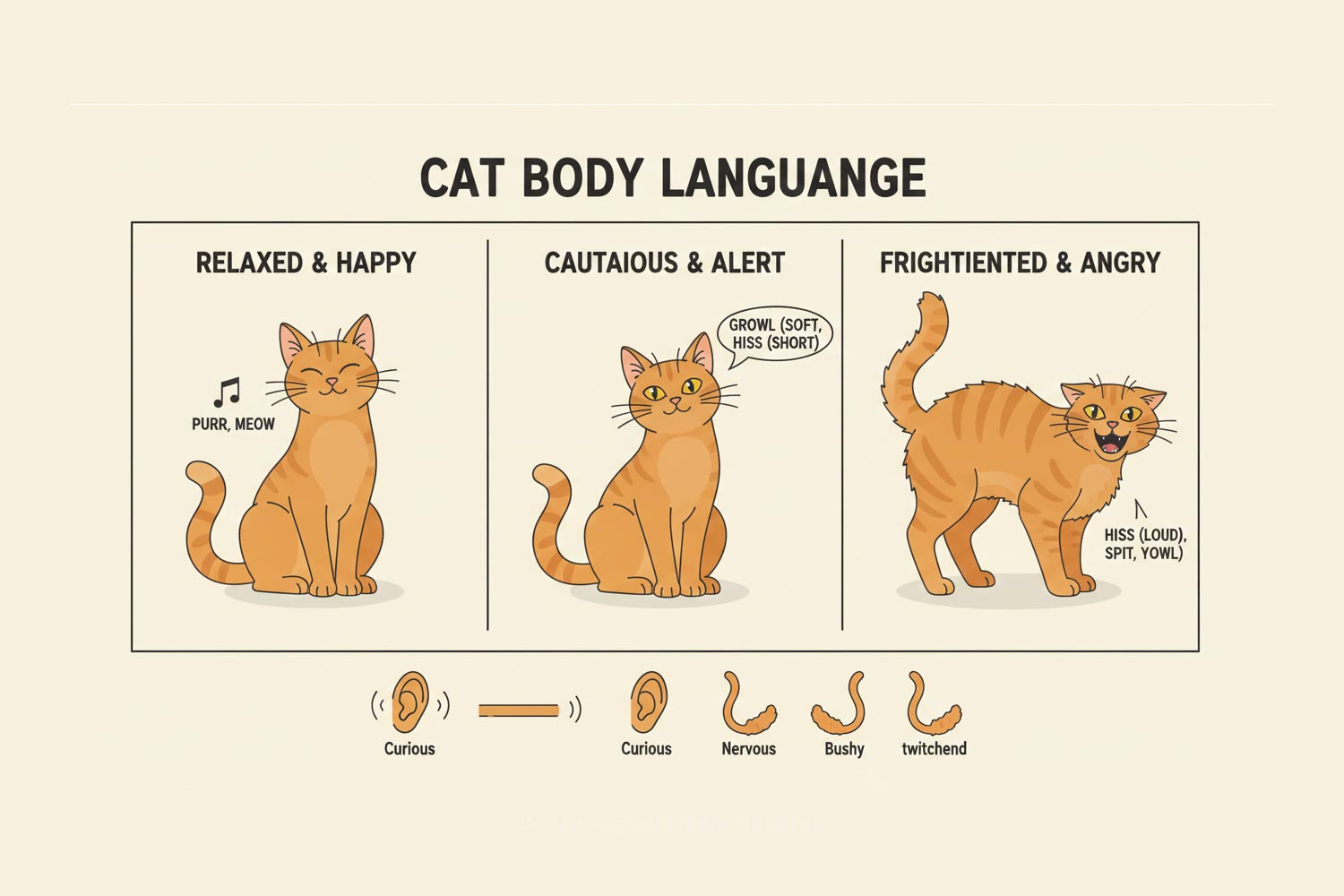
- Tail up and relaxed = content or seeking attention
- Tail low or twitching = stress or concern
- Ears forward = interest, ears pulled back = warning
۳. Time and place
- Nighttime meowing may be caused by boredom or disorientation
- Meowing in a new situation (guests, loud noise) can signal anxiety
۴. Sound repetition pattern
- Short, scattered meows = minor request
- Continuous, prolonged meows = urgency, pain, or an important need
Key point
A cat’s voice should always be interpreted alongside other signs.
Even a small change in sound or pattern can be meaningful. For example, a usually quiet cat that suddenly becomes very vocal often signals a change in emotional state or health.
By keeping these points in mind, you gain a clearer understanding of cat language and reduce misinterpretations.
Cat Sound Interpretation Table (Meows and Other Sounds)
| Sound type | Body position | Tail and ear position | Location/Time | Approximate interpretation |
| Short and quiet meow | Body relaxed, bent or reclined | Slow tail, ears forward | When petting or seeing the owner | Request for attention or greeting |
| Long and persistent fruit | Stiff or erect body | Tail down or wagging, ears back | New environment, noise or guests | Stress or worry, need to check the environment |
| Long and sharp fruit | Body tense, shoulders raised | Tail tucked, ears back | Sudden and unexpected | Warning, there may be pain or discomfort. |
| Snort | Body relaxed, reclining or in a hug | Comfortable tail and ears | When petting or resting | Satisfaction or relaxation, but sometimes it is a relaxation mechanism (stress or pain is also possible) |
| Strange sounds (chirps, trills, short moans) | Concentration or excitement | Tail upright or slightly wagging, ears forward | Bird watching, playing, interacting with the owner | Excitement, focus, or visual stimulation; usually not a direct request |
| Nocturnal or frequent fruiting | The body may be relaxed or stiff. | Tail and ears, depending on the situation | Midnight or when alone | Restlessness, change in sleep schedule, or in older cats, confusion/pain may occur. |
| Low or rare fruit | Body relaxed, usually sitting | Tail and ears are natural. | All day | It’s normal; some cats are quiet, there’s no behavioral problem. |
| Sudden change in sound or pattern | Changes in body tension | Abnormal tail or ears | Anytime | May be a health warning, stress, pain, or change in environment; needs more attention |
Types of Cat Sounds
Meows, purring, moaning, and in-between sounds
Meow – The Most Common and Most Misleading Sound
A meow is like a “general-purpose word” in cat language. Unlike human language, however, a meow does not have one fixed meaning. Even cats living in the same household may use the same sound for different reasons.
Common types of meows and their approximate meanings
۱. Short, soft meow
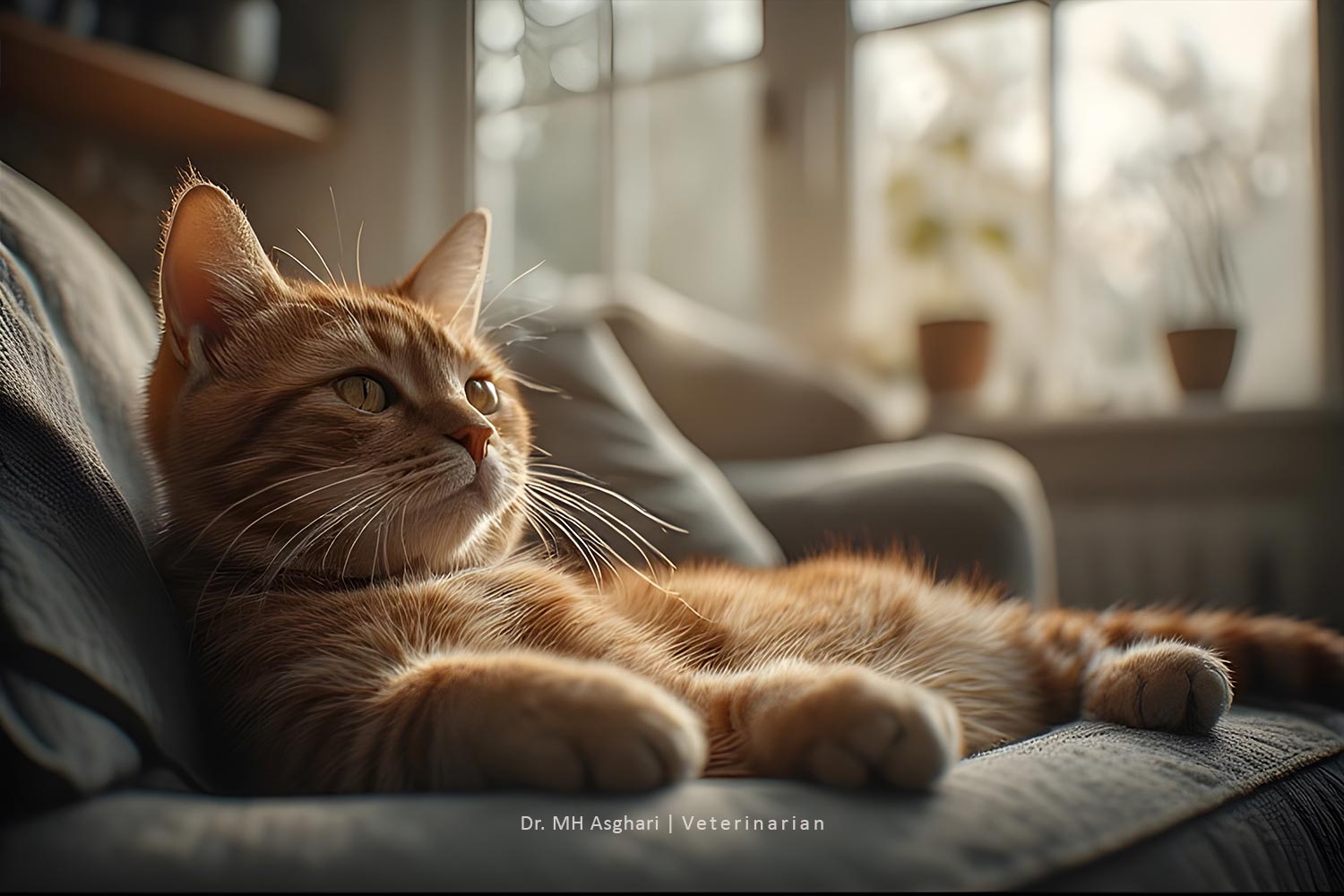
- Usually a greeting or a request for attention.
- Real-life example: when you come home from work and your cat meows at the door, they are often just saying, “Hi, I’m here.”
- Signs: relaxed body, calm tail and ears, smooth and non-urgent movements.
۲. Long, continuous meow
- Can indicate frustration, insistence, or mild dissatisfaction.
- Example: a cat that wants to enter a room but finds the door closed.
- Signs: slightly tense body, tail may move or twitch, ears pulled back more than usual.

۳. Loud, sharp meow, especially if repeated
- Often a warning and sometimes a sign of pain, stress, or serious discomfort.
- Example: a cat that suddenly produces loud, repeated meows while hiding or stiffening its body may be experiencing a physical issue.
- Note: always interpret this alongside body language and other behaviors.
Key Insight: Your Cat’s Personal Pattern Matters More Than the Sound Itself
- Every cat has its own style and “dialect.”
- A quiet cat that suddenly becomes vocal often signals a change in mood or health.
- A naturally vocal cat may meow simply to seek attention or initiate play.
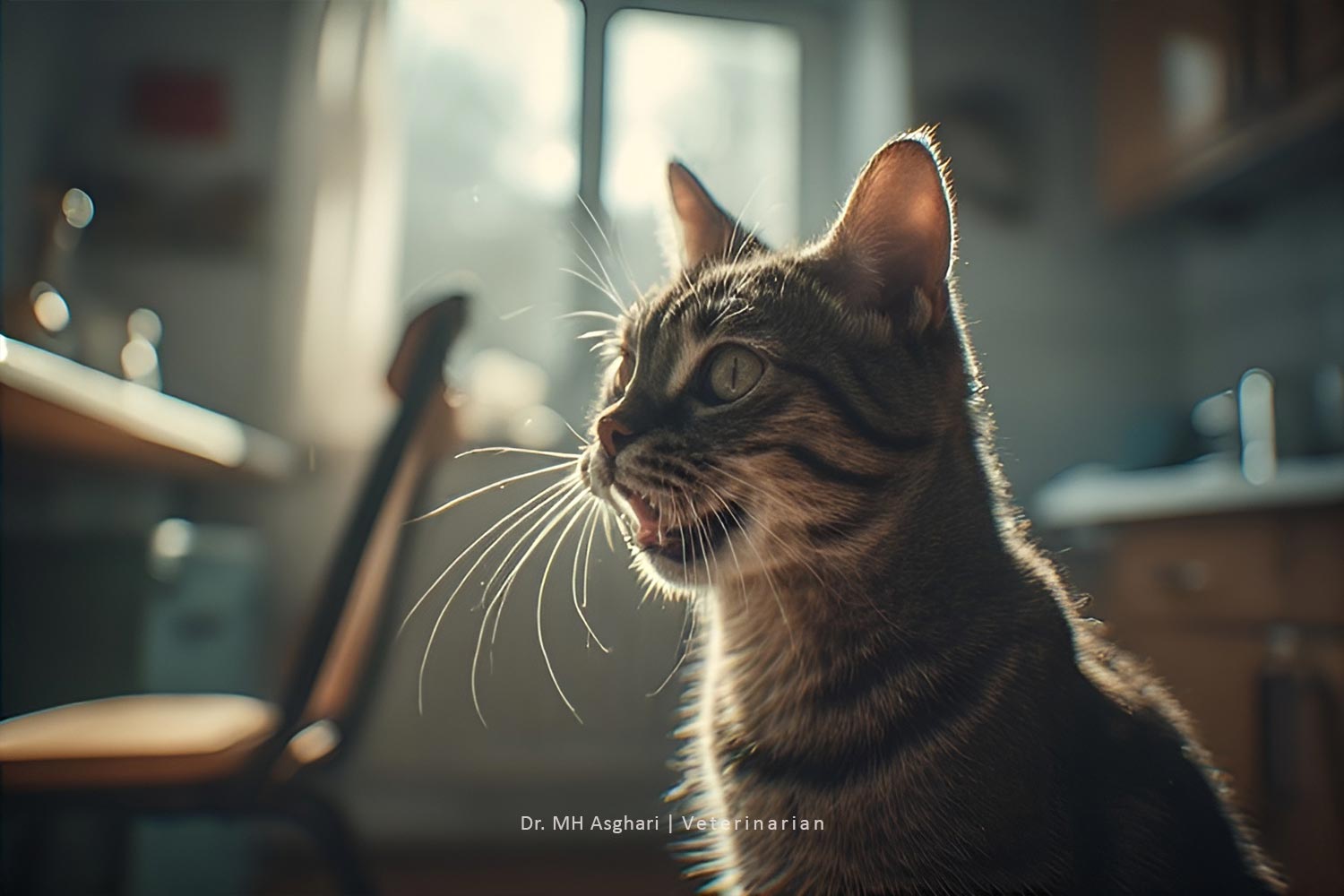
Everyday example:
A cat that has always been calm and quiet suddenly produces a long, loud meow when you enter the room. If you ignore their usual pattern, you might assume something is seriously wrong. But when you observe the body, tail, ears, and situation, you may realize they are simply asking for attention.
Understanding these details is part of learning cat language.
Practical Advice for Owners
۱. Always combine sound with body language
A meow alone is only half the message. Observe eye contact, tail position, ear movement, and posture.
۲. Learn the pattern
Take note of your cat’s sounds and the situations they occur in over several days. This helps you understand their personal communication style.
۳. Take changes seriously
If the tone, length, or frequency of meowing suddenly changes, first assess the environment and needs. If necessary, consult a veterinarian.
Purring in Cat Language – More Than a Sign of Contentment
Purring is one of the most layered sounds in cat communication and does not always mean happiness. Most owners hear purring when their cat is lying on their lap or being petted and assume it signals contentment. A closer look at cat language shows that purring can carry different meanings.
Purring with relaxed body language
- Soft, loose body posture
- Tail and ears neutral, no tension
- Eyes half-closed and calm

This usually indicates genuine contentment.
Example: a cat stretched out on the couch, purring, is typically comfortable and enjoying your presence.
Purring with stress, pain, or illness
- Tense body, raised shoulders
- Ears pulled back or flattened
- The cat may hide, tuck its paws in, or appear lethargic
This type of purring functions as a self-soothing mechanism.
Real veterinary example:
- A cat purrs on the exam table, but its body is stiff and ears are pinned back.
- The veterinarian recognizes signs of stress or possible pain.
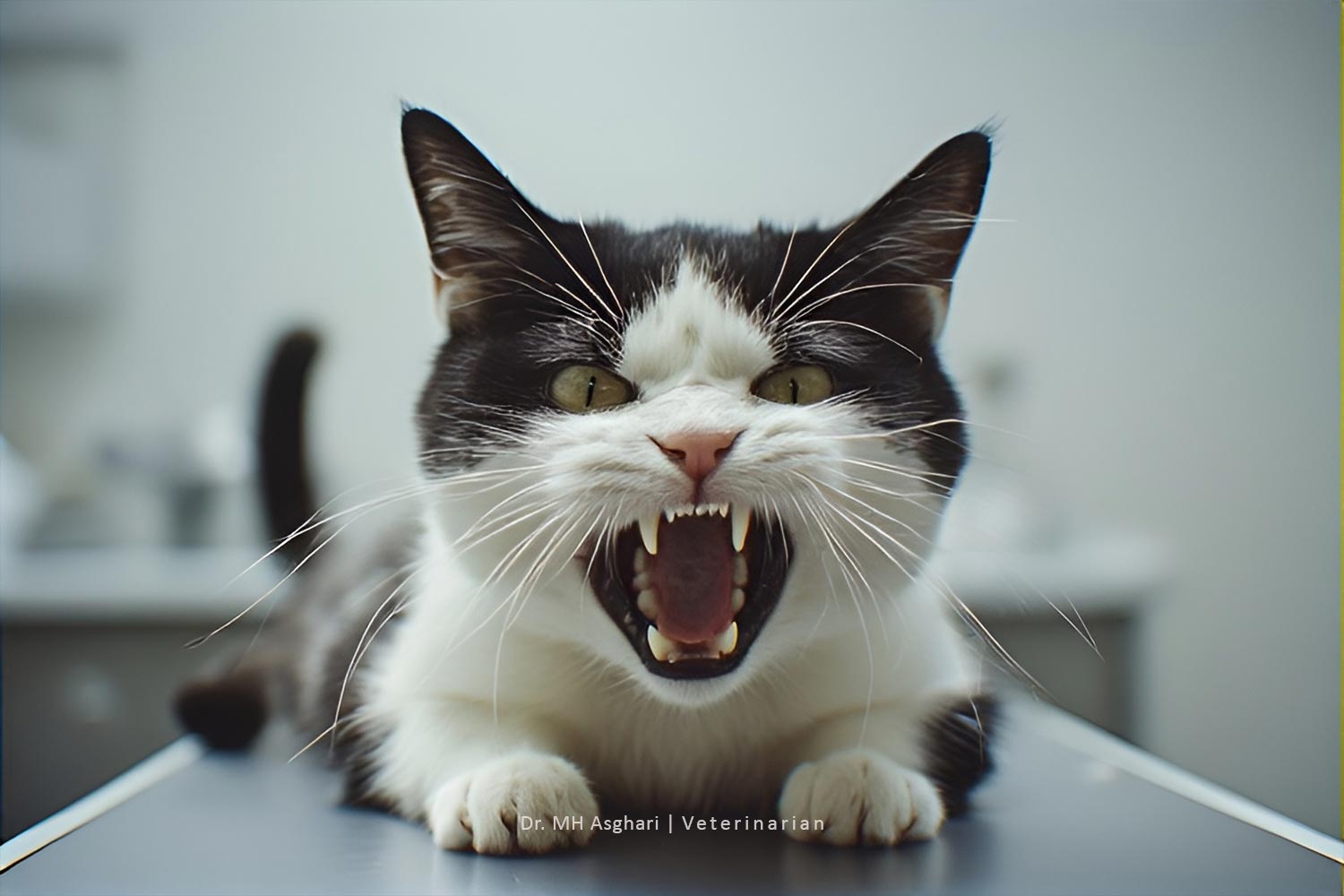
In cat language, purring should never be interpreted as contentment on its own. It must always be linked to body language and context.
Practical tips for owners
۱. Look at combinations:
- Purring + relaxed body = contentment
- Purring + tense or hiding behavior = self-soothing, stress, or pain
۲. Watch for changes:
- A cat that usually purrs calmly but starts purring intensely during stressful situations may be signaling a health issue.
۳. Treat purring as part of a larger behavioral puzzle:
- Purring alone is not enough. Tail, ears, eyes, and posture matter.
Unusual Sounds in Cat Language – Chirps, Trills, Short Moans, and In-Between Sounds
These sounds are usually heard when a cat is excited, focused, or visually stimulated, rather than when they have a direct need or request.
Types and situations
۱. Chirp
- A short sound similar to a bird chirp
- Often heard when a cat sees a bird, squirrel, or insect through a window
- Message: high excitement and focus
- Accompanying behavior: standing still, tail gently moving

۲. Trill
- A short, clear combination of meow and purr
- Often heard during close interaction with the owner
- Message: happiness, greeting, or indirect request for attention
- Real-life example: your cat stands at the door and trills as you enter the room, meaning “I’m glad you’re here.”
۳. Short moans or sounds between meow and purr
- Often occur during sudden excitement or visual stimulation
- Message: intense focus or sensory stimulation, not necessarily a request
- Example: a cat watching a moving toy or a bird in the yard may produce these sounds
Practical tips for owners
۱. Always assess context and body language
- Relaxed body = positive excitement
- Tense or crouched body = focus or momentary anxiety
۲. These sounds are usually not direct demands
- The cat is expressing a state of excitement rather than asking for food or attention
۳. Learn patterns over time
- Each cat has a unique tone and style
- With observation, owners learn what each sound means in each situation
Vocal Communication in Cat Language
Do cats talk to each other?

- Contrary to popular belief, cats rarely meow at each other.
- Their main communication tools include:
-
-
- Scent – cats leave scent markers on objects or other animals
- Body language – posture, tail, ears, and eye contact
- Spatial positioning – approaching, retreating, or choosing elevated or specific locations
-
Note: In cat language, sound is primarily a tool for communication with humans. Your cat is “talking” to you, not to the neighbor’s cat.
Real-life example:
A cat standing by a window and watching birds may make unusual sounds, but a nearby outdoor cat usually does not respond vocally. Their main communication happens through scent and body language.
Vocal Behavior of Domestic Cats
Why are some cats more vocal than others? Several factors influence cat language:
- Breed: Siamese and some Oriental breeds are typically more vocal.
- Early experiences with humans: cats that received quick responses and attention early in life learn that sound is effective.
- Daily interaction level: cats with less human interaction are often quieter.
- Individual personality: just like humans, some are naturally quiet and others talkative.
Humanization note: being quiet is completely normal and has nothing to do with distrust or behavioral problems.
Differences in Sounds Across Situations
Nighttime meowing:
Cats may meow at night due to:
- Boredom or need for play
- Changes in the owner’s sleep schedule
- Increased attachment to humans
- Occasionally pain or confusion in older cats
Practical note:
If nighttime meowing starts suddenly, changes pattern, or is accompanied by unusual behavior, it should be evaluated rather than ignored.
Cat Sounds During Stress or Pain
In cat language, stress or pain is usually expressed through a combination of sounds and behaviors:
- Unusual, loud, or prolonged vocalizations
- Hiding or distancing from people or environment
- Changes in appetite
- Changes in interaction with humans or other animals
General rule: no single sound is enough on its own. However, changes in sound and vocal pattern are often among the first warning signs of stress or health issues.
Real-life example:
A normally quiet cat suddenly produces loud, prolonged meows with ears pulled back. This typically warrants a medical check, as pain or physical discomfort may be present.
Practical Tips for Owners
- Listen and observe together: sound without body language and context is incomplete.
- Identify patterns: note sounds and situations over several days to understand your cat’s personal communication style.
- Changes matter: any sudden change in sound or pattern, even brief, is worth attention.
- Communication is mainly with humans, not other cats: most vocalizations aim to attract attention, express excitement, or show focus.
Conclusion
Cats do not speak like humans, but they are not silent either.
The problem is usually not that we fail to hear the sound, but that we ignore its context.

If you learn to:
- interpret sound alongside body language and situation
- take changes seriously
- avoid black-and-white interpretations
your relationship with your cat becomes calmer and deeper.
Sometimes, the best response is simply to listen, not to jump to conclusions.