Loud and Sudden Noises: Why Do Dogs and Cats Fear Certain Sounds?
(A Practical Guide for High-Stress Situations, Chaharshanbe Suri, and Times of Crisis)
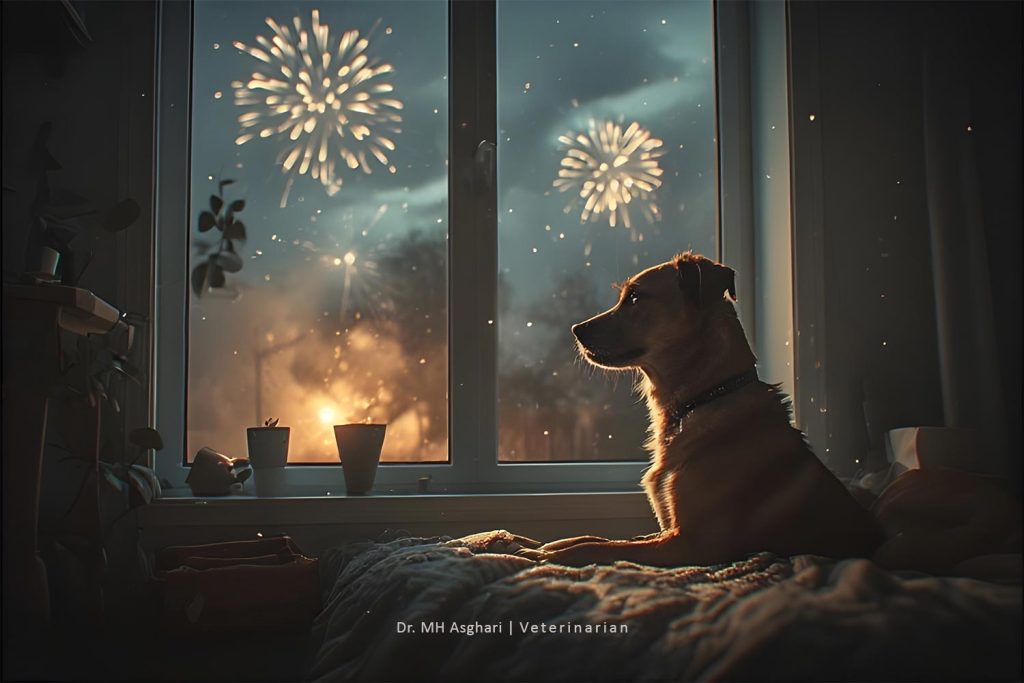
Imagine it’s the night of Chaharshanbe Suri. You’re at home when a firecracker suddenly goes off outside. Your dog starts shaking, and your cat disappears within seconds. At first glance, this reaction might seem normal. But the truth is, fear of loud noises in dogs and cats is not always a simple, short-lived response. In many cases, it can be a sign of deeper anxiety.
Many pet owners have experienced their dog’s or cat’s fear of loud sounds, yet they don’t really know where this fear comes from or when it should be taken seriously. In this article, we take a careful, step-by-step look at why dogs and cats react so strongly to loud noises, and what you can do to help your pet calm down without adding pressure or panic.
This guide is written for those who want to better understand fear of loud noises in dogs and cats and, using simple, practical, and realistic methods, make the situation more manageable for both themselves and their pets.
Why Are Dogs Afraid of Sudden Noises?
A dog’s sense of hearing is not just “stronger than a human’s.” It works differently at a fundamental level. Dogs can hear sounds that are completely undetectable to the human ear. As a result, a noise that feels like a short “pop” to you may sound several times louder, sharper, and far more unpredictable to a dog. The dog’s brain does not process this as a simple sound stimulus, but as a potential threat. This is where the foundation of fear of loud noises in dogs and cats begins.
In the natural world, sudden noises were often signs of danger. A falling branch, a predator attack, a fight. So a dog’s reaction to loud sounds is an instinctive survival response, not overreacting and not bad behavior. In these moments, the brain sends a very clear message:
“Survive first. Think later.”
The key point is that the dog cannot tell whether the sound is actually harmless, especially when the noise is:
- Sudden
- Coming from an unclear source
- Irregular and unpredictable
In these situations, firecrackers, explosions, sirens, gunshots, or even a door slamming unexpectedly act as powerful triggers and play a major role in intensifying fear of loud noises in dogs and cats. If this fear is not managed properly, it can turn into long-term anxiety.
Common Signs of Fear in Dogs Go Beyond Shaking and Running Away

Shaking or hiding are the most obvious signs, the ones even an inexperienced owner will notice. The real issue is that in many cases, dogs express fear quietly. This silence often causes their psychological stress to be overlooked, especially when it comes to fear of loud noises in dogs and cats.
More common but less obvious signs include:
- Panting without physical activity or heat
- Unusual clinginess to the owner or, on the contrary, sudden withdrawal
- Ears pinned completely back
- Eyes opened unusually wide with a fixed stare
- Repeated licking of lips or paws with no clear trigger
Some dogs don’t show any dramatic reaction at all. They simply sit still and don’t move. This is not calmness. This is freezing, a well-known physiological response to intense fear. It’s a reaction frequently seen in cases of fear of loud noises in dogs and cats and is often mistakenly interpreted as “good, they’ve calmed down.”
Why Do Some Dogs React More Intensely Than Others?
The reality is simple: not all dogs react the same way. Even in similar conditions, the intensity of fear of loud noises can vary greatly from one animal to another. This difference is usually not random and often comes down to several key factors:
- Previous negative experiences, especially at a young age
- Genetic background and breed traits
- Puppyhood and the quality of early socialization
- The owner’s behavior during past encounters with frightening noises
A dog that was once left alone during a firework or explosion in puppyhood is much more likely to show the same intense reaction years later. The brain has learned that this sound equals danger.
The owner’s response also plays a crucial role. If, at that moment, the owner was anxious, panicked, or overly emotional, an unintended message was sent to the dog: “This situation is truly dangerous.” This is how fear of loud noises in dogs and cats becomes deeper and more firmly embedded, even if the sound itself was brief and harmless.
Practical Tips to Reduce Fear: Realistic and Actionable
Create a Safe Environment
A safe space is somewhere the dog can retreat without disturbance, not a place you think the dog “should” calm down in. Under a table, next to the couch, or in a room where outside noise is reduced are all reasonable options. Dim lighting and steady background sounds like a TV or soft music help sudden noises stand out less and reduce the intensity of fear of loud noises.
Distraction, Not Force
If the dog is still in the early stage of fear, a favorite toy or a special treat may gently shift its focus. But if the fear has escalated, don’t insist. At that moment, the dog’s brain is in survival mode, not learning mode. Play and training only work when anxiety is still manageable.
No Forced Physical Contact
Out of affection, many people hug their dog or pet it intensely. The intention is good, but the result isn’t always. For some dogs, unwanted contact increases stress. The best approach is to stay available, remain calm, and let the dog decide whether to come closer. That choice restores a sense of control.
Your Behavior Matters More Than Anything
If you are anxious, your dog will sense it clearly. If your behavior is calm and normal, the dog’s brain is more likely to receive the message that there is no immediate danger. No heroic acting is needed, and no exaggerated sympathy either. Just consistency.
In one simple sentence:
A dog is not afraid of the sound itself, but of the unknown thing that might be dangerous.
And the way you respond to fear of loud noises in dogs and cats can either shorten that fear or lock it into your pet’s mind for years.
Fear of Loud Noises in Cats

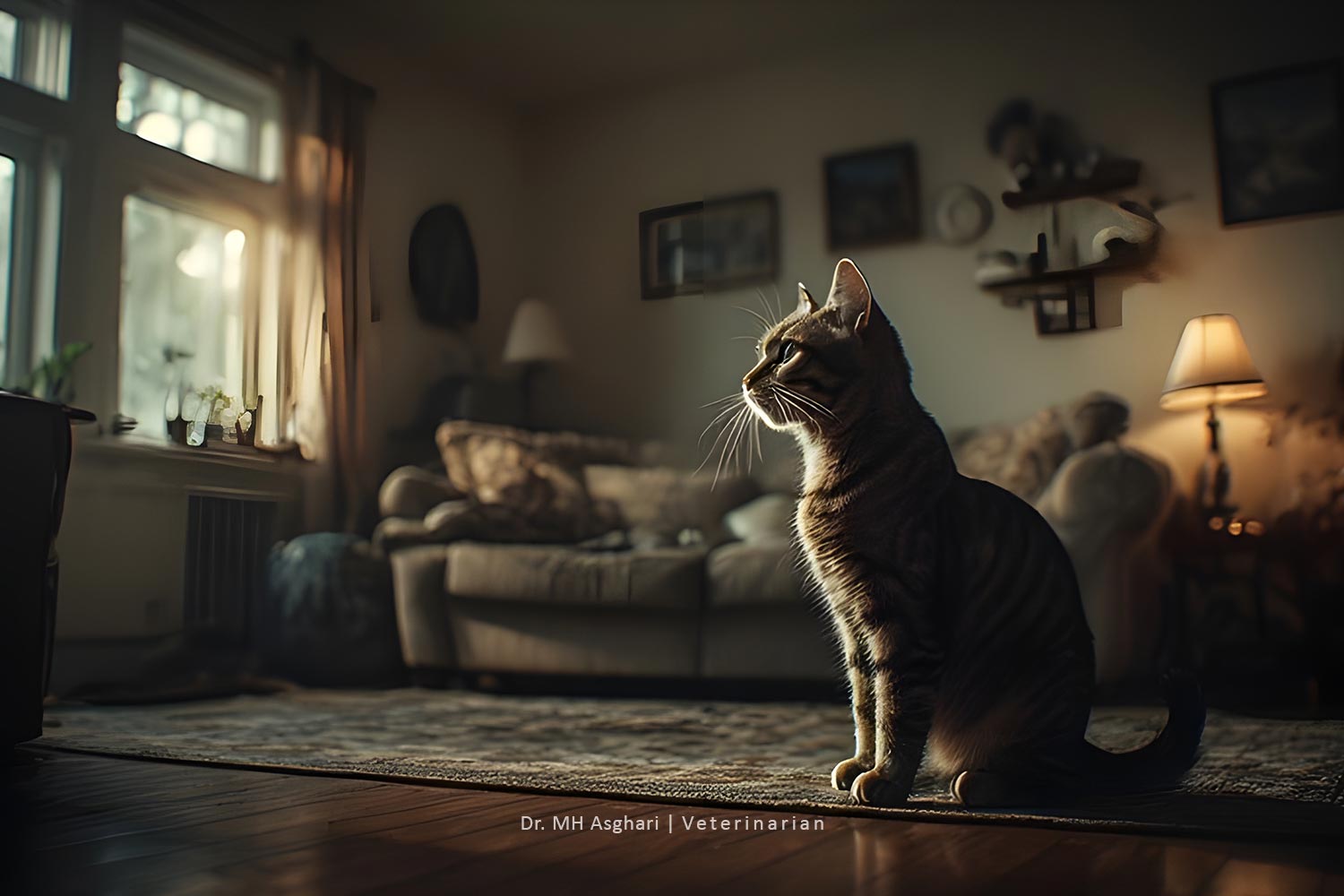
If dogs show fear through shaking and visible reactions, cats tend to internalize it and carry it with them. This doesn’t mean their fear is weaker, only that it looks different. In fact, fear of loud noises in cats is often more hidden and longer-lasting.
A cat’s nervous system is designed to detect even the smallest sudden changes in the environment. This is a survival advantage, not oversensitivity. For a cat, a loud noise isn’t just annoying. It signals that danger has entered its safe territory. A space that should be under control suddenly becomes unpredictable, and this sense of insecurity is the root of many of the cat’s later reactions.
Simply put, a cat doesn’t fight the sound or immediately flee from it. First, it labels the environment as unsafe. And this is exactly where fear of loud noises in cats can have a lasting impact, even when everything seems calm again.
How Sensitive Is a Cat’s Hearing, Really?
Cats can hear a range of sounds that even many dogs don’t fully perceive. Sharp, metallic, or explosive noises can feel to a cat like glass shattering right next to its head. Not just loud, but piercing and uncomfortable.
The critical issue is that cats usually can’t quickly identify the source of the sound. When they don’t know where it came from, how serious it is, or whether it will happen again, the brain immediately switches into full alert mode. This is where fear of loud noises in dogs and cats becomes especially deep in cats.
That’s why:
- A single short noise can make a cat disappear instantly
- The cat may stay hidden for hours or even until the next day
- Normal behavior doesn’t return immediately, even after things quiet down
This delayed return to baseline is one of the key differences between how cats and dogs react. A cat doesn’t assume the danger is over. It waits for it to come back.
Observable Behaviors That Are Often Missed

Hiding is the most obvious sign of fear, but cats often show warning signs before that. You just need to know how to see them, instead of waiting for the final escape.
Common behaviors include:
- A tail flicking sharply and nervously
- A crouched, tense body ready to flee
- Ears turned sideways or pinned back
- Short growls or hissing-like sounds
- Sudden indifference to petting or play
Some cats become aggressive in these moments, not because they’ve become “bad-tempered,” but because they feel trapped. Approaching suddenly, leaning over the cat, or trying to pick it up usually makes things worse.
With cats, understanding fear means noticing these small signals before fear of loud noises turns into a long-term behavioral pattern.
Why Do Cats Change Their Behavior After Loud Noises?
Cats have a very strong spatial memory. They don’t just remember the sound itself, but also where it happened. If a loud noise occurs in a specific part of the house, that spot may be marked as unsafe for a while. This is one of the key differences in how cats respond to fear of loud noises.
For example:
- Under the couch may no longer feel safe for sleeping
- Near the window may seem dangerous
- Even the room where the sound echoed may be avoided temporarily
These changes may seem small, but if sudden noises are repeated, they can turn into chronic stress. Stress that doesn’t disappear with a single petting session or simply with time passing.
Effective Strategies: Precise and Without Exaggeration
A Safe Space, Not a Prison
A cat’s safe space must be optional, not forced. A box, a cardboard shelter, or a corner with a blanket that the cat can enter and leave freely. The goal is not to confine the cat or send it away to “calm down.” A sense of control is the most important factor in reducing fear of loud noises in cats.
What Do Predictable Sounds Mean?
Before high-stress situations like Chaharshanbe Suri, you can turn on steady, gentle background sounds such as soft music or a fan. This helps sudden noises feel less shocking and prevents the cat’s brain from being caught completely off guard.
Don’t Approach, Be Present
Unlike dogs, many cats need distance when they’re afraid. The best support is being available while respecting boundaries. If the cat approaches you on its own, brief and calm interaction is enough. Forcing contact usually backfires.
Pheromones and Calming Garments: Support Tools, Not Miracles
Pheromones or calming wraps can reduce the intensity of stress, but they won’t eliminate fear. If you plan to use them, they should be tested before stressful situations, not introduced in the middle of a crisis. There is no magic solution for managing fear of loud noises, only the right combination of simple steps.
An Important Point That’s Often Overlooked
A cat that has become “quieter” is not necessarily calmer.
In many cases, it has simply learned not to show outward reactions. This is exactly where short-term fear slowly turns into chronic stress. In some cats, fear of loud noises doesn’t lead to panic or escape, but to silence and withdrawal.
If after loud noises your cat:
- Plays less
- Hides more than before
- Or changes the way it interacts with you
These are not personality changes. These are messages. Messages that say insecurity is still present, even if the house is quiet again.
For cats, calming means reducing the sense of insecurity, not eliminating sound entirely. The world doesn’t need to become silent. The cat’s brain needs to feel in control again. And this is exactly where your behavior can make a real difference.
Dogs’ and Cats’ Reactions to Explosive Sounds
Explosive sounds, even brief ones, increase cortisol levels in animals. Dogs and cats may show very different outward reactions, but both are under real stress. The form of the reaction differs, not the pressure itself.
Some animals appear to “get used to it.” They stop shaking, running away, or reacting dramatically. But this doesn’t necessarily mean fear of loud noises has been resolved. In many cases, stress has simply moved deeper and can affect both mental and physical health over time.
That’s why fewer visible reactions are not always good news. Sometimes it only means the animal has learned to shut down.

Pet Stress During Chaharshanbe Suri
Chaharshanbe Suri is a real example of a high-stress situation. Even animals that are usually calm may experience intense fear that night. In these moments, the owner’s role is critical:
- Stay calm, because your pet senses your stress
- Avoid reinforcing fearful behavior, such as forced holding or yelling
- Provide a safe and predictable environment
Noise Anxiety in Dogs and Cats
Noise anxiety is a serious issue that can worsen over time. Signs include prolonged hiding, aggression, or repetitive behaviors.
Long-Term Strategies
- Gradual training using recorded sounds at low volume
- Using calming aids or species-specific pheromones
- Consulting a veterinarian or an animal behaviorist
Conclusion
Fear of loud noises in dogs and cats is completely natural, but it is manageable. The key elements are creating a safe environment, staying calm yourself, and paying close attention to your pet’s behavior.
Even if an animal seems to have “gotten used to it,” internal stress may still exist. Your care and the way you respond can make a significant difference.
Frequently Asked Questions
۱. Is fear of loud noises in dogs and cats normal?
Yes, it is completely normal. Dogs’ and cats’ hearing is far more sensitive than humans’, and their brains instinctively process sudden sounds as threats. Problems begin when this fear repeats and turns into chronic stress or noise anxiety.
۲. Can pets “get used to” loud noises?
Sometimes it appears that they do, but in many cases only the outward reaction decreases. Especially in cats, reduced visible response may indicate suppressed fear with lingering internal stress. True habituation means reduced anxiety, not just silence.
۳. During Chaharshanbe Suri, should we hold our pet or leave them alone?
In most cases, giving space while remaining calmly present is the best option. Forced contact or holding can increase stress. If the animal approaches you on its own, brief and gentle interaction is enough. The pet, not the owner, should decide.
۴. Are pheromones or calming garments actually effective?
These tools can reduce stress intensity, but they are not miracles. Their effectiveness depends on being combined with a safe environment and appropriate owner behavior. They are best tested before stressful events, not during a crisis.
۵. When does fear of sound require a veterinarian or behaviorist?
If after loud noises the animal hides for long periods, becomes aggressive, plays less, or shows repetitive behaviors, noise anxiety or chronic stress is likely. In these cases, professional consultation is essential, and delay only makes the problem worse.