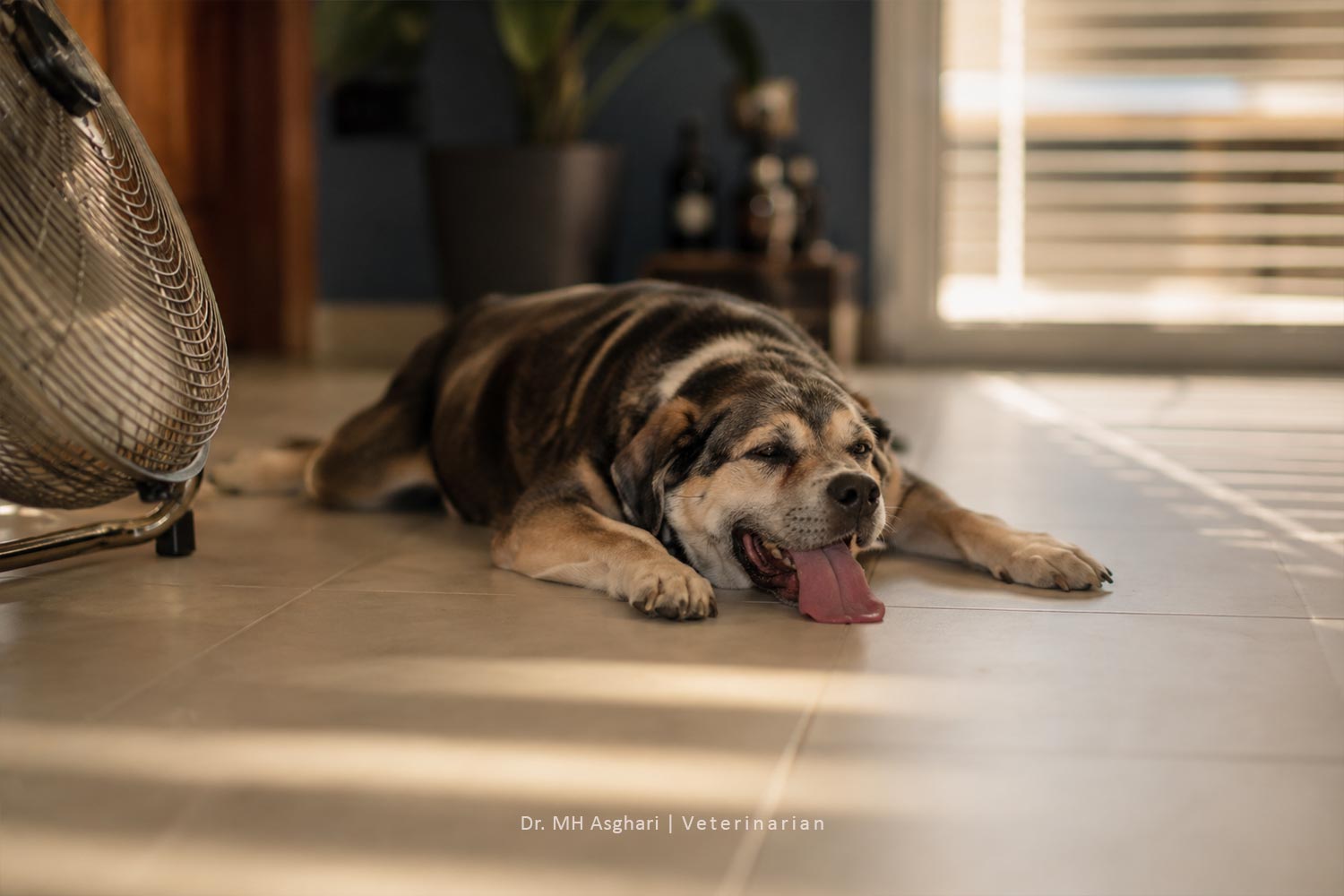
Hidden Signs of Heat Stroke in Cats and When to See a Vet Immediately
When summer arrives, many cat owners feel at ease.
Their logic is simple: “Cats come from the desert, so they tolerate heat well and heat stroke doesn’t happen to cats.”
The problem is that the cat’s body, especially today’s domestic cats, doesn’t always cooperate with this idea.
Sometimes a quiet cat, who has just lain under the bed a little longer than usual or has half-eaten its food, may be on the verge of serious heat stroke.
And that’s exactly what makes heat stroke in cats dangerous.
Cats are masters of hiding their illness.
Many dogs react clearly when they’re feeling unwell. But a cat may just seem a little lethargic or lethargic until the relatively severe stages. That’s why some pet owners only realize they have a problem when it’s already an emergency. The universe, as usual, has decided to design a creature that hides its pain and then suddenly sends you to the emergency room in the middle of the night. It’s a brilliant design, really.
In this article, we’ll talk about heatstroke in cats;
from the subtle and early signs to behaviors that shouldn’t be ignored, initial treatment, when to see a vet right away, and even which breeds are most at risk.
Can cats really tolerate heat?
To some extent, yes.
But not as much as many people think.
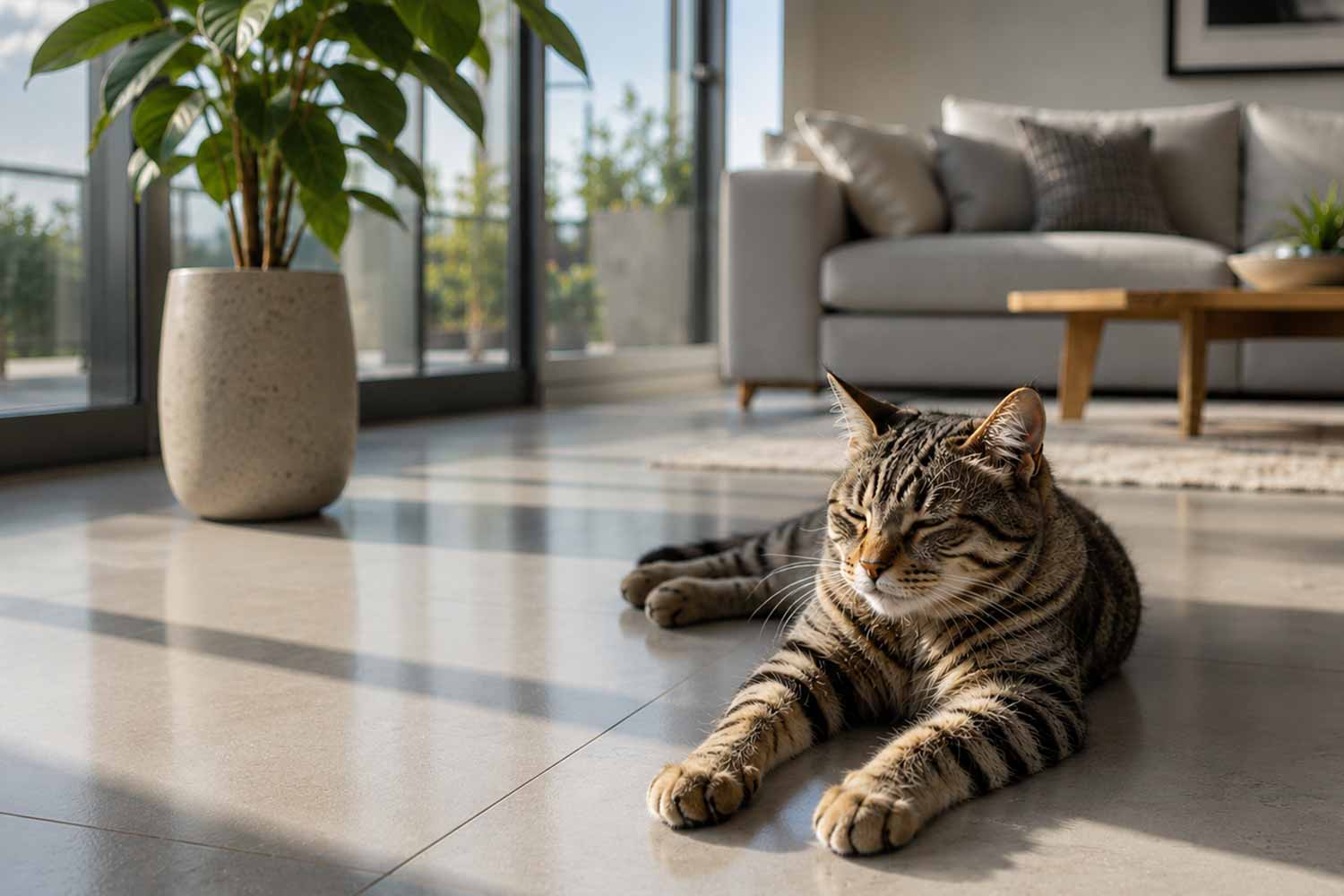
Cats are more tolerant of heat than some animals because:
- They are less physically active
- They usually rest during the hottest hours of the day
- They instinctively seek out cool spots
But this does not mean they are “immune.”
In fact, heatstroke in cats is especially common in these situations:
- A poorly ventilated home
- A hot balcony on a hot summer afternoon
- A car that is turned off and closed
- Dehydration
- Furry cats
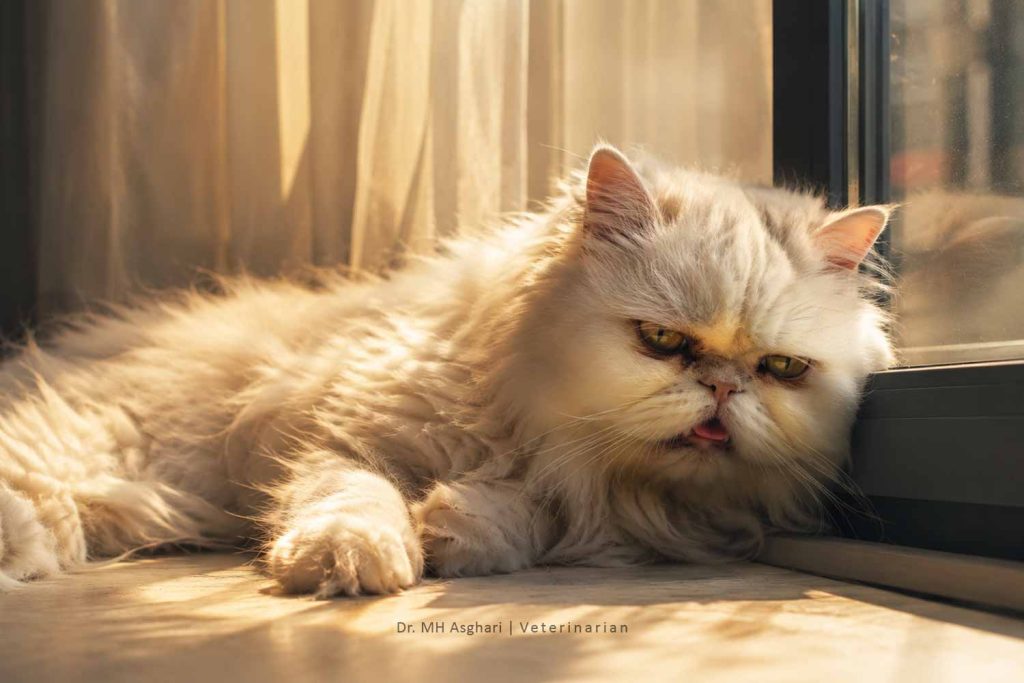
- Flat-faced breeds like the Persian
- Obese or elderly cats
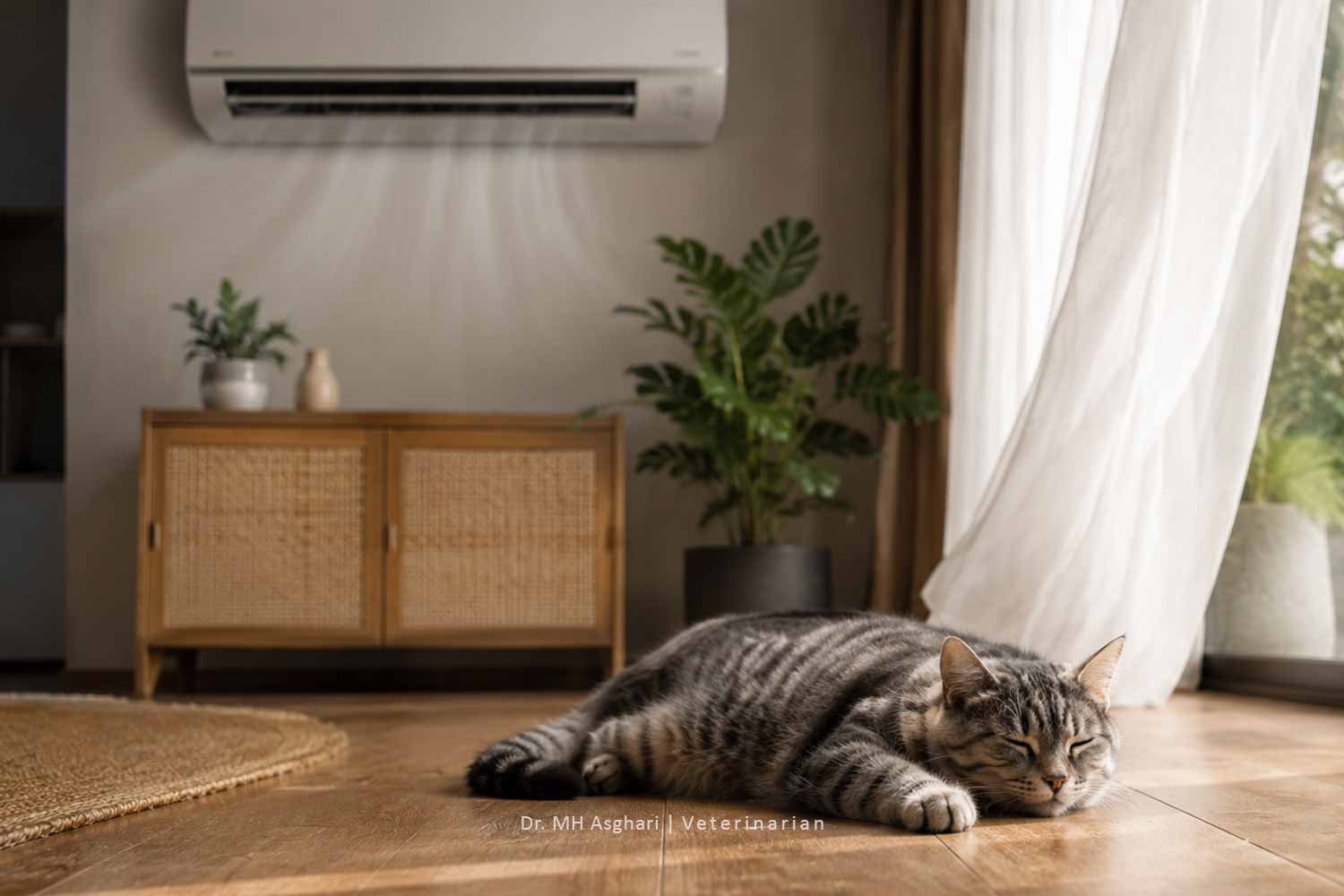
Some pet owners assume that if their cat is sleeping under an air conditioner, it means it is doing well.
Sometimes it is. Sometimes its body is desperately looking for a way to cool down.
Sometimes on hot summer days, cats rest more than usual and their sleeping time increases. This isn’t always a sign of illness, but if prolonged sleepiness is accompanied by lethargy, loss of appetite, panting, or other signs of heatstroke in cats, it shouldn’t be ignored. If you want to know how much sleep a cat normally gets per day and when excessive sleepiness can be a sign of a serious problem, this article can help.
The difference between heat stress and heat stroke in cats
Not all reactions of a cat to hot weather mean heat stroke in cats. Sometimes the animal’s body is just under heat stress and can still control its temperature. This condition is called “heat stress”.
In heat stress, the cat is usually a little less active than usual, resting more, drinking more water or looking for cool places. Its appetite may also decrease for a few hours, but it remains alert and regains its normal behavior when the environment cools down.
But heat stroke in cats is a completely different and emergency condition. In this case, the body no longer has the ability to control its internal temperature and the body temperature rises dangerously. If not treated in time, vital organs such as the brain, heart, kidneys and liver may be damaged.
In simple terms, this difference can be considered as follows:
| Heat Stress | Heatstroke in Cats |
|---|---|
| The cat is still awake. | Consciousness may decrease. |
| It gets better with rest and a cool environment. | Without treatment, it may get worse. |
| Breathing is usually a little faster. | Heavy panting or open-mouth breathing is seen |
| Usually does not pose an immediate danger. | It is a veterinary emergency. |
The important thing here is that the line between the two is not always clear. Cats often hide signs of illness and may appear only slightly lethargic on the outside, while their body temperature is rapidly increasing. For this reason, if you notice signs such as your cat panting in the heat, breathing with their mouth open, severe lethargy or imbalance, it is best to take the possibility of heatstroke in cats seriously and consult a veterinarian for an assessment of the situation.
Why is heatstroke in cats more dangerous than we think?
Because the symptoms are not always clear.
One of the most important things every cat owner should know is this:
Cats usually hide pain and illness until the severe stages
This behavior comes from the survival instinct. In nature, the weaker animal is more at risk. That is why cats have learned over the years to hide their discomfort.
What is the result?
The cat may:
- just play less
- sleep more
- become withdrawn
- eat less
- or be more relaxed
and the owner may think:
“It’s probably hot, that’s normal.”
When the animal’s body may have entered a dangerous stage of increased internal temperature.
What are the symptoms of heatstroke in cats?
Take your cat’s panting in heat seriously
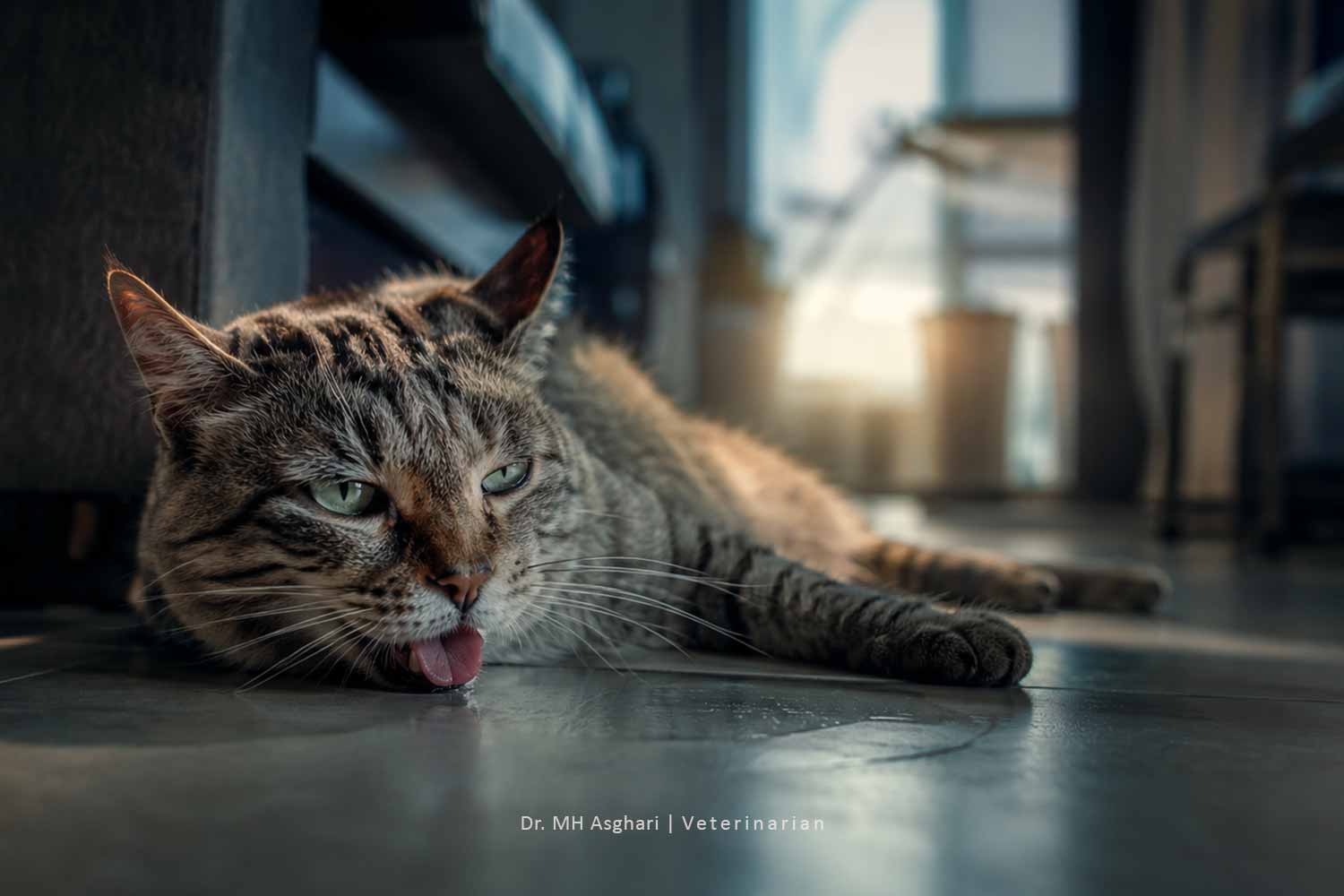
Unlike dogs, cats don’t usually pant.
So if you see your cat breathing with its mouth open, especially in hot weather, it’s almost always an abnormal sign.
Early signs of heatstroke in cats
- Sudden lethargy
- Cat sleeping a lot in the heat
- Loss of appetite
- Hiding
- Excessive licking of the body
- Hot ears
- Restlessness
- Increased breathing
Some cats may even just sit by the water bowl and their behavior becomes a little “quieter.” That’s it. No screaming, no dramatic display. A respectful animal would rather pass out quietly than express its feelings.
Do cats sweat?
Very limited.
Cats only sweat a small amount through parts like their paws.
The main ways they cool down are:
- Licking their fur
- Evaporating saliva
- And regulating their behavior (sleeping in a cool place, reducing activity)
.
That’s why in extreme heat, their bodies become overwhelmed faster than we think.
Which cats are most at risk of heatstroke?
Flatfaced cats
such as:
- Persian
- Himalayan
- Exotic
These breeds have a harder time dissipating heat due to their facial structure and respiratory tract.
Heatstroke in Persian cats is one of the most common problems in the summer.
Furry cats
The thick coat can act as a heat insulator, especially if the environment is not well ventilated.
Obese or elderly cats
They have a lower body tolerance and are more likely to become dehydrated and overheat.
Kittens
Their body temperature regulation system is not yet fully developed.
Closed car; one of the deadliest mistakes
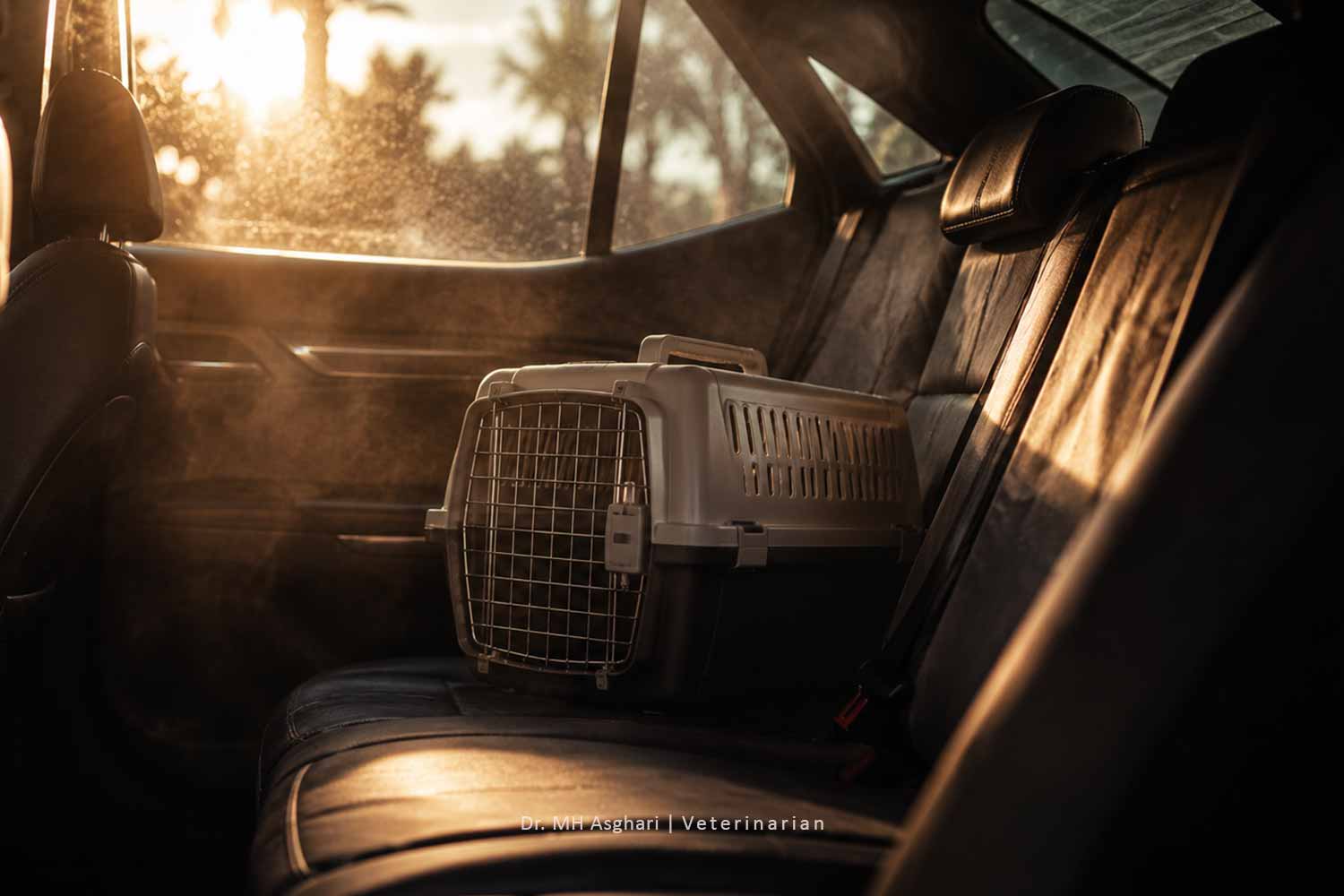
Even a few minutes.
Some people think:
“I’ll just roll down the window a little, it won’t matter.”
But the temperature inside a car can rise very quickly, even if it’s not terribly hot outside.
Heatstroke in cats inside a car can quickly lead to:
- Brain damage
- Organ failure
- Seizures
- And death
The same goes for hot, unshaded balconies.
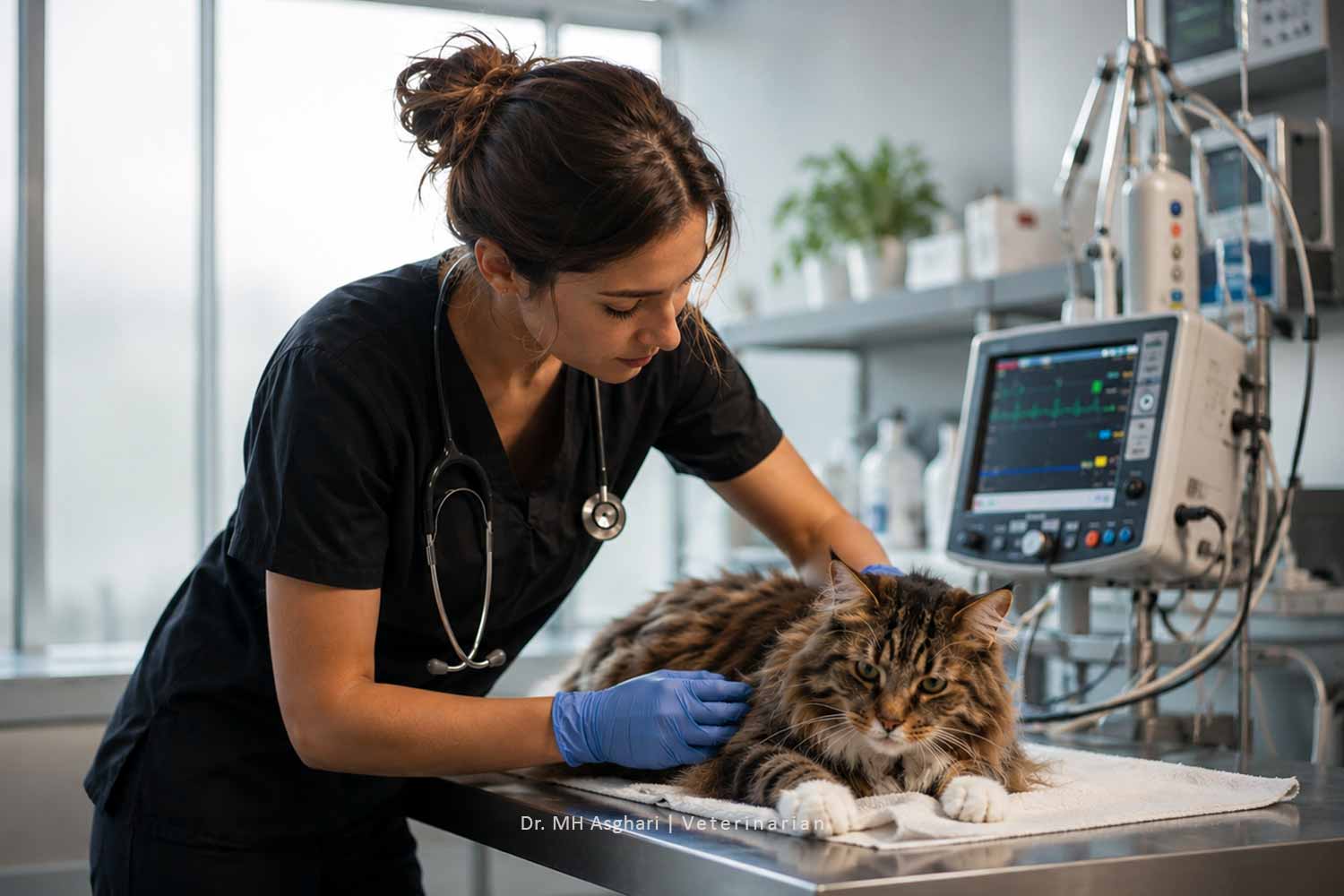
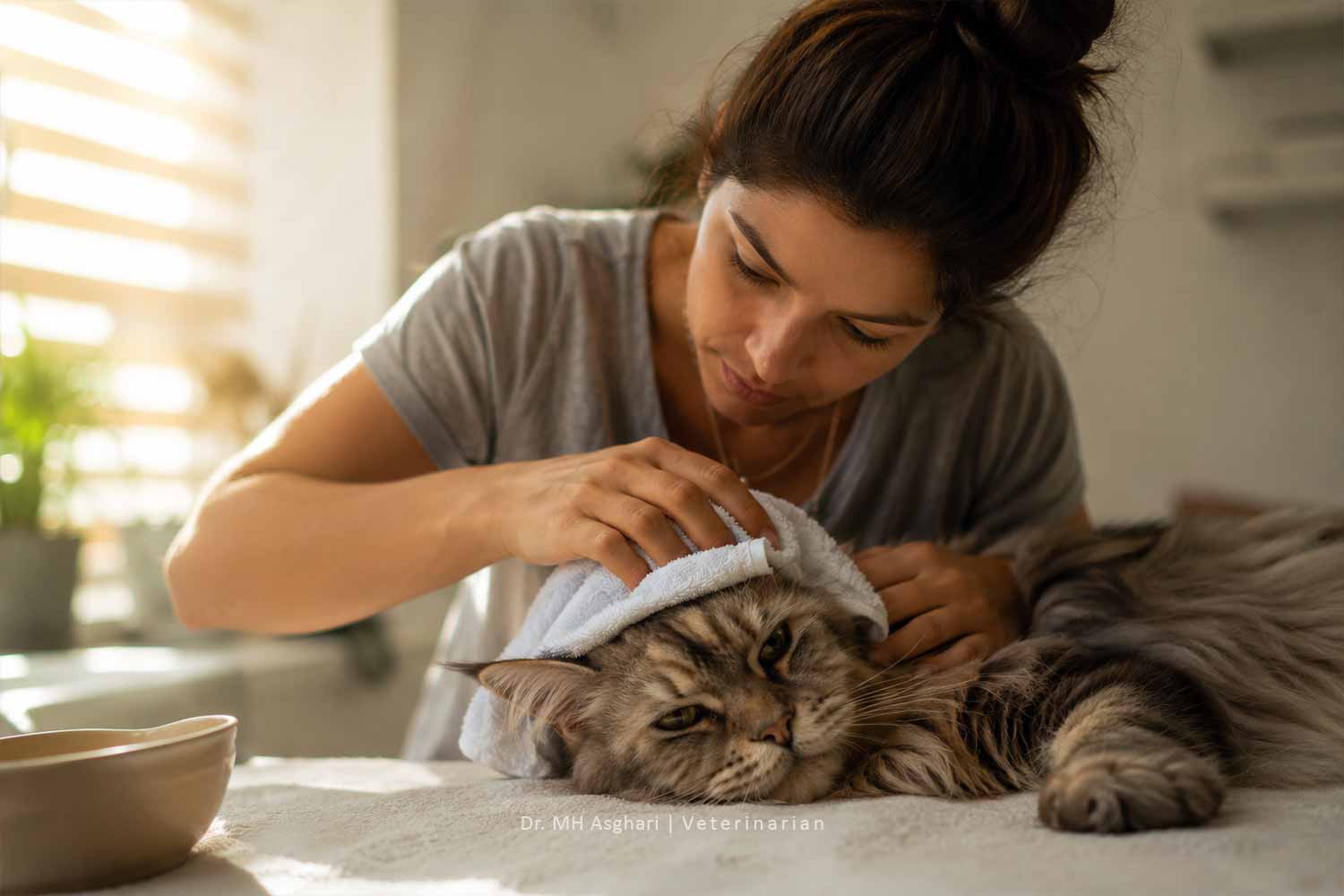
The goal is gradual, controlled cooling.
When is heatstroke in cats an emergency?
Some signs indicate that you should not wait any longer or that you should just cool your cat at home.
If your cat has these signs, you should call your veterinarian or go to a medical facility immediately:
- Heavy panting
- Open-mouth breathing
- Severe lethargy or slow response
- Vomiting
- Unsteady gait
- Shocks or unconsciousness
- Dark red or blue tongue or gums
In severe cases, heatstroke in cats can affect the brain, heart, and kidneys. So it’s best to take the symptoms seriously, even if you’re not sure. Pet owners often regret “waiting” later than “coming soon.”
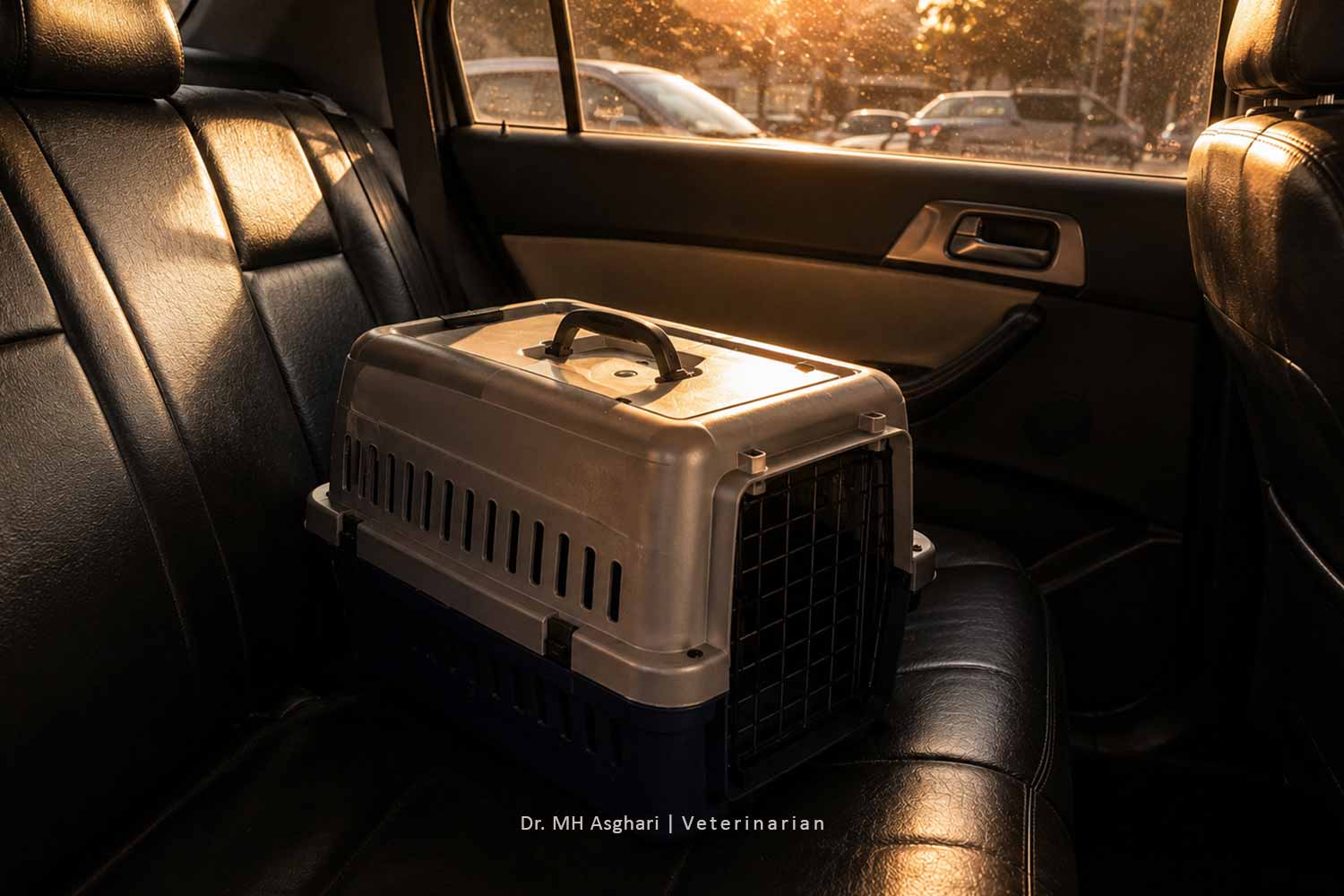
What is the right temperature for cats?
Most cats feel comfortable at around ۲۰ to ۲۶ degrees Celsius.
Of course, not all cats are the same. Some love to sunbathe by the window and even stretch out there on hot days, as if they pay the electricity bill themselves.
But there is an important difference between “loving the sun” and the risk of heatstroke in cats.
The problem arises when:
- The cat has no way to get to a cool environment
- Not enough water is available
- The house is poorly ventilated
- Or the animal’s body can no longer cool itself
In such conditions, even a calm and inactive cat can very quickly enter the dangerous stage of heatstroke in the pet.
Cat not eating in hot weather; is it normal?
A slight decrease in appetite in the heat can be normal.
But if it is accompanied by these symptoms:
- Lethargy
- Excessive sleep
- Abnormal breathing
- Hiding
- Or a significant decrease in drinking
The possibility of heat stroke in cats should be considered.
Sometimes pet owners think that their cat is “mellow”. While the animal is slowly entering the stage of dehydration.
How to prevent heat stroke in cats?
Prevention is usually much easier than cure.
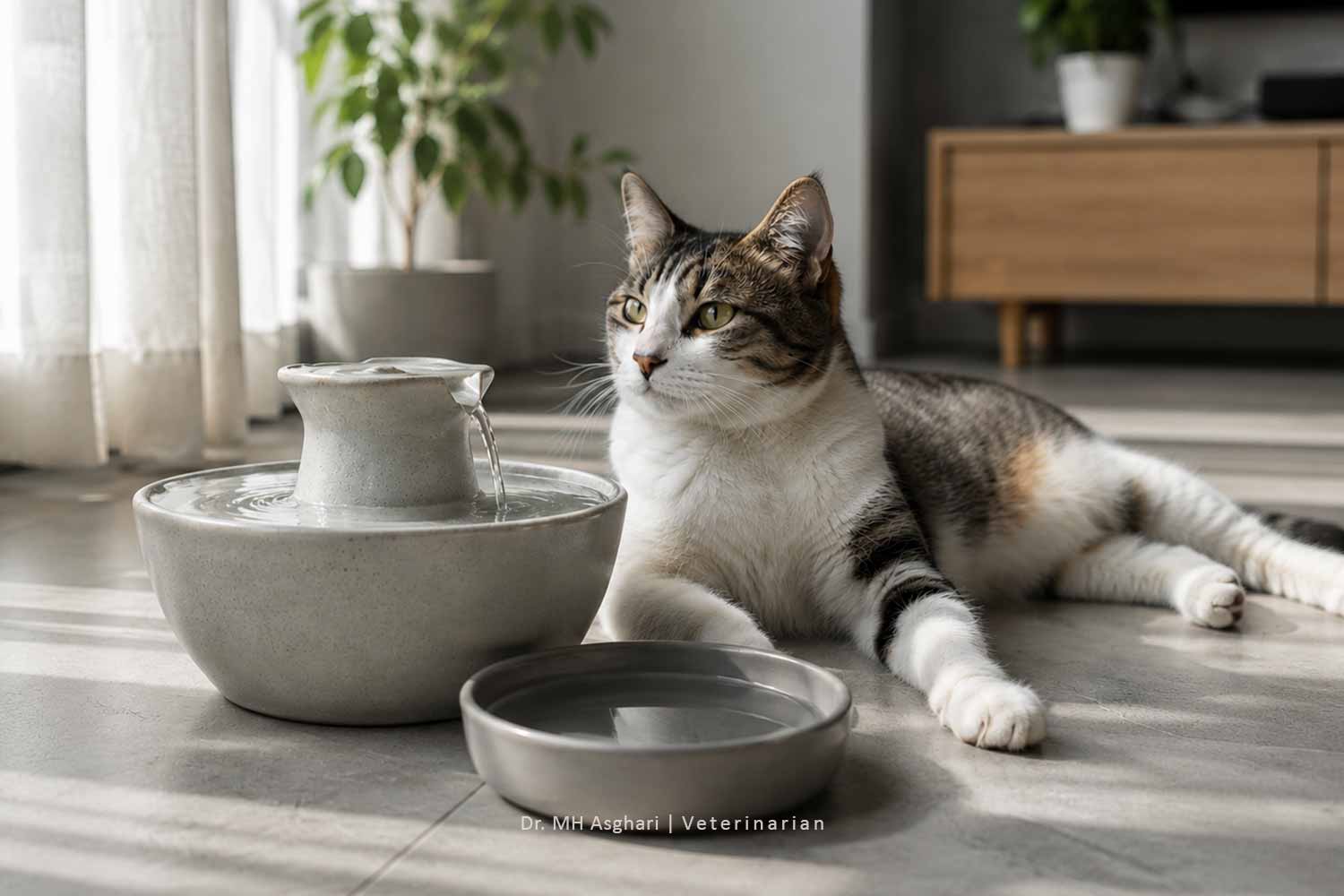
Some practical tips:
- Always have fresh water available
- Create a few cool spots in the house
- Avoid strenuous play during very hot hours
- Avoid hot, unshaded balconies
- Don’t leave your cat alone in a car
- Provide adequate ventilation for furry cats
Some cats love to sleep by a sunny window.
You don’t have to move them around all the time. They just need to have the choice to go to a cool place whenever they want.
Conclusion
Heatstroke in cats is not something that only happens in strange or very rare circumstances.
Sometimes a hot house, a summer afternoon, or a few hours of power outage are enough to put a cat’s body under stress.
The important thing is that cats usually show symptoms late.
For this reason, seemingly minor behaviors such as:
- panting
- lethargy
- hiding
- or loss of appetite
should not be completely ignored.
In most cases, if we notice it early and act quickly, the problem can be controlled.
The purpose of this article was not to scare you; it was just that the next time your cat suddenly becomes very quiet in the middle of summer, your brain will be faster at distinguishing between “normal drowsiness” and “maybe he’s not feeling well.” After all, pets don’t have an instruction manual, and humans, by long tradition, usually don’t take obvious symptoms seriously until the moment of crisis.
Frequently Asked Questions
۱. Is panting in cats always dangerous?
It should almost always be taken seriously, especially in hot weather or when accompanied by lethargy.
۲. Is a fan enough to cool a cat?
It sometimes helps, but in extreme heat, it is better to have a cooler environment, fresh water, and good ventilation.
۳. Are long-haired cats more likely to get heatstroke?
Yes, especially if the environment is poorly ventilated or the cat is overweight.
۴. Is it normal for cats to sleep a lot in the summer?
To some extent, yes. But if it is accompanied by a loss of appetite, abnormal breathing, or severe lethargy, it should be investigated.
۵. Can heatstroke in cats be fatal?
Unfortunately, yes. If it becomes severe, it can lead to organ damage or even death.
۶. Can house cats get heatstroke too?
Yes, even cats that never go outside can get heatstroke. If the house is poorly ventilated, there is not enough water available, or the cat is left in a warm room with no airflow, their body temperature can gradually rise. Furry cats, flat-faced breeds like Persians, and older or overweight cats are more at risk than other cats.
۷. Is a fan enough to cool a cat?
A fan can help circulate air, but it is not always enough to prevent or treat heatstroke in cats. If the ambient temperature is very high, a fan alone will not be enough to reduce a cat’s body temperature. The best solution is to provide a cool environment, provide constant access to fresh water, and prevent your cat from being exposed to extreme heat. If signs of heatstroke are observed, such as panting or extreme lethargy, a fan should not be used alone.
۸. Does trimming your cat’s fur prevent heatstroke?
Not necessarily. Contrary to popular belief, a cat’s fur coat is not just for keeping the body warm, but also protects the skin to some extent from the heat of the environment and direct sunlight. Trimming the fur completely, especially in long-haired cats, may even increase the risk of sunburn and skin damage. If you have any doubts about trimming your cat’s fur in the summer, it is best to consult a veterinarian before taking any action.
۹. Can a cat get heatstroke again after it has fully recovered?
Yes. Experiencing heatstroke once does not make cats immune or resistant to extreme heat. If the same conditions are repeated, the cat may get heatstroke again. In some cases, if the previous heatstroke has damaged internal organs, the animal will even be more sensitive to extreme heat than before. That is why it is important to follow preventive measures throughout the summer.
۱۰. Is it okay to put ice in the cat’s water?
In most cases, it is okay to add a few ice cubes to the water bowl to keep it cool, as long as the cat still wants to drink it. Some cats do not like very cold water and may drink less. It is important to note that when a cat is suffering from heatstroke, you should not directly cool the animal with ice or ice water, as the sudden drop in body temperature can make the condition worse. Cool, fresh water is usually the safer and more appropriate choice.