
Introduction
Some sounds become so commonplace that we don’t even notice them until they’re gone. The sound of a leash dragging on the floor, the soft meowing coming from behind the door, or the dog that greets you excitedly every evening. When these sounds are suddenly removed from our lives, it’s not just the house that becomes quieter; it’s as if a part of our lives has also been silenced.
If you’re grieving the loss of a pet, you’ve probably heard phrases like “It was just a pet” or “You’ll get another one.” Perhaps that’s why you’ve been hiding your grief. Many pet owners feel like no one understands them and even feel ashamed for crying over their pet.
The reality is different. Psychological research and the experiences of thousands of dog and cat owners show that grieving for a pet is a completely normal reaction. The relationship that develops between humans and animals is not just a simple coexistence; it is a combination of love, habit, security, responsibility, and daily companionship. For this reason, the end of this relationship can cause deep pain.
In this article, we explore why pet grief is so real, why many people don’t take it seriously, and how to cope with this grief without guilt or shame.
Why is bereavement so painful?
A bond that isn’t just emotional, it’s also etched in the brain
Many people who have never had a pet think that the intensity of grief depends on whether the person they lost was a “human” or an “animal.” But psychology and neuroscience paint a different picture.
The human brain responds to the depth of attachment more than it does to a relationship. When you live with a dog or cat for years, a bond develops that goes beyond feeding and caregiving. The animal gradually becomes part of your life, a presence that seems so natural that you often don’t realize its importance until it’s gone.
Maybe you filled your cat’s food bowl every morning before you ate breakfast yourself. Maybe your dog was an excuse every evening to get outside, take a walk, and get away from the hustle and bustle of the day. These small tasks, on the surface, are just daily habits, but in fact they are invisible threads that gradually form between humans and animals.

It is interesting to know that during affectionate interaction with a pet, a hormone called oxytocin is secreted in the human body; a hormone also called the “attachment hormone.” This same hormone is also increased during hugging loved ones, the emotional connection between parents and children, or even the affectionate look between a human and a dog. For this reason, the bond between a human and a pet is also a real relationship from a biological perspective, not just a simple interest.
For this reason, bereavement of a pet is not just the loss of an animal. Sometimes the loss is a series of recurring moments that have silently become a part of life; the sound of paws running on the ceramic tiles of the house, the soft meow that was heard every night before going to bed, or the excitement that awaited you when you opened the door.
One psychologist in the field of grief has an interesting saying: “We don’t just lose creatures; we also lose the future that we thought we would still have with them.” This saying is absolutely true when it comes to bereavement of a pet. Suddenly, there are no more evening walks, no more games, or that familiar look that used to comfort you after a hard day, without any judgment.
To better understand this, imagine a person whose cat has been waiting for him at the door every day for twelve years after he came home from work. After the cat dies, he will continue to pause for weeks, even without realizing it, when he opens the door; it’s as if his brain is still expecting the same welcome. This is not a strange reaction. The human brain needs time to change habits that have been repeated for years.
That’s why grieving for a pet can be so deep and real. You haven’t just lost an animal; you’ve lost part of your daily routine, a sense of security, unconditional companionship, and memories that may have been woven into the fabric of your life for years. If this grief seems overwhelming to you, it doesn’t mean you’re being overly sentimental; it simply means that the relationship you formed with your pet was real, deep, and valuable.
Some People Don’t Just Lose Their Pet
The sad part is that sometimes when a pet dies, it’s not just a beloved creature that’s gone.
Some people don’t just lose their pet when their pet dies; they also lose a part of their daily routine, a part of their routine, and a part of their emotional security.
Maybe your cat used to sleep on your lap every night before bed. Maybe your dog was the excuse for an evening walk. Maybe it was the only creature that sat next to you without judgment after a hard day.
When that presence is gone, the void is much bigger than anyone realizes. That’s why pet grief can last for months.

Why Don’t Many People Take Pet Grief Seriously?
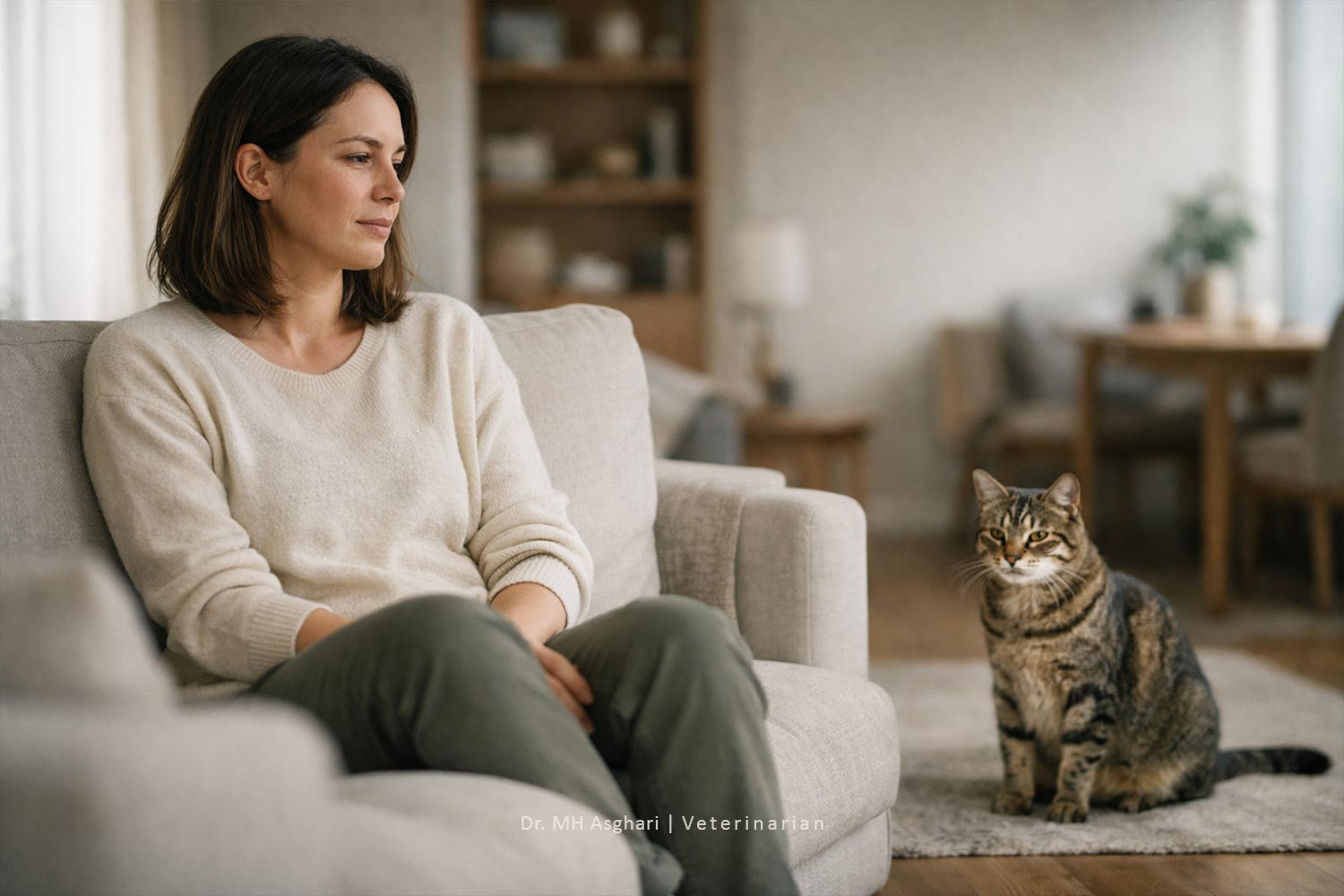
One of the most painful parts of grieving a pet is not the loss itself; it’s the feeling you experience afterward, when you realize that many people around you don’t understand the depth of your grief.
After the death of your dog or cat, you may have heard these words instead of a sympathetic statement:
- “It was just an animal.”
- “Don’t beat yourself up so much.”
- “Get another one, it’ll be okay.”
- “So many people are losing people, are you crying for an animal?”
Most people who say these things don’t mean to hurt you. They usually haven’t had the emotional experience of living with a pet and can’t imagine the depth of that attachment. So they’re unwittingly trying to minimize your grief.

But for someone who has lived with a pet for years, these sentences can multiply the feeling of loneliness.
“Unseen Grief”; When Society Doesn’t Recognize Your Grief
In psychology, there is a concept called Disenfranchised Grief, which can be translated as “unrecognized grief” or “unseen grief.”
This concept refers to grief that a person truly experiences, but that is not considered important enough by those around them or even society. In such a situation, the person not only faces the pain of losing their loved one, but also feels that they have no right to talk about or express this pain.
Unfortunately, pet grief is one of the most well-known examples of this type of grief.
Unlike when a family member dies, when people around them usually offer support with messages of condolence, attendance at ceremonies, or sympathy, the death of a pet is often met with silence, indifference, or even judgment. This difference can leave many pet owners feeling like their grief is “unseen.”
Why do some pet owners feel ashamed?
It may seem strange, but many people try not to cry in front of others after the death of their pet.
Some people remove their pet’s photo from their desk, don’t talk about the death, or even respond with, “It’s okay, I’m fine” when someone asks how they’re doing.
The reason for this behavior is usually not that their grief has subsided; it’s because they’re afraid of how others will react. They worry that if they say they’re still crying for their dog or cat after a few weeks or months, they’ll seem sentimental, weak, or exaggerated.
But the truth is that feeling ashamed is not a natural part of grieving for a pet; it’s the result of social judgments. There are no scientific or human standards that determine who is “allowed” to grieve the loss of a loved one.
What to do when no one understands my pet’s grief?
If you feel like the people around you don’t understand, first of all, remind yourself that the validity of your feelings does not depend on the approval of others.
Sometimes talking to someone who has experienced the loss of a pet is much more comforting than hearing dozens of clichéd comforting statements. Even reading about the experiences of other pet owners or attending support groups can make you feel like you’re not alone.
At the same time, not everyone around you needs to be able to understand the depth of your relationship with your pet. Some experiences are only understandable to those who have lived them.
If you find yourself constantly thinking to yourself these days, “No one understands my pet’s grief,” know that many people have experienced exactly the same feeling. This feeling is not a sign that grieving a pet is abnormal; Rather, it is largely the result of society not yet recognizing the value and depth of the emotional relationship between humans and animals as it should.
Signs of Pet Grief; What Emotions Are Normal?
When we talk about grieving a pet, the first thing that comes to mind for most people is crying. But grief is not just about shedding tears.
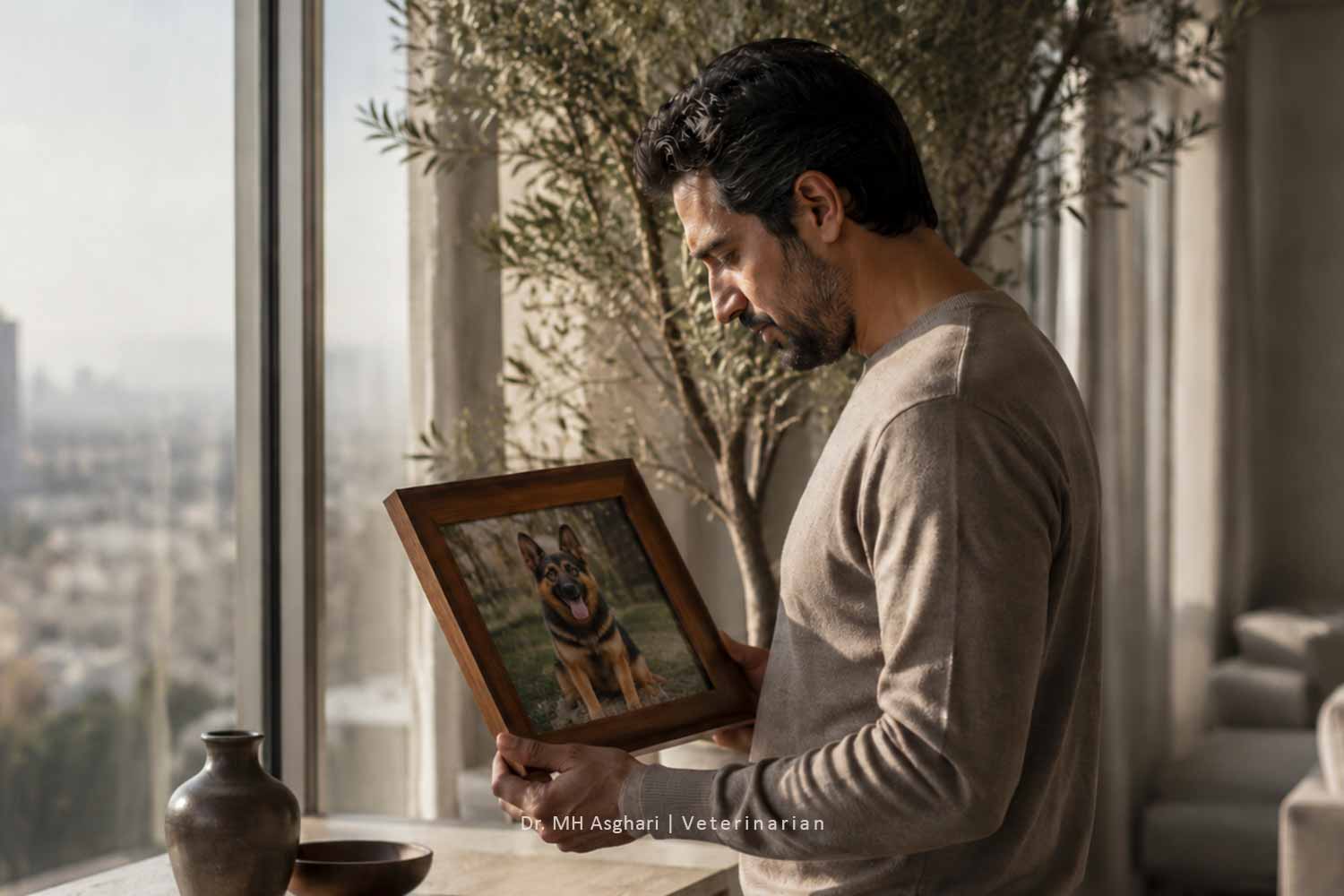
Losing a pet that has been a part of your daily life for years can bring on a variety of emotions and reactions, some of which are so unexpected that you may even worry and ask yourself, “Is this normal?”
The good news is that most of these feelings are part of the natural grieving process. Everyone experiences this journey differently, and not everyone is going to react exactly the same.
You may be constantly waiting for your pet to be there
One of the most common experiences after losing a pet is that your brain is still waiting for the animal to be there.
You may subconsciously expect your dog to run towards you when you open the door or your cat to come out from around the corner of the room. You may even subconsciously look for him a few moments after you spill food on the floor, waiting for him to come and pick up the pieces of food as usual.
These events do not indicate that you have not accepted reality. The human brain needs time to adjust to a sudden change, especially when a behavior has been repeated every day for years.
The house may seem too quiet
Many pet owners say that the first thing that bothers them after the death of their pet is the silence in the house.
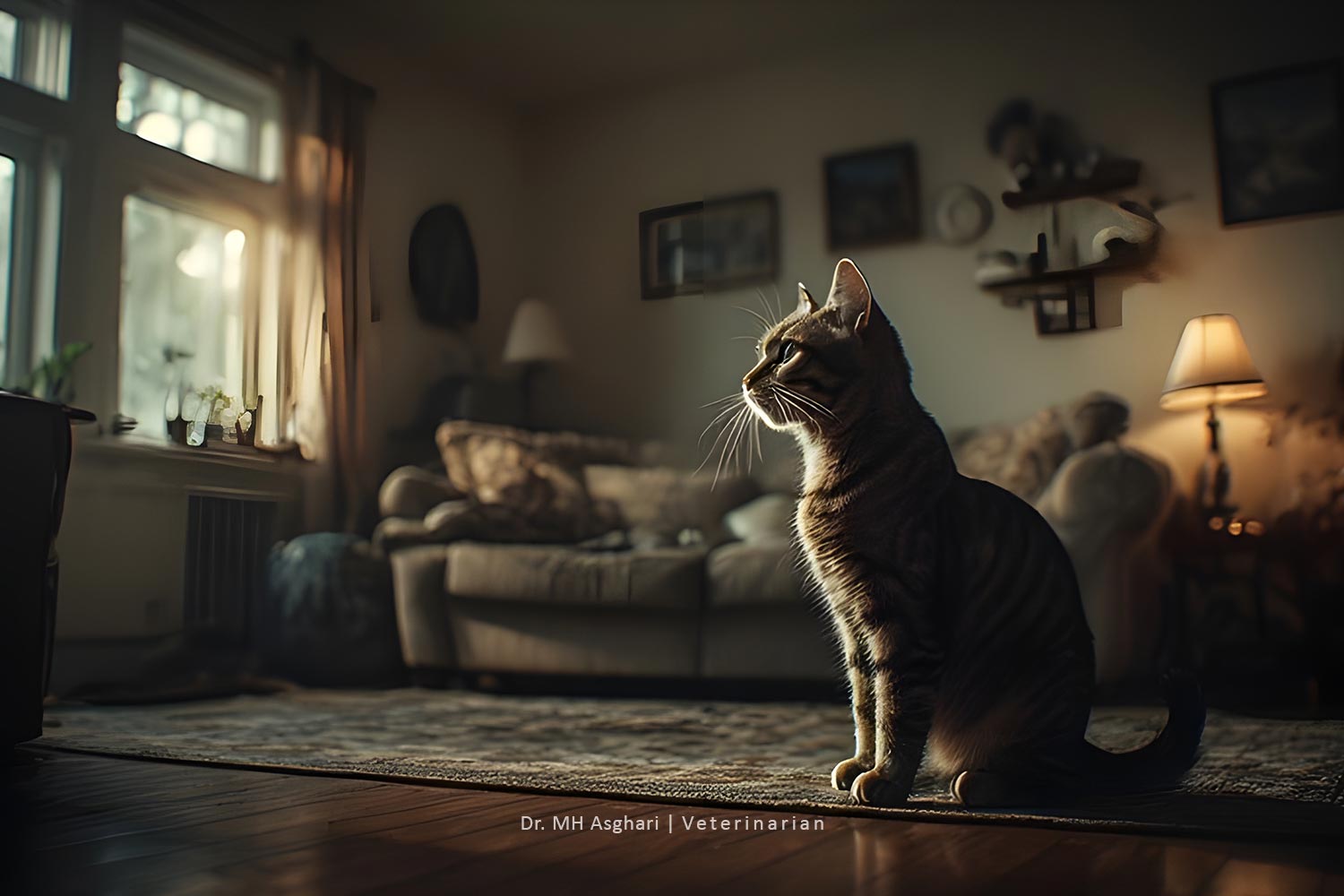
The silence that was there before but was never noticeable, filled with the sound of paws, the jingle of a collar, the purr of a cat, or the short bark of a dog.
Sometimes this silence is more painful than the absence of the pet itself, because it is a constant reminder of the emptiness. This feeling is one of the most common experiences of pet bereavement.
You may not pack up your pet’s belongings
Some people pack up their food bowls, toys, or bedding immediately after their pet dies. Others may not be able to handle them for weeks or even months.
None of these reactions are necessarily right or wrong.
If you’re not ready to let go of your pet’s belongings yet, it doesn’t mean you’re “stuck” in your grief. Sometimes, these belongings are the last tangible link to shared memories, and letting them go takes time.
It’s important not to make this decision under pressure from others.
Feeling Guilt, Even If You’ve Done Everything Right
One of the most complex emotions to experience when grieving a pet is guilt.
You may find yourself asking yourself,
“What if I had taken him to the vet sooner?”
“What if I had stayed with him longer that day?”
“What if there was another treatment?”
These questions are usually formed out of love and affection for the animal, not out of reality. The human mind, after a great loss, looks for a way to feel like it could have changed the outcome.
While it is helpful to examine events logically, constant self-blame does not help to alleviate grief. For this reason, feelings of guilt are so common that they could be the subject of an article in their own right.
It’s completely normal to experience emotional fluctuations
You may be able to smile about your pet today, but tomorrow you’ll burst into tears again when you see an old photo or hear a dog barking on the street.
This doesn’t mean you’re going backwards.
Bereavement from a pet usually doesn’t have a straight path. Some days you’ll feel better, and some days the sadness will return with the same intensity. These ups and downs are a normal part of your brain and heart adjusting to a major loss.
When should you get these reactions checked out?
Most of the reactions mentioned above are normal and will lessen in intensity over time.
But if weeks or months have passed and your grief is still so intense that it’s interfering with your sleep, appetite, family relationships, work, or ability to perform daily activities, it’s a good idea to talk to a psychologist or mental health counselor.
Getting help doesn’t mean that you’ve lost your pet. Sometimes we just need a safe space to express our feelings without fear of judgment.
Ultimately, the most important thing to remember is that there is no set timeline for grieving. Some people cope with loss quickly, while others need more time. Comparing yourself to others usually only makes the journey harder.
Is it normal to feel like no one understands my pet’s grief?
Yes.
One of the most common searches on the internet is “No one understands my pet’s grief.”
This feeling is very common among pet owners. Many even choose not to talk about their pet’s death because they are afraid of how others will react.
But hiding your pet’s grief doesn’t usually make it go away; it just makes it harder to cope.
Sometimes talking to someone who has been through it is much more comforting than hearing dozens of clichés.
Why do some people experience pet grief more intensely?

One of the questions that many people have after losing a pet is why some people seem to recover relatively quickly from the loss of their pet, while others continue to live with deep sadness for weeks or even months.
The truth is that there is no one-size-fits-all approach to grief. Just as no two relationships are exactly alike, no two experiences of bereavement are the same.
A variety of factors can make the loss deeper and longer for one person, without it being a sign of weakness or unhealthy attachment.
When a Pet Has Been a Companion in Lonely Days
For many people, a pet is not just a companion; it is the closest companion in everyday life.
Imagine a person who lives alone. Every day after work, the only creature that greets them with enthusiasm is their dog or cat. He spends weekends with her, talks to her, and her presence makes the house feel less quiet and empty.
In such circumstances, pet grief is not just the loss of a pet; it is the loss of an important part of daily communication with the world around them.
When a pet has been with you through tough times
Some relationships are formed in specific circumstances, and this makes them deeper.
Perhaps your pet has been with you through illness, the loss of a loved one, divorce, immigration, or a period of depression. Perhaps it was the only creature that stayed by your side every day, without expectation or judgment.
In these situations, the memory of a pet is not limited to playing or feeding. He has become a part of the important memories of your life, and it is natural for the loss of a pet to be accompanied by more complex emotions.
The length of time you have lived together matters
Attachment does not depend only on the degree of interest; time also plays an important role.
A pet that has lived with you for ten or fifteen years has probably been present in many important seasons of your life; from moving house to having a child, starting a new job, or even going through difficult times.
The more memories you share, the more the void in that relationship is usually felt.
Of course, that doesn’t mean that grieving for a pet can’t be intense if your pet was with you for a short time. Sometimes a short but very deep relationship can have a more lasting impact than years of coexistence.
Each person’s personality changes the way they grieve
Some people express their feelings more easily, while others prefer to experience their grief in silence.
Neither of these two methods is inherently right or wrong. The important thing is to allow yourself to experience your feelings and not deny them.
Sometimes a person may seem calm on the outside, but months later, when they see a photo or hear their pet’s name, they suddenly burst into tears. This is not unusual and does not indicate that their grieving process has gone wrong.
Does more love mean more intense grief?
Not always.
The intensity of grief for a pet depends not only on the amount of love, but also on the role the animal played in your life.
For one person, their dog was the partner of all evening walks. For another, their cat was the only companion on long lonely nights. For another, their pet is a reminder of a loved one who is no longer with them.
For this reason, it is useless to compare your grief to others. Two people may have lost both their dogs, but their relationship stories are completely different.
Ultimately, bereavement from a pet is a personal experience. If you feel like your pain is deeper than others expect, it doesn’t necessarily mean you are more sensitive or weaker. Sometimes it just means that the relationship you lost held a special place in your life; and each unique relationship brings its own unique grief.
If you have decided to undergo euthanasia, grief may be more complicated.
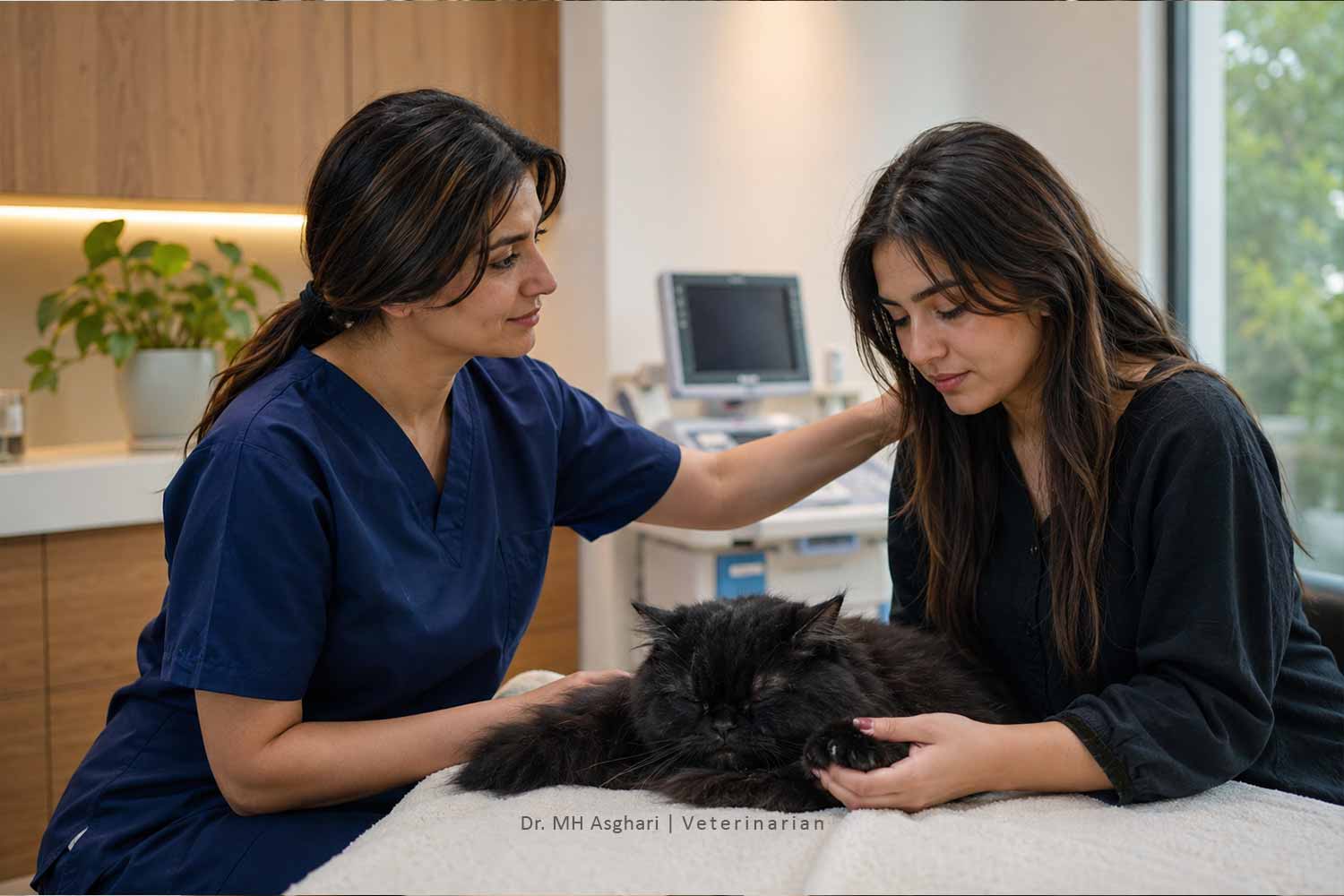
Not all pet owners are faced with the sudden death of their pet. Sometimes illness, severe pain, or a decline in quality of life force the family and veterinarian to make a very difficult decision; a decision that may be made out of love, but is then accompanied by very heavy emotions.
In such cases, bereavement for a pet is often not just about the loss. It is also accompanied by feelings of guilt, doubt, and constant reliving of past events.
Many pet owners repeatedly ask themselves these questions after euthanasia:
- “Did I rush it?”
- “What if I had tried a different treatment?”
- “Maybe he could have stayed with me for a few more days or weeks.”
- “Did I really have the right to make this decision?”
If these questions sound familiar to you, you are not alone. These thoughts are very common among people who have had their pet euthanized.
Why do pet owners feel guilty after euthanasia?
One of the main reasons for this feeling is the responsibility that pet owners have towards their pet.
When a pet becomes ill, you are the one who decides whether to treat it, whether to continue its care, or ultimately euthanize it. This role often causes the mind to look back many times after the event is over, searching for a way that might have led to a different outcome.
But there is one important point to note; after a great loss, the human mind usually only reviews the possibilities of salvation, not the suffering that the animal endured before.
For this reason, many people gradually forget the pain and hardship of the last days of the disease, and only the question remains in their minds: “What if I had made a different decision?”
Kindness does not always feel good
Sometimes the kindest decision is the hardest decision.
When a veterinarian, after examining the animal, concludes that the disease is incurable and that continuing life will only be accompanied by severe pain, euthanasia can be a way to end the animal’s suffering, not to end the value of life.
However, knowing this does not necessarily make the guilt go away.
Many pet owners will later say, “Logically, I knew I had made the right decision, but my heart still didn’t agree.”
This conflict between logic and emotion is a normal part of grieving for a pet.
Don’t tire yourself out with “what ifs…”
One of the hallmarks of grief is the creation of hypothetical scenarios.
- “If I had known sooner…”
- “If I had gone to a different vet…”
- “If a new treatment had been discovered…”
These “what ifs” usually have no definitive answers, but they can occupy the mind for weeks or even months.
Remember that you made your decision with the information, resources, and circumstances of the time, not with the knowledge you have today and after the event. Judging past decisions with today’s information almost always ends in guilt.
Don’t confuse love with guilt
Sometimes pet owners think that if they don’t feel guilty, they don’t love their pet enough.
But the two are not the same thing.
Love is seen in the care, attention, nighttime wake-ups, visits to the vet, concern for the animal’s well-being, and all the moments you spent trying to make it comfortable. Feelings of guilt, while very common in the bereavement of a pet, are not a measure of how much you care.
If you’ve done everything you can to help your pet, it’s kinder to show the same compassion for yourself today.
If you’re still feeling this way…
If it’s been months since your pet died and you still blame yourself every day for the decision to euthanize your pet, talking to a psychologist or even a veterinarian who was involved in the pet’s treatment can help.
Sometimes hearing the medical facts again, remembering the animal’s condition in its final days, and talking about feelings can help ease the heavy burden of guilt.
The important thing is that bereavement after euthanasia is usually more complicated than other grief. If it takes you longer to cope, it doesn’t mean you’re weaker; it just means you’ve made a decision that’s both loving and responsible, and it’s a difficult decision for any human being to accept.
Is the human-animal relationship really like a family relationship?
For many people, the answer is yes.
In many families, pets are not just animals; they are part of the home.
They stay by their owners’ side during difficult times, reduce anxiety, reduce feelings of loneliness, and their presence becomes part of the family’s psychological security.
For this reason, bereavement from a pet can be very similar to the loss of a loved one in terms of intensity of emotion; although it manifests itself differently in different people.
Should I get a new pet right away?
There is no single answer.
Some people feel better after a while with another animal, while others are not yet emotionally ready.
If the goal of getting a new pet is simply to escape the grief of losing a pet, constant comparisons between the new pet and the old one may make the adoption process more difficult.
Each animal has its own unique personality, and neither is meant to fill the void of another.
What can help you cope with the loss of a pet?
You don’t have to fight your feelings. Grief is a natural part of the grieving process.
Here are a few simple things you can do to help make the process easier:
- Let your feelings be real.
- Talk to someone you trust about your pet.
- Don’t delete photos or fond memories.
- If you like, create a small memorial for your pet.
- Don’t beat yourself up for the intensity of your grief.
These steps won’t make the grief go away, but they will help you grieve your pet’s loss in a healthier way.
Children and Pet Grief: When One of the First Experiences of Loss Happens
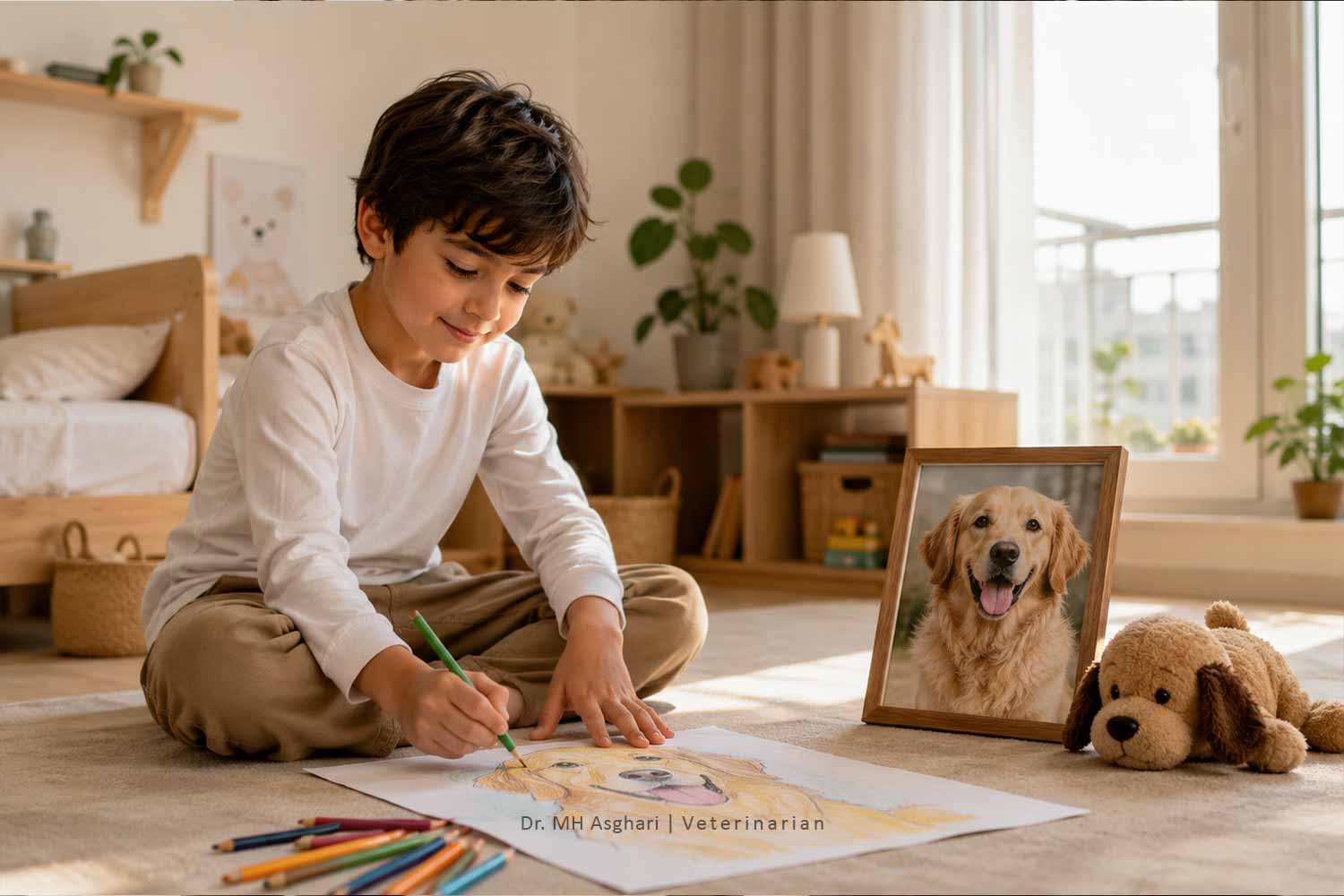
For many children, the death of a pet is their first real encounter with the concept of loss. For this reason, bereavement in children can be accompanied by reactions that seem unexpected or even alarming to parents.
Some children cry for hours, some become silent, and others constantly ask questions:
- “When will he come back?”
- “Where is he now?”
- “Couldn’t the doctor save him?”
None of these reactions are unusual. Children, just like adults, need time to understand and accept the loss.
Tell the truth in simple language
You may be tempted to protect your child by saying, “He went away on a trip” or “He went to sleep.”
But child psychologists generally advise against using vague explanations. These statements can make your child wait for the pet to return or even be afraid to go to sleep.
It is best to explain honestly, in age-appropriate language, that the pet has passed away and will not return, but the memories and love will always remain.
Let your child express their feelings
Some parents are quick to say things like:
“Don’t cry.”
“Be strong.”
“Stop being sad.”
These are usually meant out of love, but they can send the message that it is wrong to be sad.
Instead, you can say:
“I know you loved him very much.”
“I miss him too.”
“It’s okay to be sad.”
These simple statements can help your child experience their feelings in a healthier way.
A small farewell ceremony can help
Not all farewells need to be formal or elaborate.
Sometimes lighting a candle, drawing a picture of your pet, printing a photo, writing a letter, or planting a flower in his memory can help your child better accept the concept of the end.
These things won’t take away the grief of your pet, but they will show your child that love and memories are valuable, even after death.
What are some things you should not do after losing a pet?
When it comes to dealing with a major loss, there is no perfect guide. However, some behaviors can make the process of grieving a pet more difficult.
Don’t suppress your feelings
Sometimes people think that if they don’t talk about their pet or cry, they will get better faster.
But feelings that are not expressed often don’t go away; they just take on a different form and may linger for a longer period of time.
It’s perfectly normal to feel sad if you miss your pet.
Don’t blame yourself all the time
After the death of a pet, it’s easy to get caught up in a cycle of blame.
You may find yourself replaying past events over and over again, searching for something you did wrong that would have made things different today.
Reviewing events is helpful for learning, but living in the past and constantly repeating “I wish…” only adds to the burden of bereavement for your pet.
Don’t force yourself to get another pet right away
Sometimes well-meaning people say,
“The sooner you get another dog or cat, the better off you’ll be.”
For some people, this decision can be helpful, but not for everyone.
If you’re still comparing every animal to your previous pet or feel like you’re just trying to fill in the void, it may not be the right time to make this decision yet.
Your new pet isn’t going to replace your old one; it’s going to create a whole new relationship with you.
Don’t compare yourself to others
A friend may be back to normal after a few weeks, but you still cry when you see a photo.
That doesn’t mean you’re any weaker.
Every relationship has its own story, and every pet loss journey is different.
Grieving is not a straight path; it’s normal if you feel sad again.
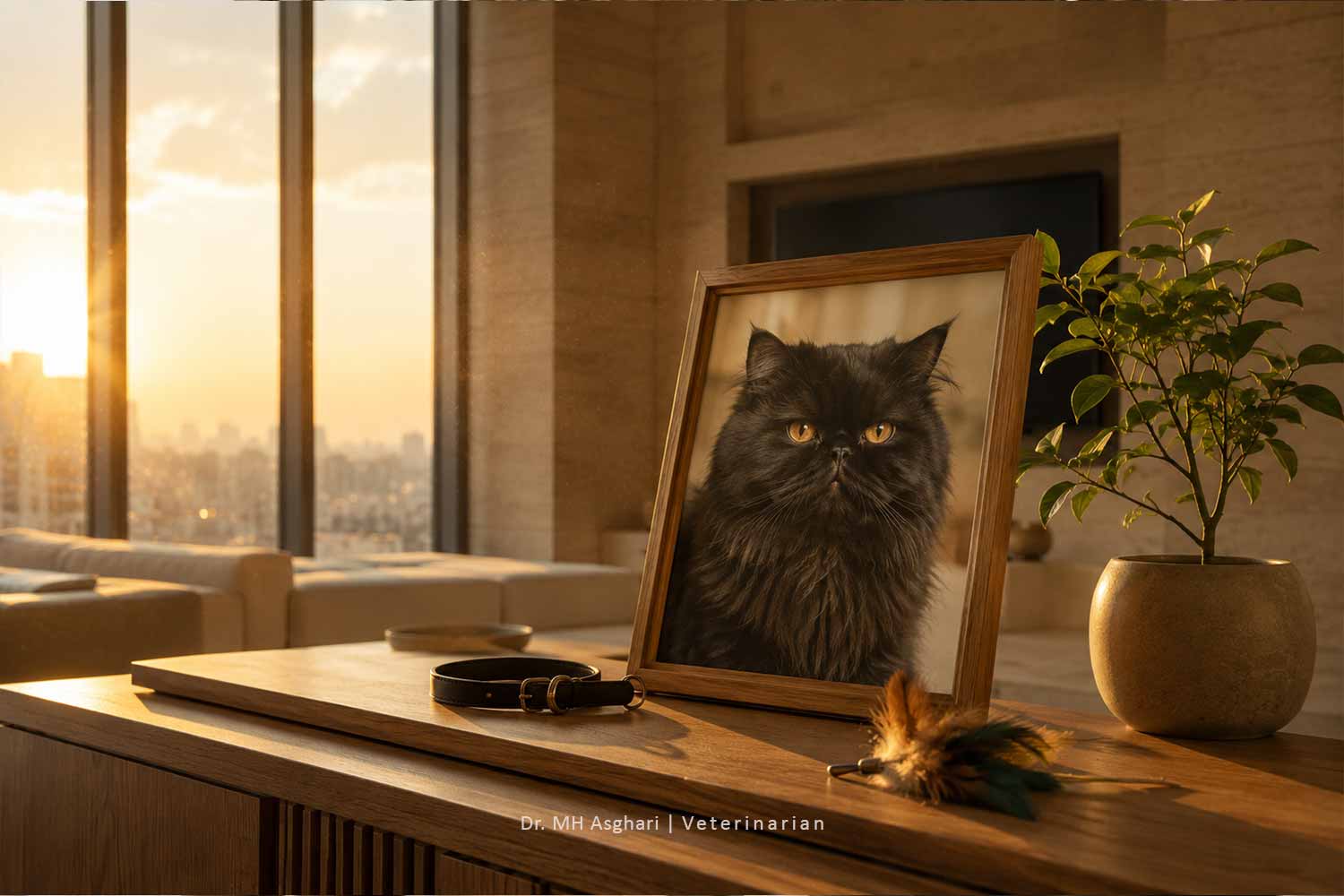
Many people think that the grieving process should be a straight line, where you get a little better each day until the sadness finally fades.
But the reality is often not.
Pet grief is more like a wave than a straight line.
You may feel calmer for a week, back to your normal routine, and even able to smile when you talk about your pet. But then, suddenly, the sight of an old collar, the sound of a dog barking in the park, or the discovery of a toy under the couch can bring back the sadness.
This does not mean failure or setback.
The human brain associates memories with everyday places, sounds, smells, and habits. That’s why certain moments can bring back old feelings, even if it’s been a long time since the pet died.
Special dates can bring back feelings
A pet’s birthday, the anniversary of their death, the first New Year’s Eve without them, or even the first time you’ve been to the vet in a long time can all bring back feelings of longing.
This is perfectly normal.
Many pet owners say they thought their pet was doing well, but on one of these special days, they shed tears again.
These tears don’t mean they’re starting to grieve their pet again; they’re just part of the natural process of living with a precious memory.
The goal isn’t to forget
Sometimes people think that if they still feel sad after a few months or even years, it means they haven’t come to terms with the loss.
But the goal of grieving isn’t to forget.
The goal is to learn to live with the memories, without letting them bring our whole lives to a standstill every time we think of them.
There will come a time when, instead of crying, you will smile at your dog or cat’s antics. You may still miss them, but those memories will gradually become more precious than painful.
This is the change that many people experience, slowly and over time, as they grieve the loss of a pet.
When is it best to seek help from a psychologist?
If weeks or months have passed and your grief is still so severe that it’s interfering with your sleep, appetite, work, or daily relationships, it’s a good idea to talk to a psychologist.
Getting help doesn’t mean you’re weak.
Sometimes we just need someone to listen to us without judgment.
Conclusion

Pet grief is a real, human, and honorable emotion. If you feel like a part of your life has changed after the death of your dog or cat, know that you are not alone.
There are no rules that say who you are “allowed” to grieve for. The bond that has been formed over the years with an animal can be as deep as its absence.
Time may help ease the pain, but what helps most is accepting the fact that your feelings are real and worth hearing.
Frequently Asked Questions
۱. Is pet grief normal?
Yes. Psychologists agree that this type of grief is completely real, and the intensity varies from person to person.
۲. Why do I feel guilty after my pet dies?
Guilt is a common reaction to pet grief, and many pet owners experience it, even if they have done their best to care for their pet.
۳. How long does it take to grieve the death of a pet?
There is no set time frame. For some people, it takes a few weeks, for others, it takes a few months or longer.
۴. Does getting a new pet help ease the grief?
For some people, yes, but it is best to make this decision when you are emotionally prepared.
۵. What if the people around you don’t understand my grief?
Try talking to people who have been through similar experiences or seek help from a psychologist if you need it. Most importantly, don’t discount your feelings.
Resources
- American Veterinary Medical Association (AVMA) | https://www.avma.org
- Association for Pet Loss and Bereavement (APLB) | https://www.aplb.org
- American Psychological Association (APA) | https://www.apa.org