

A Scientific Look at the Anatomy and Physical Secrets of Domestic Cats
If you’ve lived with a cat for a while, you’ve probably caught yourself thinking that its body seems to follow the laws of physics a little more loosely than most creatures. Not completely ignore them, but just enough to raise suspicion. A cat jumps down from the top of a wardrobe and lands perfectly fine. A cat slips through a gap that looks impossible to you. Or curls up on a sofa in a way that makes you wonder whether it even has bones.
The truth is, a cat’s body isn’t strange or magical.
It’s simply very precisely designed.
This article isn’t meant to dissect every bone like a veterinary textbook. Instead, it helps you understand what lies behind those soft movements, that quiet presence, the balance, and the lightning-fast reactions. Once you recognize the structure beneath them, a cat’s behavior starts to make more sense, and your expectations become more realistic.
Cat Anatomy: A Body Built for Hunting, Not for Living Indoors
A cat’s body is the result of millions of years of evolution. That evolution was about survival, not cuteness.
And yet, the final outcome is both efficient and elegant.
A cat’s skeleton consists of around ۲۳۰ bones, slightly more than a human’s. But the key difference isn’t the number. It’s how those bones connect and how freely they move. Many feline joints have a wider range of motion, especially in the shoulders, hips, and spine.
Unlike humans, a cat’s shoulders are not rigidly attached to a fixed collarbone. This gives the front legs far greater freedom of movement. You’ve seen the result countless times: cats passing through narrow spaces without getting stuck or compressing their bodies.
In practical terms, a cat’s body is designed to slip through, hide, and reshape itself instantly. In the wild, that flexibility meant the difference between a successful hunter and a hungry one.
The Cat’s Spine: A Living Spring
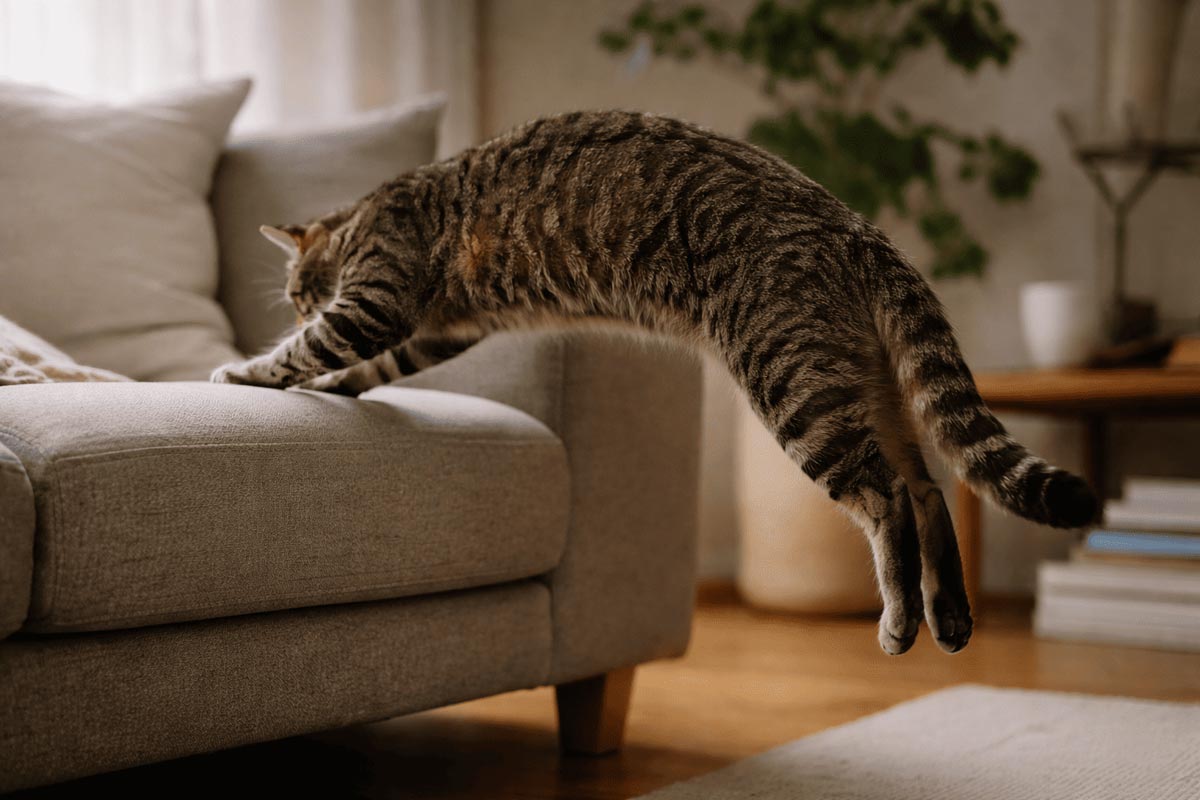
One of the most important features of a cat’s body is its spine.
The feline spine doesn’t just support the body. It actively drives movement.
Between the vertebrae are highly elastic discs that allow the spine to stretch, twist, and contract. That’s why, when a cat runs, its body extends and compresses with each stride, like a living spring.
You may have noticed that just before a jump, a cat pulls its body slightly backward, then stretches and suddenly releases. This is where the spine plays its central role.
That flexibility also comes with responsibility for the owner. A cat with limited movement or excess weight puts additional strain on this highly mobile spine. Over time, that pressure can lead to pain, reduced mobility, or even behavioral changes. Many behavioral issues in domestic cats have physical roots, not personality problems.
Physical Features of Cats: Small Details with Big Roles
A cat’s body is full of small details that play major roles in daily life. Because we see them every day, we often underestimate their importance.
Whiskers are a perfect example. They aren’t just long hairs. They are highly sensitive sensory tools that respond to air movement, distance, and vibration. A cat’s whiskers are usually about as wide as its body. This allows the cat to determine whether it can fit through a narrow space just by moving its head.
That’s why damaged or trimmed whiskers can make a cat anxious, unbalanced, or hesitant for a while. One of its primary tools for understanding the environment has been compromised.

A cat’s claws are also more than defensive weapons. Retractable claws allow cats to move almost silently. In nature, this silence was a major advantage. Even at home, it’s the reason your cat can suddenly appear behind you and scare the life out of you.
Physical Abilities of Cats: Balance, Reaction, and Split-Second Decisions
One of the most famous traits of cats is their ability to land on their feet. It’s repeated so often that it sometimes turns into myth. But there is solid science behind it.
Cats possess what’s known as the “righting reflex.” Their inner ear is extremely sensitive to head and body position. As soon as a cat is airborne, its brain processes balance information and adjusts the body for rotation. The flexible spine enables the twist, and the legs prepare for landing.
All of this happens in a fraction of a second.
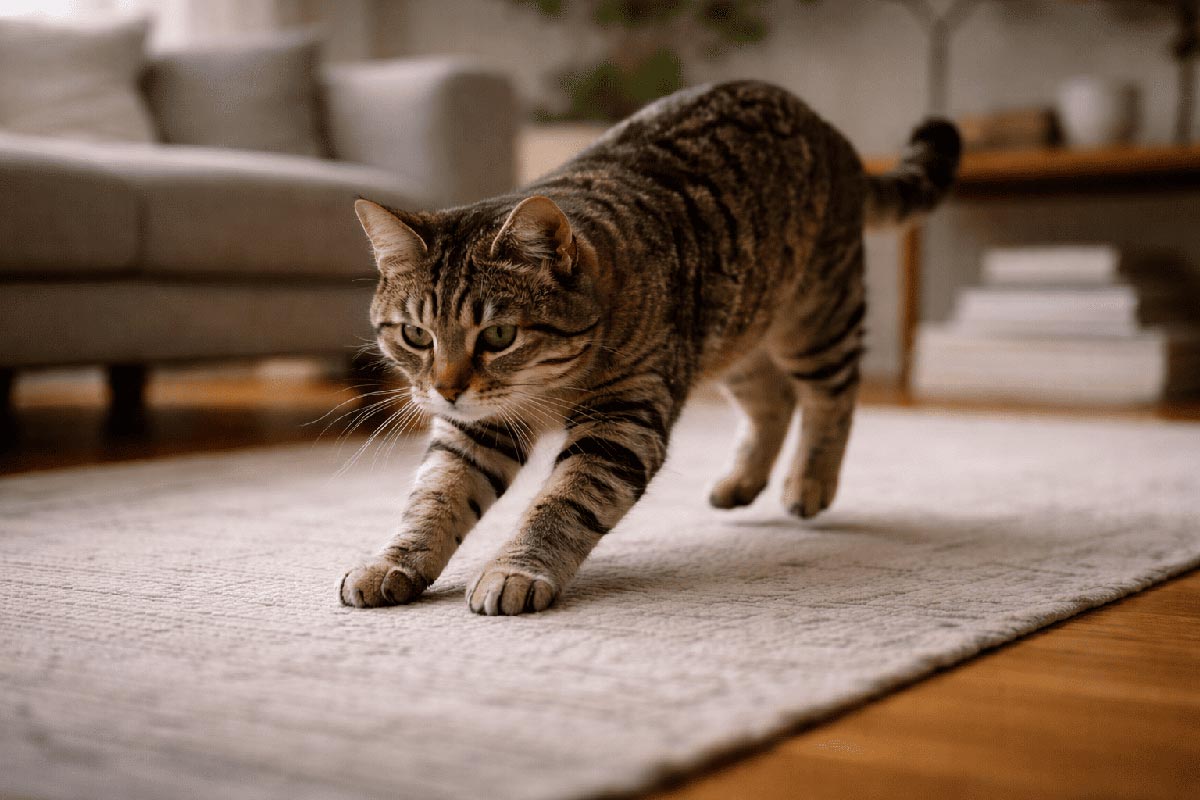
Still, it’s important to remember that this ability doesn’t make cats invincible. Falls from significant heights are dangerous. Many serious injuries in domestic cats happen because of the false belief that “cats always land safely.”
How Cats Differ from Other Pets: A Comparison That Changes Perspective
When you compare a cat’s body to a dog’s, the difference in design philosophy becomes obvious. Dogs are built for endurance. Their bodies support long pursuits, sustained running, and cooperative activity.