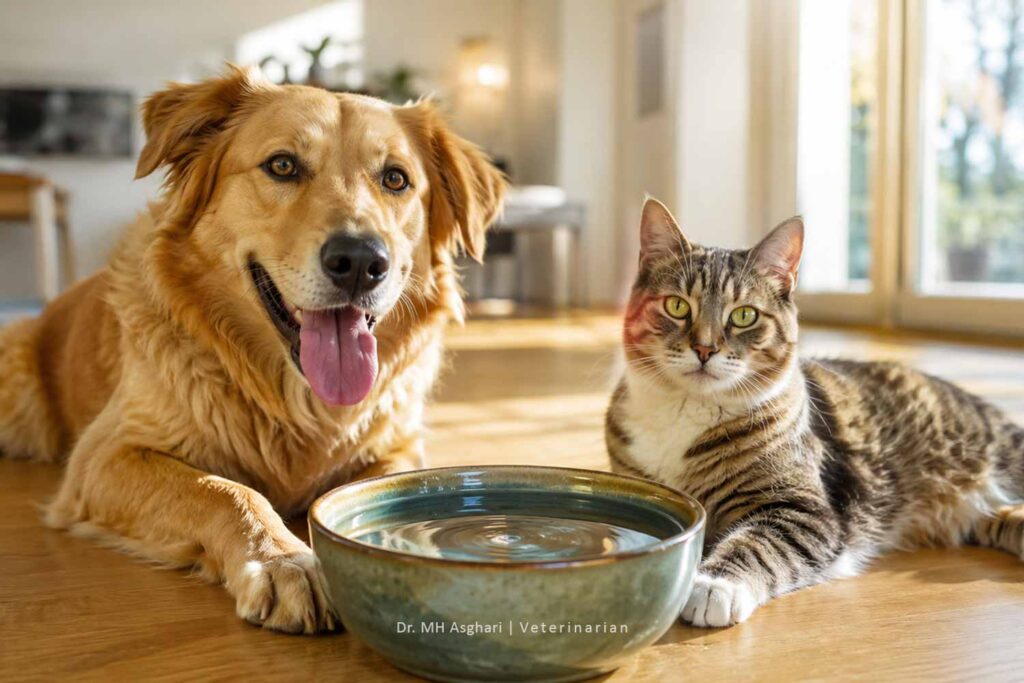
How do we know if our pet is drinking enough water?
As summer approaches, many pet owners have a common concern; is my dog or cat drinking enough water?
You may have checked the water bowl several times a day and thought to yourself, “I think he didn’t drink enough water today…” Or, conversely, you may have suddenly noticed that your pet is going to the water bowl more often than usual.
The reality is that a dog’s and cat’s water intake is not just a fixed number. Age, weight, type of food, activity level, ambient temperature, and even personality can affect how much water they need.
On the other hand, dehydration in dogs and cats doesn’t always start with obvious signs. Sometimes the animal is still playing, eating, and seemingly normal, but their body is losing much-needed water.
In this article, we will examine how much water dogs and cats should consume per day, what symptoms can indicate dehydration, and how to prevent more serious problems such as heatstroke on hot days of the year.
How much water should a dog or cat drink per day?
In general, veterinarians recommend that healthy animals drink between ۵۰ and ۶۰ ml of water per kilogram of body weight per day.
That is:
- A ۴ kg cat needs about ۲۰۰ to ۲۴۰ ml of water per day.
- A ۱۰ kg dog needs about ۵۰۰ to ۶۰۰ ml of water per day.
- A ۲۰ kg dog may drink more than a liter of water per day.
But these numbers are just a starting point.
If your pet is active outdoors, goes on long walks, or lives in a very hot area, your dog or cat’s water consumption can naturally increase.
Why do animals need more water in the summer?
Like humans, animals need water to regulate their temperature.
Dogs lose more body heat through panting. This process causes a significant amount of water loss.
Cats pant less in hot weather, but they still drink more water to maintain normal body function.
Many cases of dehydration in dogs and cats occur precisely on days when the owner thinks the pet is home and safe.
A warm house, a sunny balcony, or even a long nap by the window can increase the body’s need for water.
Do cats really drink less water?
Yes, and this is one of the most important things cat owners need to know.
Cats usually drink less water than their owners think, and many of them have a natural tendency to drink less water.
The reason for this is due to their desert ancestors. Over the course of evolution, cats have learned to survive on less water and get a large part of their moisture needs from their food.
But this trait is not always to their advantage.
Today, many cats mainly eat dry food. Dry food has very little moisture, which increases their need to drink water.
The problem is that some cats do not show obvious signs even when they are not getting enough water.
That is why assessing the water intake of dogs and cats is especially important in the case of cats.
How do you know if your pet is dehydrated?
Early detection of dehydration symptoms can prevent many problems.
Some of the most important signs of dehydration in pets include:
Dry gums
A healthy pet’s gums are usually moist and shiny.
If the gums look dry, sticky, or abnormal, the body may be dehydrated.
Decreased energy
Sometimes the pet owner thinks that the pet is just lazy.
However, decreased energy, less desire to play, or excessive sleeping can be early signs of dehydration in animals.
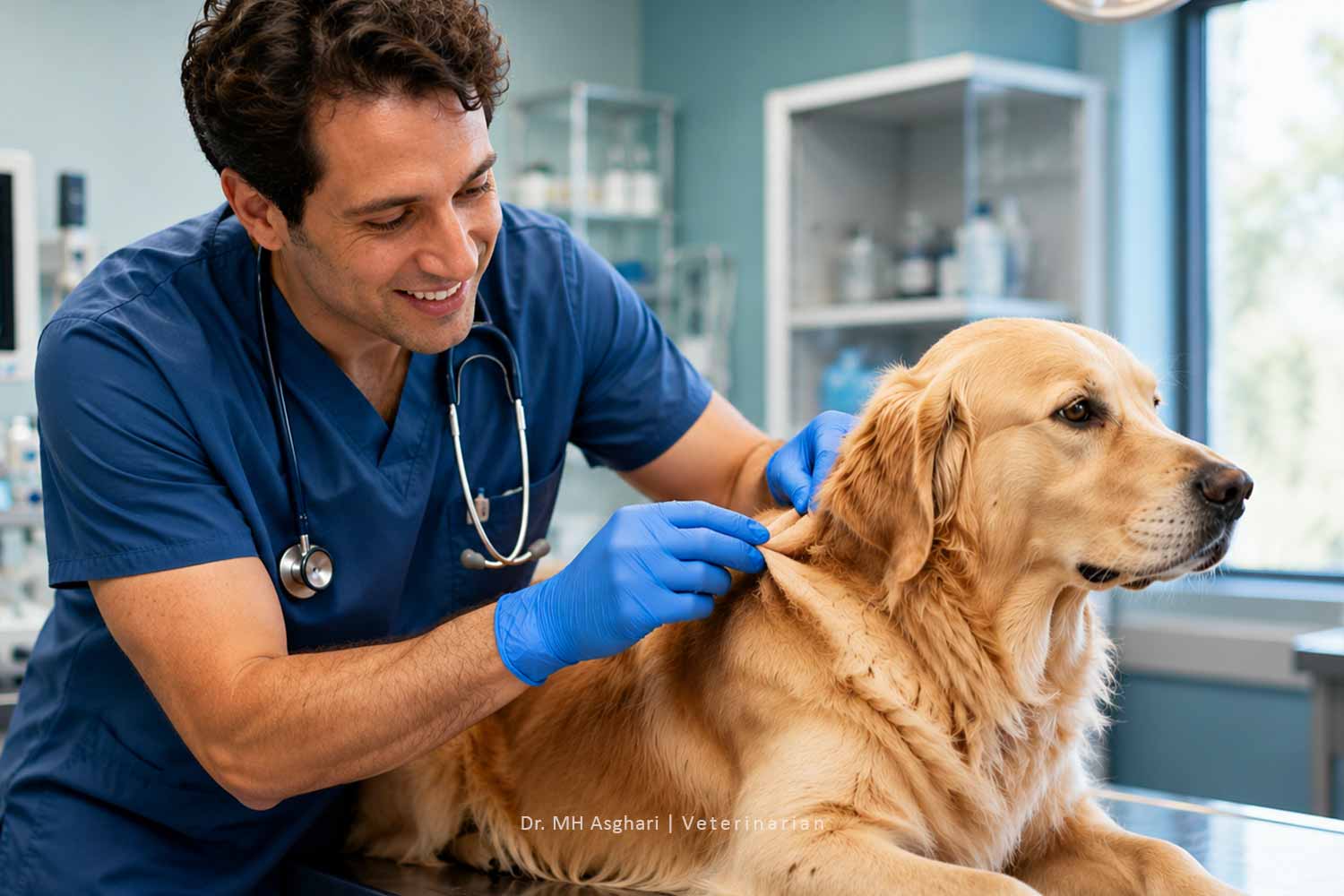
Sunken Eyes
In more severe cases, the eyes may appear slightly sunken.
Decreased Appetite
Some dogs and cats show less interest in food when they are dehydrated.
Increased Respiratory Rate
If your pet is in a cool environment but is still panting or breathing faster than usual, it is best to have them checked.
What to do if your pet won’t drink water?
One concern that is often heard, especially during the hot summer months, is:
“My cat has been drinking a lot of water today, is this normal?”
Or
“My dog goes to the water bowl but doesn’t seem to want to drink.”
Before you start imagining the worst-case scenarios, it’s a good idea to consider a few simple but important points.
The truth is, not all cases of reduced water consumption are related to illness. Sometimes the cause is something as simple as the location of the water bowl or even the temperature of the water itself.
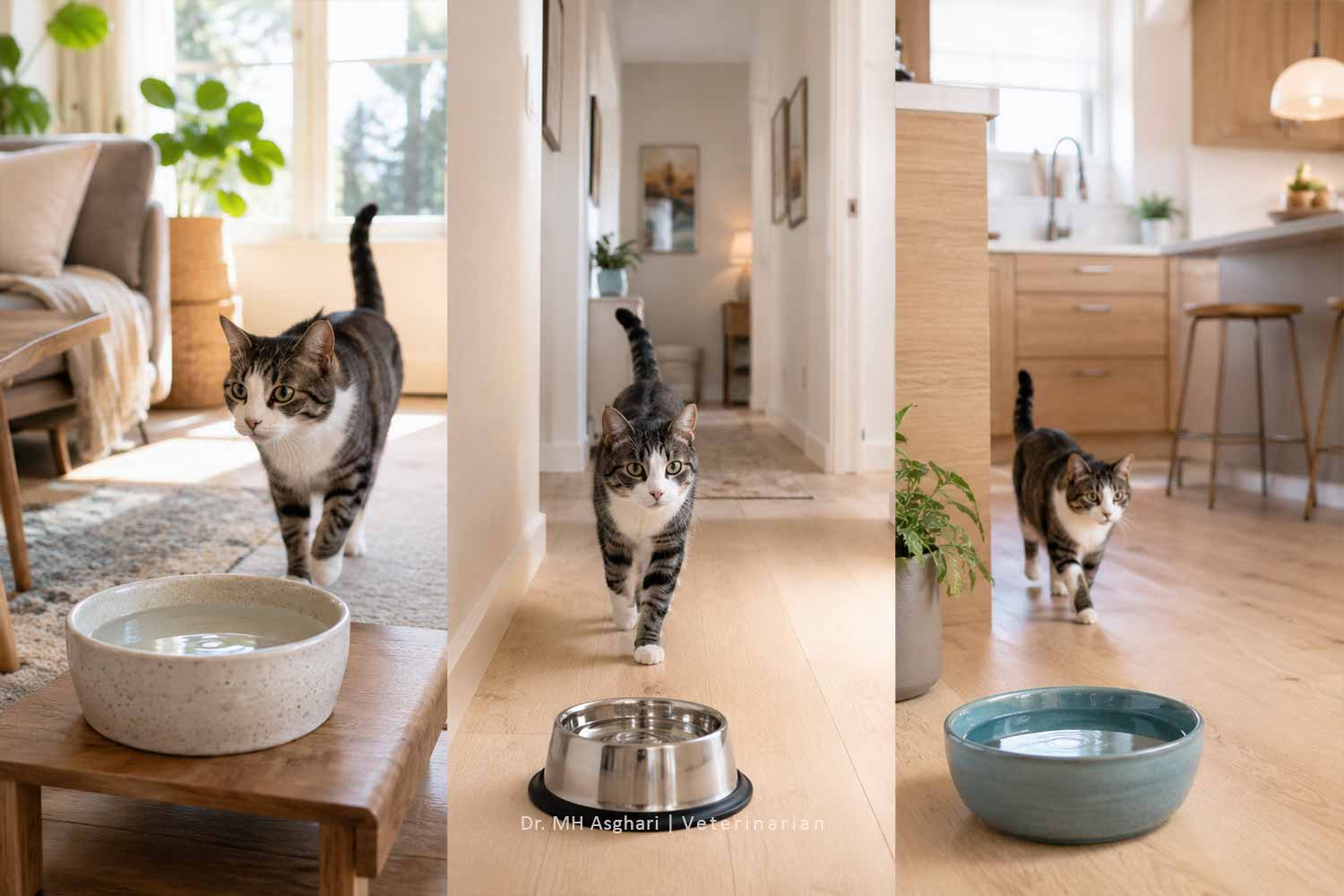
See the water bowl from an animal’s perspective
We usually only pay attention to how full the water bowl is, but animals have different criteria.
Many cats are sensitive to the smell of leftover food, detergent, or even the material of the bowl. Some cats don’t like plastic bowls and are more comfortable with stainless steel or ceramic bowls.
If it’s been a while since you washed the bowl, your cat may be less inclined to drink water, even if the water looks perfectly clean.
Sometimes a simple wash and change of bowl can solve the problem, which probably makes more sense to a cat than to most humans.
The location of the water bowl is more important than you might think
Some animals don’t like their water bowls next to their food bowls.
Some cats also don’t like their water bowls near their litter boxes.
In larger homes, placing multiple water bowls in different locations can significantly increase water consumption. Many pet owners find that their pet is already thirsty, but doesn’t like the long walk or location of the bowl to drink.
Fresh water is sometimes more appealing than cold water
In the summer, the water in the bowl can heat up in a matter of hours.
Some animals are sensitive to this temperature change and prefer to receive fresh water.
If you notice that your animal is drinking less water, try changing the water a few times a day. This can make a significant difference, especially for cats.
Cats Don’t Always Show Their Thirst
One of the interesting, if somewhat troublesome, characteristics of cats is that they don’t usually show their thirst like dogs do.
A cat can drink less water than its body actually needs for a long time and still seem perfectly normal.
For this reason, many veterinarians recommend that cat owners not only look at the water bowl but also pay attention to the cat’s overall condition, including activity level, urine quality, appetite, and daily energy levels.
Consider your pet’s diet
If your pet eats wet or canned food, some of the water it needs comes from its food.
In contrast, animals that eat mostly dry food usually need to drink more water.
That’s why two animals of the same weight can have completely different water intakes, and both fall within the normal range.
When is reduced water intake a concern?
If your pet is showing signs of lethargy, dry gums, vomiting, diarrhea, loss of appetite, or decreased activity in addition to drinking less water, it’s time to get serious.
It’s also a good idea to see your vet if your dog or cat refuses to drink water for a long period of time, especially in hot weather.
The important thing is not to find an exact number for water intake. It’s more important to understand your pet’s normal behavior. When you know how much water your dog or cat usually drinks, you’ll be able to spot any unusual changes much sooner, and early detection can sometimes prevent a serious problem.
Some Simple Ways to Increase Your Dog’s and Cat’s Water Consumption
Sometimes small changes can make a big difference.
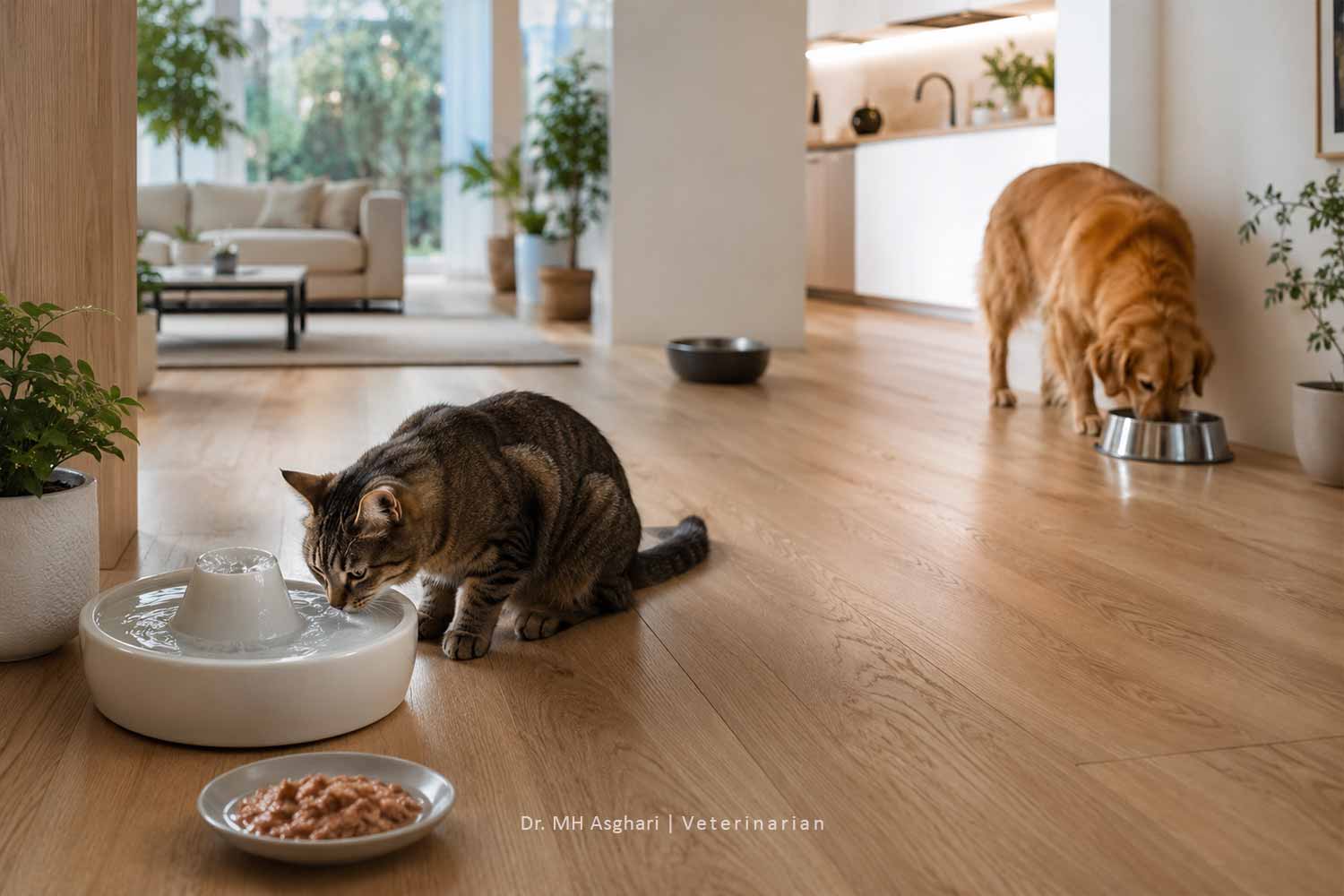
Use multiple water bowls
Placing multiple bowls in different parts of the house makes it easier for your pet to access.
Use wet food
Wet food for cats can provide a significant portion of their daily water needs.
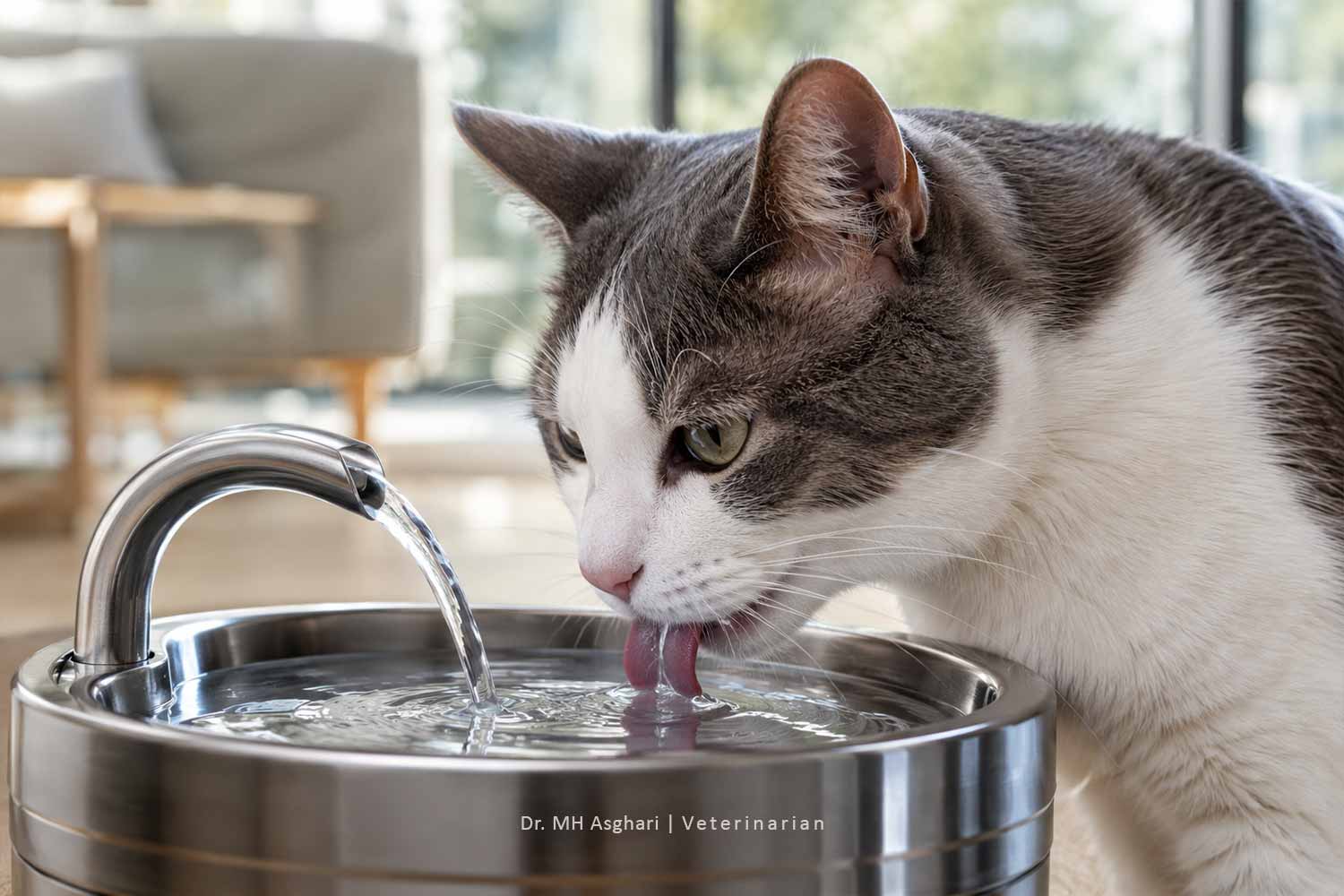
Use fountains
Many cats prefer running water.
Carry water with you on walks
It is essential for dogs to carry water, especially on hot days.
Keep the environment cool
The more moderate the ambient temperature, the lower the risk of dehydration and heatstroke.
Can drinking too much water be a sign of illness?
Yes.
Sometimes we focus only on dehydration, but a sudden increase in thirst can also be important.
If you notice that your pet is suddenly drinking a lot more water than before, without a change in temperature or physical activity, it is best to discuss the issue with your veterinarian.
Some diseases, such as:
- Kidney disease
- Diabetes
- Some hormonal disorders
- Infections
Can cause an abnormal increase in water consumption.
So checking your dog’s and cat’s water consumption is not just to diagnose dehydration; sometimes unusual changes can be an important clue to an underlying disease.
When should you see a vet?
Sometimes dehydration is just a little thirsty or dry mouth, and it can be treated with water and rest. But it’s not always that simple. In some cases, dehydration can affect the function of the heart, kidneys, and circulatory system in a short period of time.
If your pet shows any of the following symptoms, it’s best to see a vet right away.
Extreme Lethargy or Sudden Loss of Energy
All dogs and cats have their occasional sluggish days. But if an animal that usually greets you, plays, or responds to its surroundings suddenly spends most of its time in a corner or is reluctant to move, it could be a sign of dehydration or even the onset of heatstroke.
Many pet owners mistake this change for normal fatigue, when in fact it is sometimes the body’s first warning that something serious is going on.
Frequent Vomiting or Severe Diarrhea
Vomiting and diarrhea are two of the most common causes of dehydration in animals.
If your dog or cat is vomiting several times a day or has severe diarrhea, their body may be losing water and electrolytes faster than you think. This can be especially dangerous in puppies, kittens, and older animals.
Completely Refusing to Drink Water
A loss of appetite or decreased water intake isn’t always a cause for concern, but if your pet completely refuses to drink water for several hours, it’s worth investigating immediately.
Sometimes pet owners assume their pet will drink whenever they’re thirsty, but certain illnesses, pain, or nausea can disrupt this natural mechanism.
Abnormal Panting or Rapid Breathing
On hot days, panting is somewhat normal, especially in dogs. However, if your pet is in a cool environment and is still panting heavily, breathing seems abnormal, or won’t calm down, it’s time to take action.
This could be an early sign of heatstroke or heatstroke.
Weakness, tremors, or imbalance
If you notice your pet is unsteady while walking, has weak legs, or is shaking when standing, don’t expect the condition to improve on its own.
These symptoms could indicate dehydration affecting circulation or body temperature.
Possible signs of heatstroke
Heatstroke is a true veterinary emergency and can progress very quickly.
Symptoms such as:
- Heavy and constant breathing
- Restlessness or confusion
- Severe drooling from the mouth
- Red gums
- Severe weakness
- Vomiting
- Loss of consciousness
They require immediate action and emergency treatment for heatstroke.
Importantly, many pet owners assume that heatstroke only occurs when their pet is outdoors or in direct sunlight. In fact, even a parked car, a hot balcony, or a poorly ventilated room can create dangerous conditions.
Overall, if you feel that your pet’s behavior or physical condition is “not what it used to be” and this change is accompanied by signs of dehydration, it’s best to err on the side of caution. In many cases, an early visit to the vet can prevent a simple problem from becoming an emergency.
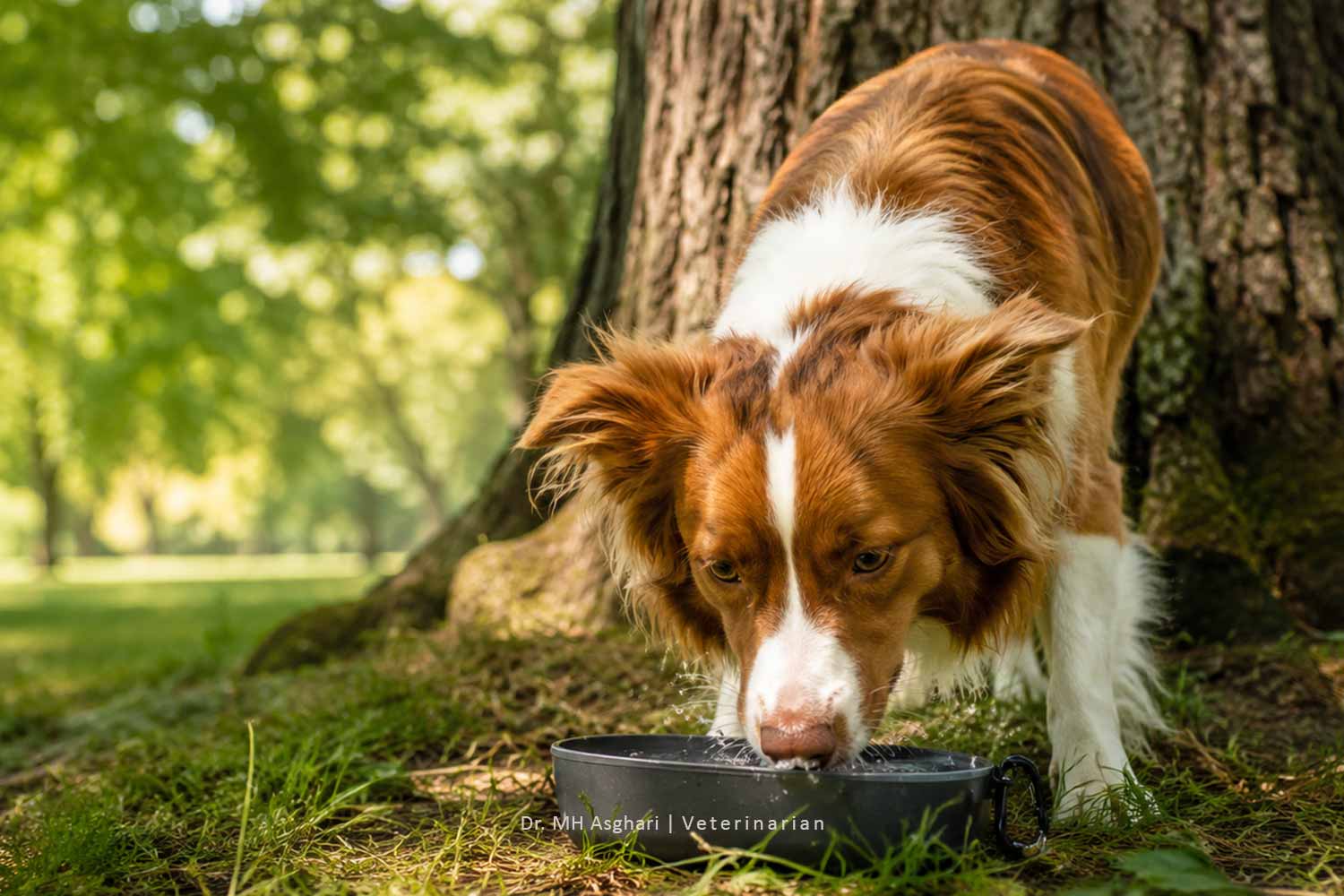
Summary
Taking care of your pet during the hot season is not just about providing shade or turning on the air conditioner.
Knowing how much water your dog or cat is drinking is one of the simplest but most important ways to keep them healthy.
If you know how much water your pet usually drinks, you will be able to notice any unusual changes sooner. This can help prevent dehydration, heat stroke, and even the late detection of some diseases.
You don’t have to worry every time your pet drinks a little less water. But knowing their natural water consumption patterns is one of the best tools any pet owner can have to care for their furry friend.
Frequently Asked Questions
۱. How much water should my dog drink in the summer?
On average, about ۵۰ to ۶۰ ml per kilogram of body weight per day, but this amount increases with heat and activity.
۲. My cat drinks very little water; is this normal?
Cats usually drink less water than dogs, but if they eat dry food, their water intake should be monitored more carefully.
۳. What are the most important signs of dehydration in dogs and cats?
Dry gums, decreased energy, and lethargy are the most common symptoms.
۴. Can wet food help with hydration?
Yes. Wet food provides a significant portion of the animal’s daily water needs.
۵. Is a sudden increase in water consumption dangerous?
It is not always dangerous, but it can be a sign of some diseases and is best checked by a veterinarian.
Resources
- https://vcahospitals.com/know-your-pet/dehydration-in-dogs
- https://vcahospitals.com/know-your-pet/dehydration-in-cats
- https://www.petmd.com/dog/general-health/how-much-water-should-a-dog-drink
- https://www.petmd.com/cat/nutrition/how-much-water-should-cat-drink
- https://www.avma.org/resources-tools/pet-owners/petcare/warm-weather-pet-safety