
It’s Probably Happened to You Too
You’re running late in the morning. Your cup of tea is still half full. Your dog follows you around, excitedly circling your feet. Your cat, as usual, has jumped onto the counter and is watching you. But you’re in a hurry. Without meaning to, your voice rises:
“Not now!”
A few minutes later, everything is quiet.
But it isn’t a peaceful kind of quiet.
Most Mistakes Dog and Cat Owners Make do not come from a lack of love. They come from exhaustion, rushing through the day, or simply not knowing better. They come from the simple assumption that “my pet understands what I meant.”
The reality is that many sources of stress for pets are unintentionally created by us inside our own homes.
If you’ve recently found yourself wondering, “Why has my pet suddenly become so anxious?” or “Could my behavior be causing this?”, this article was written for exactly that moment of doubt.
No one is here to assign blame.
We’re simply going to look at the most common Mistakes Dog and Cat Owners Make, how to recognize them, and what you can do to correct them.
Mistreating Dogs and Cats: When Good Intentions Lead to Bad Outcomes
Yelling or Suddenly Changing Your Tone of Voice: One of the Most Common Mistakes Dog and Cat Owners Make
Among the many Mistakes Dog and Cat Owners Make, suddenly raising your voice is perhaps the most common and, at the same time, one of the most underestimated.
To us, it feels like a brief reaction.
To a pet, it feels like a sudden change in the safety of their environment.
When your tone changes without warning, your pet doesn’t understand the reason behind it. All they experience is the result:
The environment is no longer predictable.
And unpredictability is one of the most significant causes of stress in companion animals.
Many Mistakes Dog and Cat Owners Make begin at exactly this point, the moment our reaction happens faster than our awareness.
What Does a Dog Understand? What Does a Cat Experience?
When faced with this type of inappropriate behavior, dogs and cats respond differently.
Dogs are generally relationship-focused in their reactions:
- They lower their bodies.
- Their tails drop.
- They avoid eye contact.
- Sometimes they become overly active in an attempt to reduce tension.
Cats are often more environment-focused:
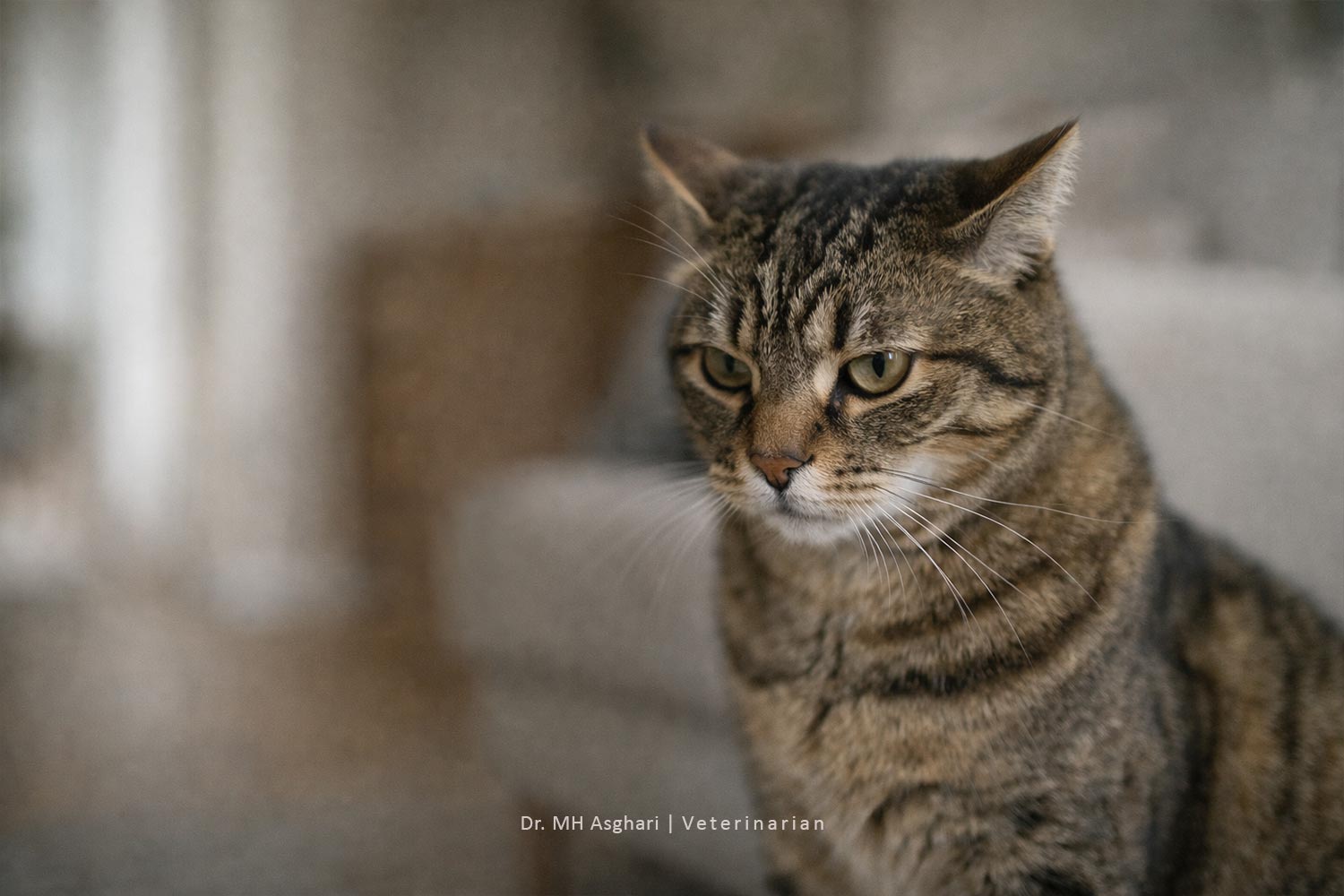
- Their ears move backward.
- Their pupils dilate.
- They create distance or hide.
When this pattern becomes repetitive, it turns into one of the common mistakes made when caring for dogs and cats at home, creating a source of chronic stress.
Not intense stress.
Just the kind that slowly wears them down.
A Correction That Actually Works
Among the many Mistakes Dog and Cat Owners Make, this is fortunately one of the easiest to fix if we become aware of it:
- Pause for half a second before reacting.
- Consciously lower your tone of voice.
- Use short, consistent commands.
- If you’re angry, step away from the situation instead of taking it out on your pet.
Pets do not primarily react to volume.
They react to consistency.
And consistency means safety.
Delayed Punishment: The Mistake That Makes a Relationship Feel Unsafe
Another of the most serious Mistakes Dog and Cat Owners Make is punishing a pet long after the behavior has occurred.
Imagine coming home and discovering that something has been damaged.
Several minutes later, you find your pet and scold them.
From your perspective:
Damage happened, therefore punishment follows.
From your pet’s perspective:
You arrived, your tone changed, and suddenly things feel unsafe.
They cannot connect your reaction to something they did several minutes earlier.
A pet’s learning window is short.
A few seconds, not a few minutes.
This is one of the most significant training mistakes in pet ownership because instead of learning, “That behavior was wrong,” the animal learns:
“Sometimes my owner becomes unpredictable.”
What happens next?
- Reduced trust
- Increased anxiety
- More hiding behaviors
- Or even defensive reactions
Some owners mistake this response for “feeling guilty.”
In reality, it is usually a reaction to the owner’s energy and body language rather than an understanding of wrongdoing.
What Is the Healthier Alternative?
If you catch the behavior in the moment:
- Respond calmly and immediately.
- Interrupt the behavior.
- Redirect your pet toward the correct option.
- Reinforce the desired behavior.
If you notice it too late:
Don’t punish.
Manage the environment.
Adjust the circumstances instead.
Many Mistakes Dog and Cat Owners Make come from assuming that pets think according to the same sense of time that humans do.
They don’t.
Their learning depends on timing and repetition.
Once we understand this difference, a large part of the stress experienced by dogs and cats at home begins to resolve naturally.
Not through greater intensity.
Through greater consistency.
Sources of Pet Stress That We Often Create Ourselves
Over-Affection and Stress in Cats
More affection is not always better.
Some owners see their cat and immediately pick them up. The cat tolerates it for a few seconds. Then the tail starts flicking rapidly, the ears move slightly backward…
And suddenly, a swipe of the paw.
This is one of those things that can unintentionally make a pet anxious.
Cats want an “exit option.” If they do not have a way to withdraw from the interaction, their stress level rises.
The Fix
Let the pet initiate the interaction.
When you notice signs of discomfort or fatigue, stop.
Guests, Noise, and Constant Handling
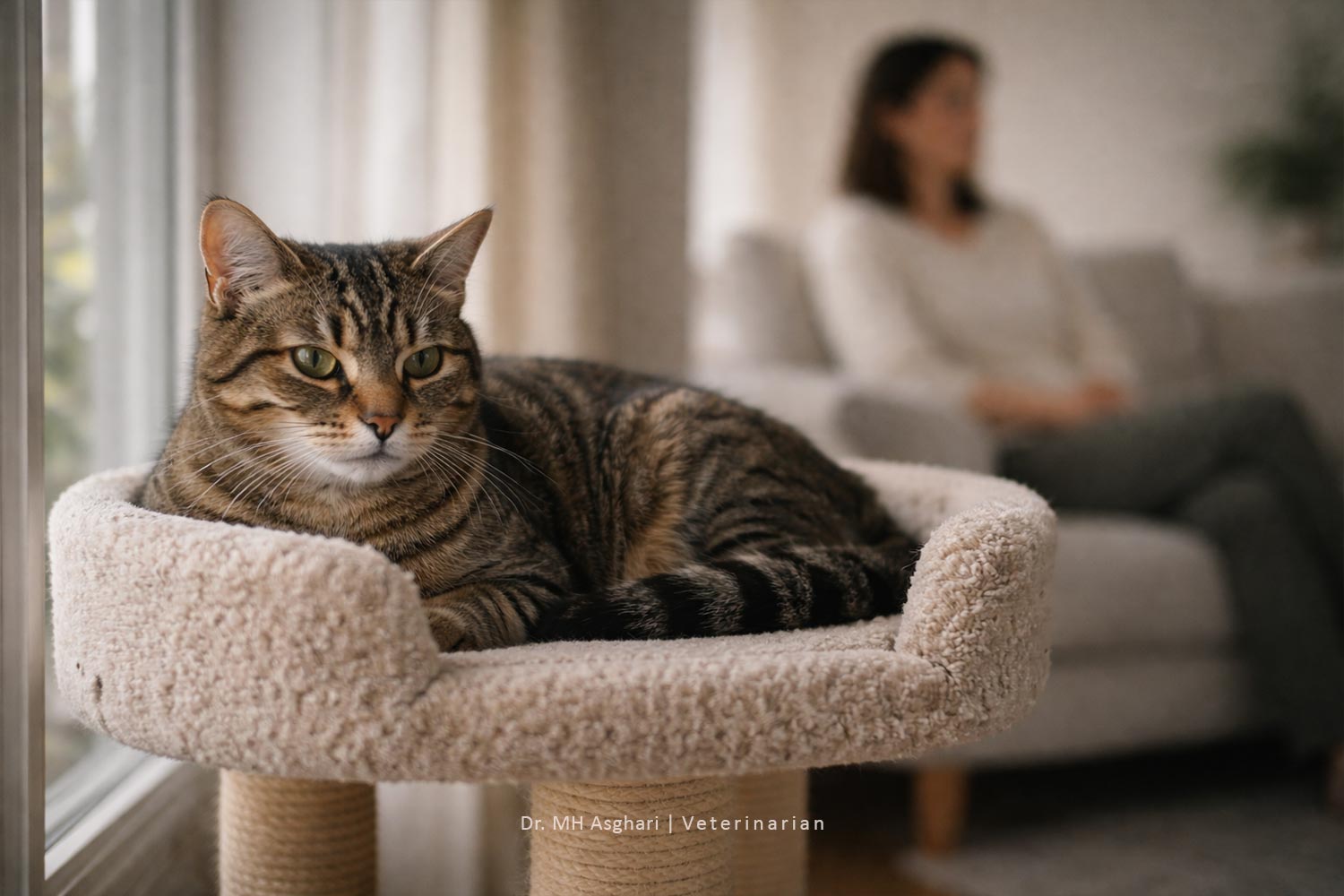
In homes with frequent visitors, one of the most common causes of stress in dogs and cats is constant activity and stimulation.
A dog may become overly excited, bark excessively, or jump around.
A cat is more likely to hide.
Create a safe space.
- A quiet room
- A high perch for the cat
- A crate or designated corner for the dog
Feeling safe is more important than being social.
A Cause of Stress in Dogs and Cats at Home: When Routine Quietly Falls Apart
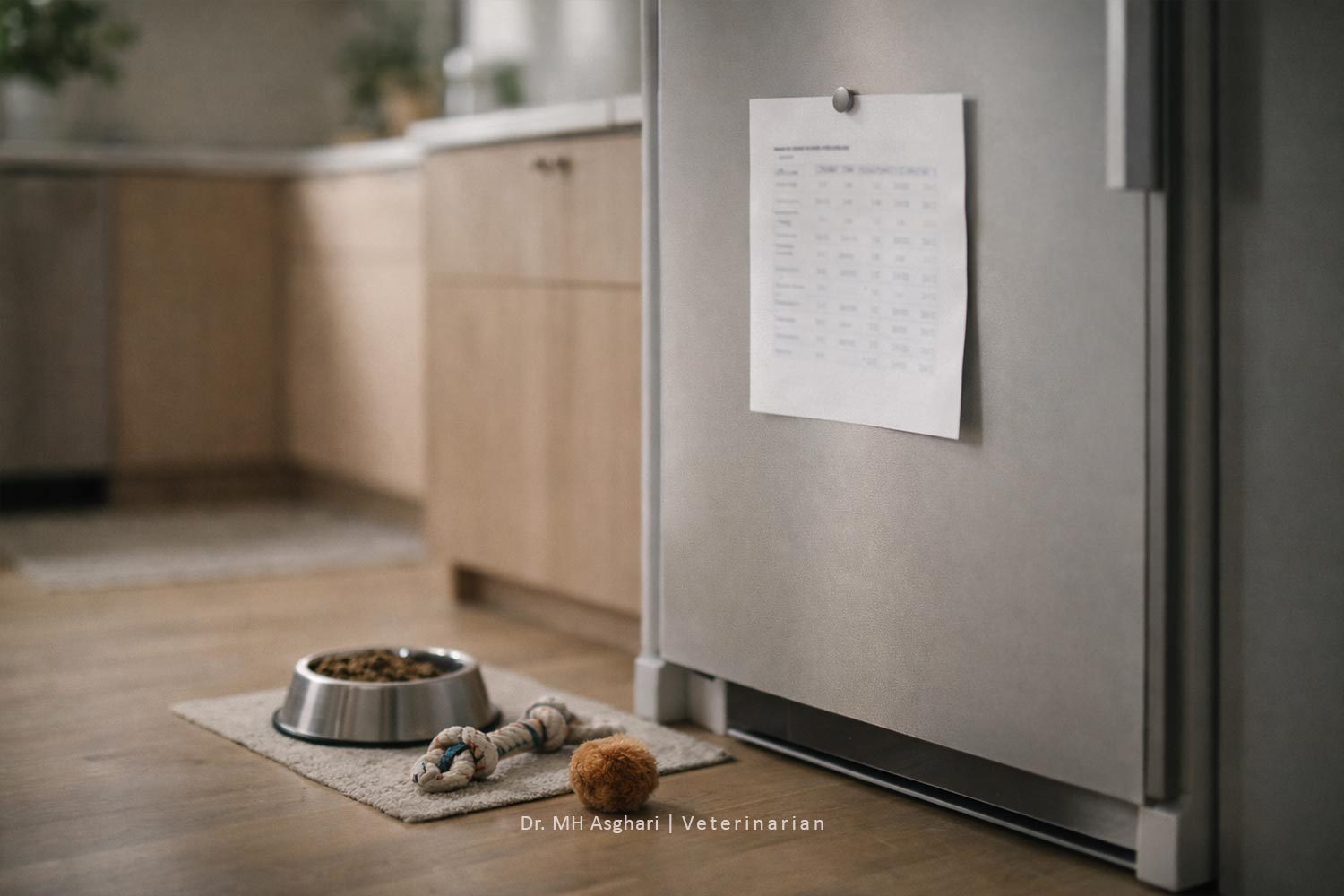
Sudden Changes in Schedule
Changes in routine and stress in cats are directly connected.
If feeding times, sleeping schedules, or play sessions constantly change, cats become unsettled.
Dogs become restless as well.
One of the classic Mistakes Dog and Cat Owners Make is inconsistency in the daily routine.
The solution is simple but powerful:
- Keep feeding times roughly consistent.
- Schedule regular play sessions.
- Use predictable cues before leaving the house.
Predictability equals lower stress hormone levels.
Sources of Pet Stress That We Often Create Ourselves
Over-Affection and Stress in Cats
More affection is not always better.
Some owners see their cat and immediately pick them up. The cat tolerates it for a few seconds. Then the tail starts flicking rapidly, the ears move slightly backward…
And suddenly, a swipe of the paw.
This is one of those things that can unintentionally make a pet anxious.
Cats want an “exit option.” If they do not have a way to withdraw from the interaction, their stress level rises.
The Fix
Let the pet initiate the interaction.
When you notice signs of discomfort or fatigue, stop.
Guests, Noise, and Constant Handling
In homes with frequent visitors, one of the most common causes of stress in dogs and cats is constant activity and stimulation.
A dog may become overly excited, bark excessively, or jump around.
A cat is more likely to hide.
Create a safe space.
-
A quiet room
-
A high perch for the cat
-
A crate or designated corner for the dog
Feeling safe is more important than being social.
A Cause of Stress in Dogs and Cats at Home: When Routine Quietly Falls Apart
Sudden Changes in Schedule
Changes in routine and stress in cats are directly connected.
If feeding times, sleeping schedules, or play sessions constantly change, cats become unsettled.
Dogs become restless as well.
One of the classic Mistakes Dog and Cat Owners Make is inconsistency in the daily routine.
The solution is simple but powerful:
-
Keep feeding times roughly consistent.
-
Schedule regular play sessions.
-
Use predictable cues before leaving the house.
Predictability equals lower stress hormone levels.
Unpredictable Absences
Ignoring a pet’s emotional needs is not just about forgetting to provide food.
If your pet never knows when you will return, separation anxiety can develop.
Common signs include:
-
Excessive licking
-
Destructive behavior
-
Prolonged meowing or barking
The owner’s behavior plays a major role in pet stress here.
Keep departures and arrivals calm.
Avoid dramatic goodbye rituals.
Treat your return as something normal.
The Role of Owner Behavior in Pet Stress: Anxiety Can Be Transferred
Sometimes the problem is not our voice.
It is our emotional state.
If you are anxious, your pet can sense that tension.
Dogs are particularly skilled at reading human body language.
Cats also notice shifts in the emotional energy of their environment.
One of the more subtle Mistakes Dog and Cat Owners Make is responding to a frightened pet with excessive emotional intensity.
Over-comforting can sometimes reinforce fear.
A calm presence, sitting nearby, and providing a safe hiding place are often far more effective.
Ignoring Body Language
Ignoring body language means missing the earliest warning signs.
In Cats
-
Rapid tail movements
-
Ears pinned back
-
Dilated pupils
In Dogs
-
Lip licking
-
Yawning when not tired
-
A stiff body posture
If you recognize these signs before they escalate, you can prevent a significant amount of stress.
This is exactly where many common mistakes in caring for dogs and cats at home occur:
We wait for dramatic behavior while overlooking the early signals.
Training Mistakes in Pet Ownership That Disrupt Peace
Expecting Human Thinking
Expecting a pet to “understand why we’re upset” is unrealistic.
Animals have emotions.
They do not have human logic.
When the message is unclear, confusion follows.
And confusion creates stress.
Insufficient or Inappropriate Play
A lack of proper physical and mental stimulation is another of the common Mistakes Dog and Cat Owners Make.
A dog without enough physical and mental activity often becomes anxious.
A cat without opportunities for hunting-style play can develop chronic nervous stimulation and frustration.
Ten minutes of purposeful play is more valuable than thirty minutes of aimless activity.
Conclusion
If You Only Fix Three Things
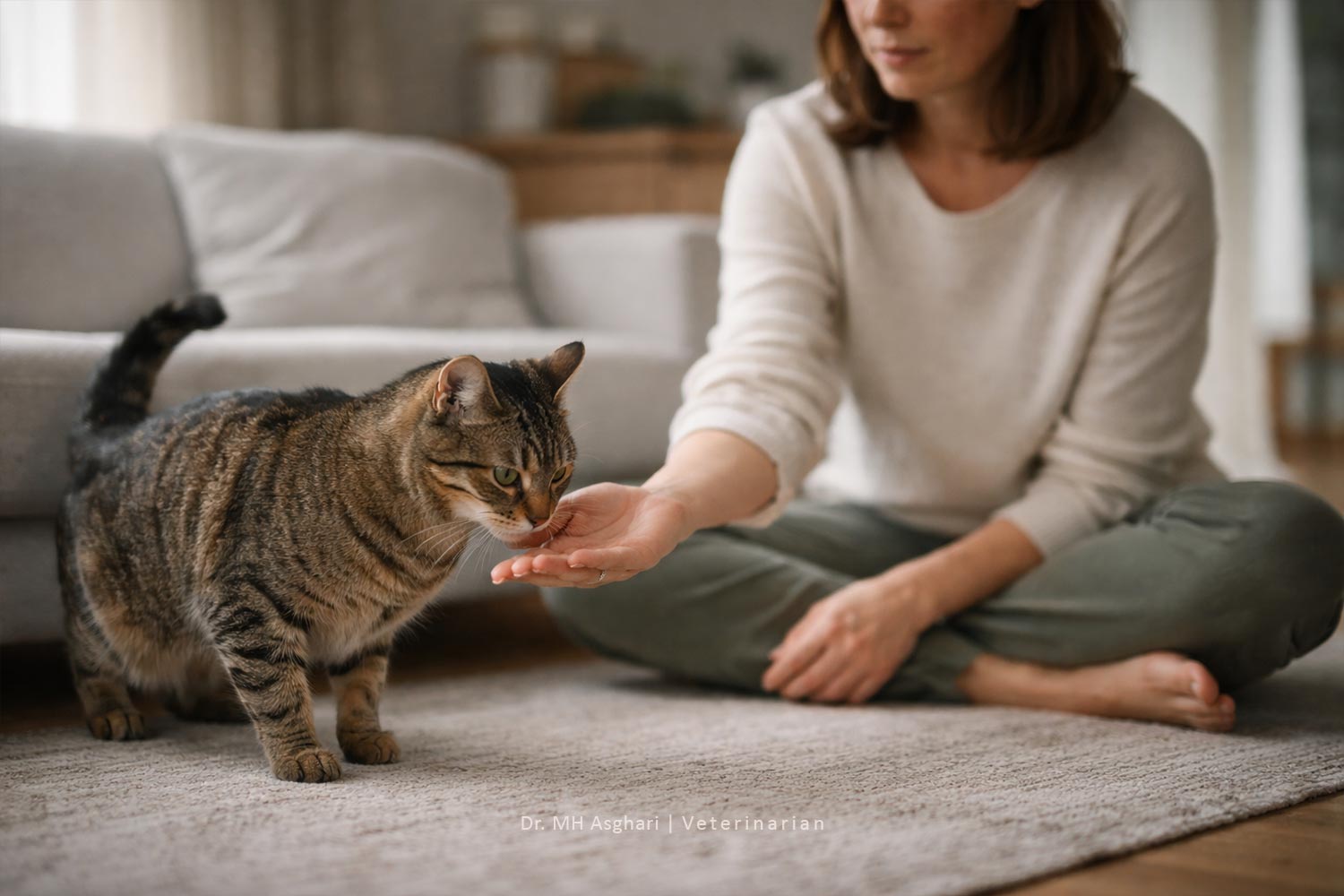
Most Mistakes Dog and Cat Owners Make come from love, not neglect.
If you want to start making positive changes today, focus on these three things:
- Keep your tone of voice and reactions consistent.
- Maintain a predictable daily routine.
- Pay attention to your pet’s body language earlier.
Very often, these three small adjustments are enough to create a healthier balance between owner behavior and pet anxiety.
If you notice serious signs such as sudden aggression, prolonged hiding, loss of appetite, or obsessive behaviors, it is best to consult a veterinarian or an animal behavior specialist.
If you feel that your pet’s stress may be linked to an everyday habit or routine, spend one week focusing on just three things:
Routine + Consistent Tone + Safe Space
Surprisingly often, those three changes can make a remarkable difference.
Frequently Asked Questions
۱. How Can I Tell Whether My Pet’s Stress Is Caused by My Behavior or by an Illness?
If the signs are accompanied by changes in appetite, diarrhea, vomiting, or pain, a medical condition should be ruled out first.
If the behavior appears to be closely linked to environmental situations or specific circumstances, owner behavior is more likely to be a contributing factor.
۲. Is Petting a Frightened Animal the Right Thing to Do?
If the animal approaches you voluntarily, yes.
If the animal is trying to create distance, do not insist on physical contact.
۳. Why Do Cats Struggle More With Changes in Routine?
Cats rely heavily on predictability.
Sudden changes can feel threatening and disruptive to their sense of security.
۴. What Psychological Effects Can Punishment Have?
Physical punishment or delayed punishment can reduce trust and contribute to chronic anxiety.
۵. When Should Professional Help Be Sought?
Professional assistance is recommended when stress-related behaviors are severe, persistent, or becoming progressively worse.