
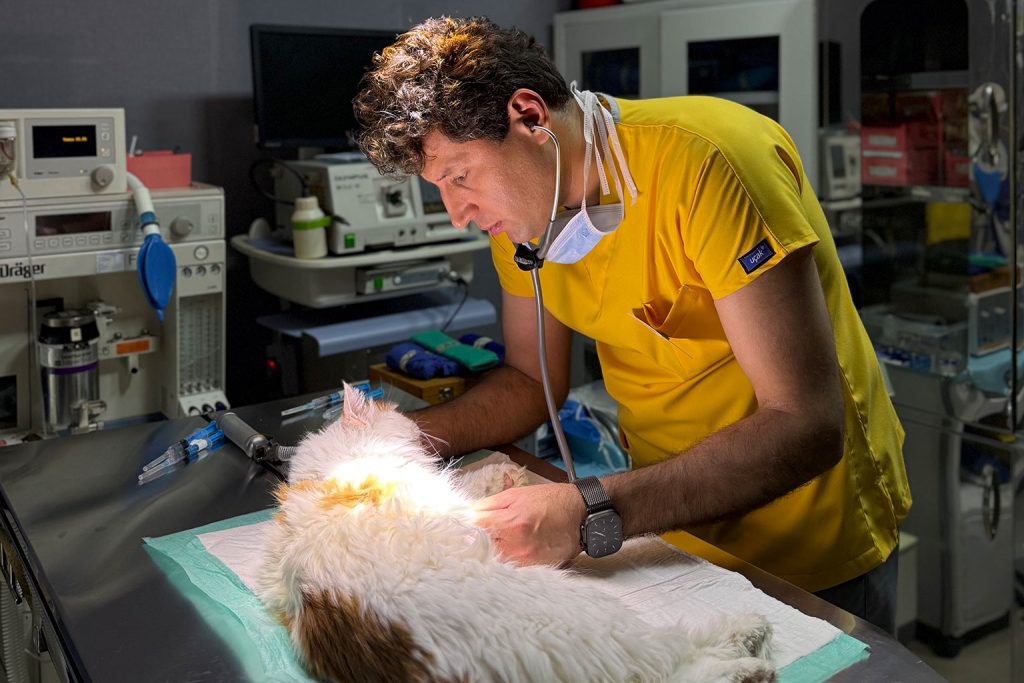
For the First Time in the World: Repairing Complex Animal Wounds with Human Adipose Tissue in Iran
Dr. Mohammad Hassan Asghari Vasati Kalai, a veterinarian and member of the Veterinary Association, referring to the implementation of an innovative project in the field of animal wound repair with a clinical objective, announced: For the first time in Iran and the world, human adipose tissue has been used to repair complex wounds in animals, and this method has yielded remarkable results in regenerating tissues such as the nose, palate, and chin of animals. This project shows that repair from human to animal and vice versa is no longer a hypothesis, but has become a scientific and clinical reality.
He stated that this scientific achievement has taken important steps in the field of complex wound repair, adding: its outcomes will be used for the repair of difficult and complex wounds in humans.
Asghari Vasati Kalai said: In a scientific and medical field known as the science of repair—which is backed by extensive documentation and experience—we have reached a benchmark whose commercialization pathway has also begun. This project is being carried out in one of the research divisions of the Rayan Research Center for Stem Cells and Regenerative Medicine, and it has so far led to the birth of numerous knowledge-based companies.
He went on to note the use of technology for repairing adipose layers and chronic wounds, saying: This novel method has shown high effectiveness in treating various types of wounds—from infected wounds and burns to diabetic and pressure ulcers, and cases in which conventional treatments are not effective.
Asghari Vasati Kalai emphasized: Our aim in carrying out this project is to achieve a type of repair that not only restores the function of the damaged organ, but also preserves the aesthetic and physiological qualities of the skin. In the laboratory phase, we used human adipose tissue for the first time in the world to repair wounds in companion animals and succeeded in performing a live graft from human to animal; an approach that had previously only been done in the reverse direction (from animal to human) in certain global projects, such as liver transplantation from pigs.
According to this veterinarian, in this project human tissue was used to treat animals that had severe, otherwise untreatable injuries; including complete repair of the palate, reconstruction of a lost nose, and even full restoration of muscles, tendons, and chin tissue.
He added: This level of repair demonstrates the considerable power of the technology used; to the extent that even in human-to-animal grafts, striking results have been achieved.
Regarding the time required for repair with this method, Asghari said: The duration depends on the initial severity of the wound, but on average this method is as fast as or faster than conventional approaches, and the quality of repair is far superior. For example, wounds that with standard methods require three to four months of treatment can be repaired within one month with this technology, and the cosmetic outcomes are much more natural and pleasing.
He stated: Some patients were in situations where treatment by any other method was not possible, and in practice we were able to make the impossible possible. In such cases, the value of this method goes beyond monetary calculations.
In another part of his remarks, Asghari referred to a related project underway in the field of ophthalmology and said: Human serums with registered formulations have been produced and will soon enter the phase of publishing scientific articles. These formulations have achieved highly successful results in treating deep corneal wounds, both in laboratory animals and in companion animals.
He concluded by saying that they are engaged in scientific exchange with other countries around the world, adding: We are not an isolated island in Iran; we are in contact with many international researchers, and in many cases—including this transfer of human tissue to animals—we have even been at the forefront globally. Our region, despite its limitations, is now one of the serious centers of knowledge production in veterinary medicine and regenerative medicine.
Development of a Biological Membrane for Wound Repair Derived from the Patient’s Own Tissue by an International Team Led by Iran
A notable aspect of this scientific endeavor—which is being conducted simultaneously in the fields of veterinary and human medicine in Iran—is the similar efforts pursued in other countries.
In ۲۰۲۴, during a scientific conference in Istanbul, it became clear that Dr. Shahriar Nazari, a researcher in the field of clinical medicine, independently succeeded—without knowledge of parallel, aligned projects—in producing a human membrane for wound repair in Iran. According to him, this event marked the beginning of an international scientific collaboration in which parallel achievements were directed into a shared, synergistic path.
Following this collaboration, Dr. Martin from Brazil also joined the research team, and the project of wound repair using a human membrane has since been pursued as an international program led by Iran. The formation of this multinational team not only accelerated the scientific development of the project, but also solidified Iran’s position as one of the pioneers of cutting-edge regenerative therapies worldwide.

Dr. Shahriar Nazari, an otolaryngologist (ENT specialist), announced the development of an innovative biological membrane in Iran for the repair of chronic wounds, burns, and necrotic areas. The membrane is created from a combination of adipose-derived stem cells and blood-derived growth factors, and it has the potential to replace modern imported dressings.
He reported the invention of this novel biological membrane for the treatment of chronic wounds, burns, and necrotic tissues, explaining that it was developed for the first time by an international team of physicians from Iran, Lebanon, Spain, and Brazil.
According to Nazari, this scientific achievement is the result of more than five years of research and clinical experience in wound treatment using autologous (patient-derived) components. The concept of the Nanofat-PRF membrane was originally introduced in ۲۰۱۹ by Dr. Nabil Faqih, a Lebanese-Spanish surgeon.
This report further highlights that Nazari, without knowledge of the parallel project, had independently developed the membrane in Iran. In ۲۰۲۴, during a scientific conference in Istanbul, it was discovered that these research efforts were running in parallel. Dr. Martin from Brazil also joined the team, and the project continued as a joint international collaboration.
Nazari explained: “We succeeded in producing a living, body-compatible membrane without using foreign devices, relying solely on laboratory conditions. Unlike costly imported dressings, this membrane is derived directly from the patient’s own body, which significantly reduces treatment costs.”
He added: “In addition to its regenerative capacity, the membrane possesses natural antimicrobial properties, preventing wound infection without the need for antibiotics. It also retains wound moisture and stimulates angiogenesis, thereby accelerating the healing process.”
The research team, led by Dr. Nazari, has also developed a device that can produce this membrane from a patient’s blood and fat in only ۱۰ to ۱۵ minutes. According to him, the device could even be used in a general practitioner’s office, provided that the physician completes specialized training courses.
He emphasized: “One of the highlights of our research is that this membrane has also demonstrated successful therapeutic effects in animal models (such as cats), and it has even shown effectiveness in interspecies grafts (xenografts). This could pave the way for new advances in transplantation science and tissue repair.”
Nazari noted that all research expenses for this project were personally funded, and all genetic, immunological, microscopic, and microbiological tests were carried out within the country. No foreign materials or drugs were imported; every component of the membrane was extracted entirely from the patient’s own body.
Assisting in the Treatment of Patients with Chronic Wounds
Nazari emphasized that in order for this device to enter the stage of mass production and general use, approvals from the Food and Drug Administration, university ethics committees, and the Ministry of Health are required.
He expressed hope that with the cooperation of the relevant authorities, this product will soon be available to Iranian physicians and patients, and eventually to international markets as well.
In conclusion, the ENT specialist stated: “My greatest honor is to be able, through this invention, to help veterans, spinal cord injury patients, diabetics, and those suffering from chronic wounds.”
Turning Birth-Related Discards into Regenerative Serum
Reza Maghdes-Ali, PhD in Developmental Biology and a faculty member at Royan Institute, announced new research aimed at producing the first advanced product—umbilical cord blood serum—which utilizes birth-related discards for the development of human-derived biological products.
He explained that one of the key outcomes of using this serum is the production of eye drops for corneal repair, which has shown successful performance in animal studies. The serum also has potential applications in dermatology, hair treatment, wound dressings, and other regenerative products, all of which are currently under investigation and development.
The Royan Institute faculty member reported that human-derived biological products from birth-related discards are being developed and have multiple applications in regenerative medicine. At present, they are in the preclinical research phase and are being designed as human-based alternatives to animal-derived products.
Maghdes-Ali noted: “Since ۲۰۲۱, we have initiated systematic activities to process and utilize birth-related products, which include placenta, umbilical cord, fetal membranes, and umbilical cord blood—materials that are usually discarded as medical waste. We have sought to transform these valuable resources into diverse biological and regenerative products applicable in both regenerative medicine and therapeutic settings.”
He added: “The first advanced product is umbilical cord blood serum, which serves as a human substitute for FBS (fetal bovine serum). This product, used for cell culture and proliferation in cellular research, not only offers ethical advantages but also eliminates the risk of zoonotic disease transmission.”
Regarding other applications of this serum, the Royan Institute researcher explained: “One of the most important results of using this serum is the production of eye drops for corneal repair, which has proven effective in animal studies. It also holds potential for applications in skin, hair, wound dressings, and other regenerative products currently being explored.”
He further noted that similar products have been developed globally from birth-related discards, such as placenta extracts, umbilical cord-derived cells, Wharton’s jelly, and umbilical cord blood vessels—all of which hold significant importance in therapeutic fields, especially tissue regeneration.
Reza Maghdes-Ali stressed: “Our products are currently produced at the research grade level and are being used in laboratory and preclinical studies. To enter clinical and pharmaceutical markets, it is necessary to obtain the required approvals and standards from regulatory authorities so the products can advance to the clinical grade level.”
In conclusion, he emphasized that the associated research team is working continuously on developing these technologies and navigating regulatory processes, with the ultimate goal of delivering safe and effective human-derived products for advanced therapies.