The Role of Adequate Water Consumption in Kidney and Urinary Tract Health in Pets
Sometimes it all starts with a simple behavior. You just filled the water bowl, but your cat just glances at it and walks away indifferently. Or your dog drinks water greedily after a long walk and you think to yourself: “If he always drank more water, wouldn’t his kidneys stay healthier?”
This question arises for many pet owners. On the one hand, we have all heard that drinking water is essential for the body. On the other hand, there are different recommendations on the Internet; some say that the more water your pet drinks, the less likely it is to develop kidney disease, while others warn that drinking too much water can itself be a sign of a disease. Naturally, among all this contradictory advice, it is not easy to find the right answer.
The truth is that the effect of water on kidney health in dogs and cats is much more than a simple recommendation like “put more water in front of your pet.” Adequate water is one of the foundations of normal kidney function, but this does not mean that drinking more water than the body needs can prevent or even cure any kidney disease. Just like humans, dogs and cats have a precise mechanism for maintaining water balance that should not be ignored.
In this article, we are going to examine the real relationship between the effect of water on kidney health in dogs and cats without creating fear or false hope. You will see how water helps normal kidney function, why cats are more susceptible to dehydration than dogs, when drinking too little water can be a concern, and when drinking too much water should be taken seriously. You will also learn practical strategies to increase water intake and reduce the risk of some urinary and kidney problems. Below, we will examine the most important points you need to know about the effect of water on kidney health in dogs and cats, step by step.
What exactly do dog and cat kidneys do and why is water essential for them?
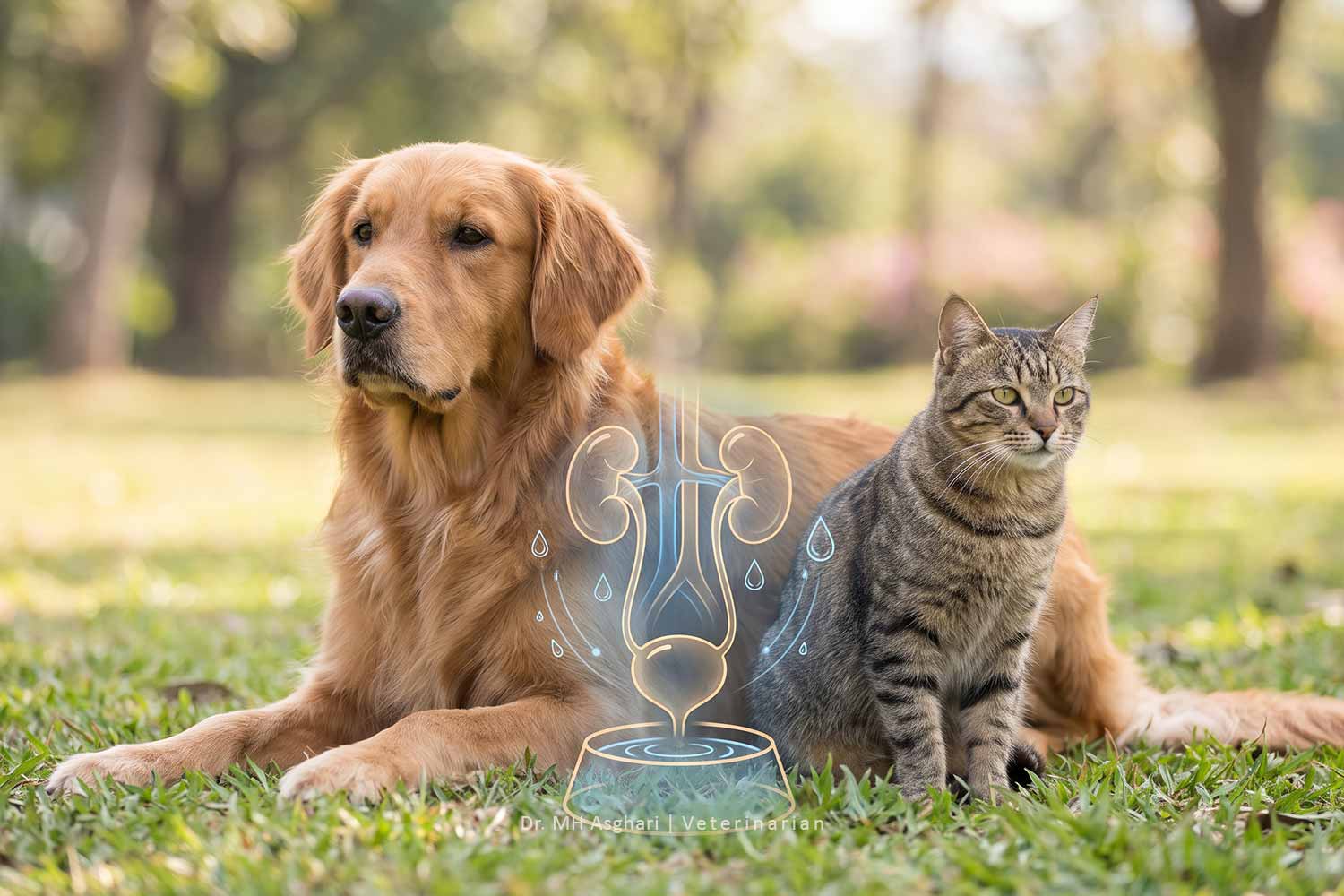
To better understand the impact of water on kidney health in dogs and cats, we must first familiarize ourselves with the functions of the kidneys. When it comes to kidneys, most people only think of “blood purification.” But the truth is that the kidneys are one of the most complex and hardworking organs in the body. These two small organs work non-stop day and night to maintain the balance of fluids, salts, and waste products in the body.
Simply put, every time blood passes through the kidneys, waste products from metabolism are separated and eventually excreted in the urine. At the same time, needed water and minerals are returned to the bloodstream so that the body does not suffer from dehydration or electrolyte imbalance.
This process shows that the impact of water on kidney health in dogs and cats is not limited to quenching thirst. If the body does not receive enough water, the kidneys are forced to produce more concentrated urine to retain more water. This is a natural mechanism in the short term, but if it continues on a regular basis, it can set the stage for some urinary tract problems.
Especially in cats, overly concentrated urine can increase the likelihood of urinary crystal formation or some urinary tract diseases. Of course, this is not the only factor; nutrition, genetics, body weight and health conditions of the animal also play an important role.
On the other hand, when the body is sufficiently hydrated, urine is usually more dilute and waste products are more easily excreted. This is why many veterinarians consider maintaining adequate water intake to be one of the foundations of preventive care for urinary tract health.
But there is an important point that is usually less talked about.
Enough water is different from too much water.
The body of a dog or cat knows exactly how much water it needs, and the kidneys work accordingly. If your pet is not naturally thirsty, forcing them to drink more water will not necessarily make their kidneys healthier. In fact, in some diseases, a sudden increase in water consumption can be one of the first signs of a problem, not a solution.
That’s why when we talk about the impact of water on kidney health in dogs and cats, we always mean “providing enough water in proportion to the body’s needs,” not giving them too much water.
Does more water really prevent kidney disease?
A significant portion of the research on the effects of water on kidney health in dogs and cats has focused on the difference between adequate and excessive water intake.
This is a question that many pet owners are trying to answer.
If we were to answer it in one sentence, it would be:
Adequate water helps with kidney health, but more water than the body needs is no guarantee of preventing kidney disease.
This distinction may seem simple, but it is scientifically important.
For example, suppose two cats live in the same house. Both eat the same food, but one of them naturally prefers to drink water, while the other gets most of its moisture from wet food. If both cats drink enough water overall, the cat that is seen more often by the water bowl will not necessarily have healthier kidneys.
In fact, the effect of water on kidney health in dogs and cats is only one of the factors that affect normal kidney function.
Kidney health depends on a number of factors, including:
- Sufficient hydration
- A balanced diet
- A balanced weight
- Control of underlying diseases
- Regular checkups
- Age of the animal
- Genetic factors
For this reason, the impact of water on kidney health in dogs and cats should be considered as one piece of a larger puzzle, not the only determining factor.
On the other hand, research has shown that adequate water intake can help dilute urine. This is especially important in cats, since many of them naturally drink less water than their bodies need. The ancestors of today’s cats lived in arid regions, and their bodies have evolved to conserve water. For this reason, many domestic cats still do not feel very thirsty, even when they should be drinking more water.
If such a cat eats a lot of dry food and doesn’t drink enough water, the urine is more likely to become concentrated. This, along with other factors, can increase the risk of certain urinary tract problems. Of course, this doesn’t mean that dry food alone causes kidney disease; it’s important that the animal’s total water intake meets its body’s needs.
On the other hand, if a dog or cat that has always consumed plain water suddenly starts drinking a lot of water, don’t assume that “their kidneys are cleaning up.” Sometimes this behavioral change can be one of the first signs of diseases such as chronic kidney disease (CKD), diabetes, certain hormonal disorders, or even infections, and should be checked out by a veterinarian.
In fact, the most important thing every pet owner should remember is that the goal is to maintain the body’s natural balance. Neither dehydration is good for the kidneys, nor should abnormal excessive drinking be ignored.
Why are cats more susceptible to dehydration than dogs?
In cats, the effect of water on kidney health is even more important, as these animals tend to feel less thirsty.
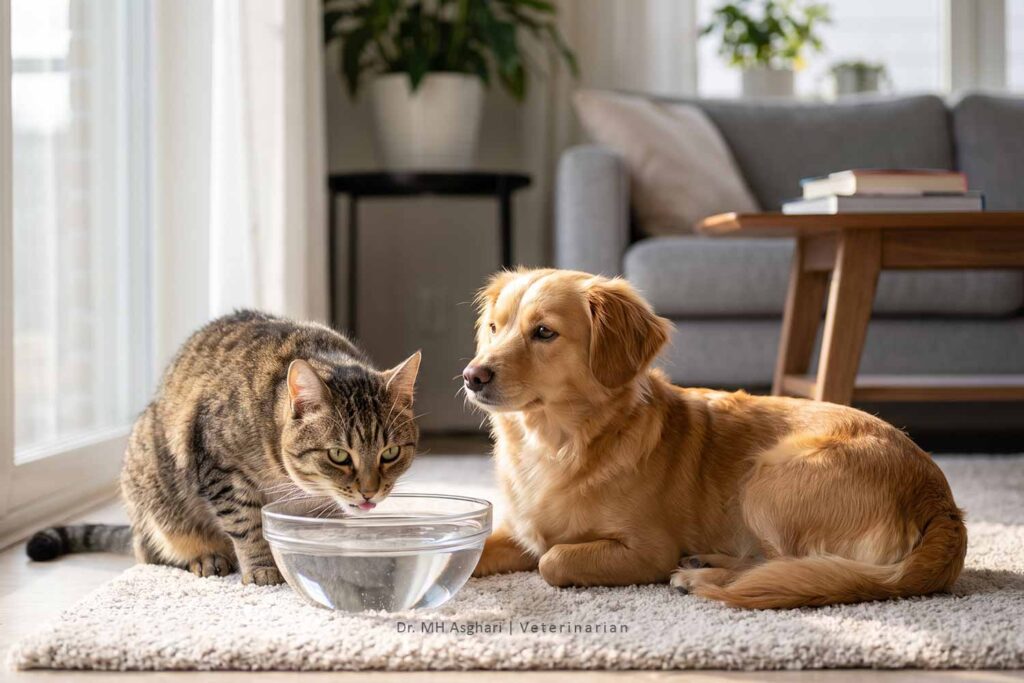
If we see a dog and a cat together in the same house, the difference in their behavior when drinking water is usually quite obvious. Many dogs go straight to the water bowl after playing, walking, or even being very excited, and drink water with appetite. But a cat may pass by the water bowl for hours, take a few small sips, and then get back to his work; as if drinking water were a secondary and not very important activity in his daily routine.
Understanding the effect of water on kidney health in dogs and cats becomes even more important when we know that cats’ natural behavior when drinking water is significantly different from dogs, and this can affect the health of their urinary tract.
This behavior does not always mean a problem. Cats are inherently animals that are less inclined to drink water compared to many domestic animals. The reason for this is largely due to their evolutionary past. The ancestors of domestic cats lived in environments where free water was not always available and they obtained much of their moisture from hunting.
But the living conditions of modern cats are different. A domestic cat does not usually hunt, and many cats get a large part of their diet from dry food. Dry food is usually low in moisture, and therefore the animal must obtain most of its water needs through drinking.
This is where the effect of water on the health of the kidneys of dogs and cats becomes even more important; especially for cats who do not like to drink much.
When a cat does not get enough water, the body makes urine more concentrated to conserve fluids. This mechanism is basically a smart function of the body, but in some cats it can lead to problems such as:
- Urinary crystal formation
- Bladder irritation
- Urinary tract problems
- Increased risk of urinary obstruction in susceptible cats
Of course, we must be careful of a common misconception. When some cat owners hear this, they assume that any cat that drinks little water is definitely on the road to kidney disease. This is not true.
Dehydration is a risk factor, not a definite prediction.
A cat may drink little water from the bowl for years but not have a problem because it gets moisture from wet food or the right conditions for its body. In contrast, another cat may be more prone to kidney problems due to genetics, advanced age or underlying diseases.
For this reason, it is very important to understand the natural habits of the animal. If your cat has always been dehydrated, but is otherwise healthy, has a normal appetite, and has no unusual symptoms, this is different from a cat whose water intake has suddenly changed.
For this reason, understanding the impact of water on kidney health in dogs and cats is especially important for cat owners.
The Relationship Between Dry Food, Wet Food, and Kidney Health in Dogs and Cats
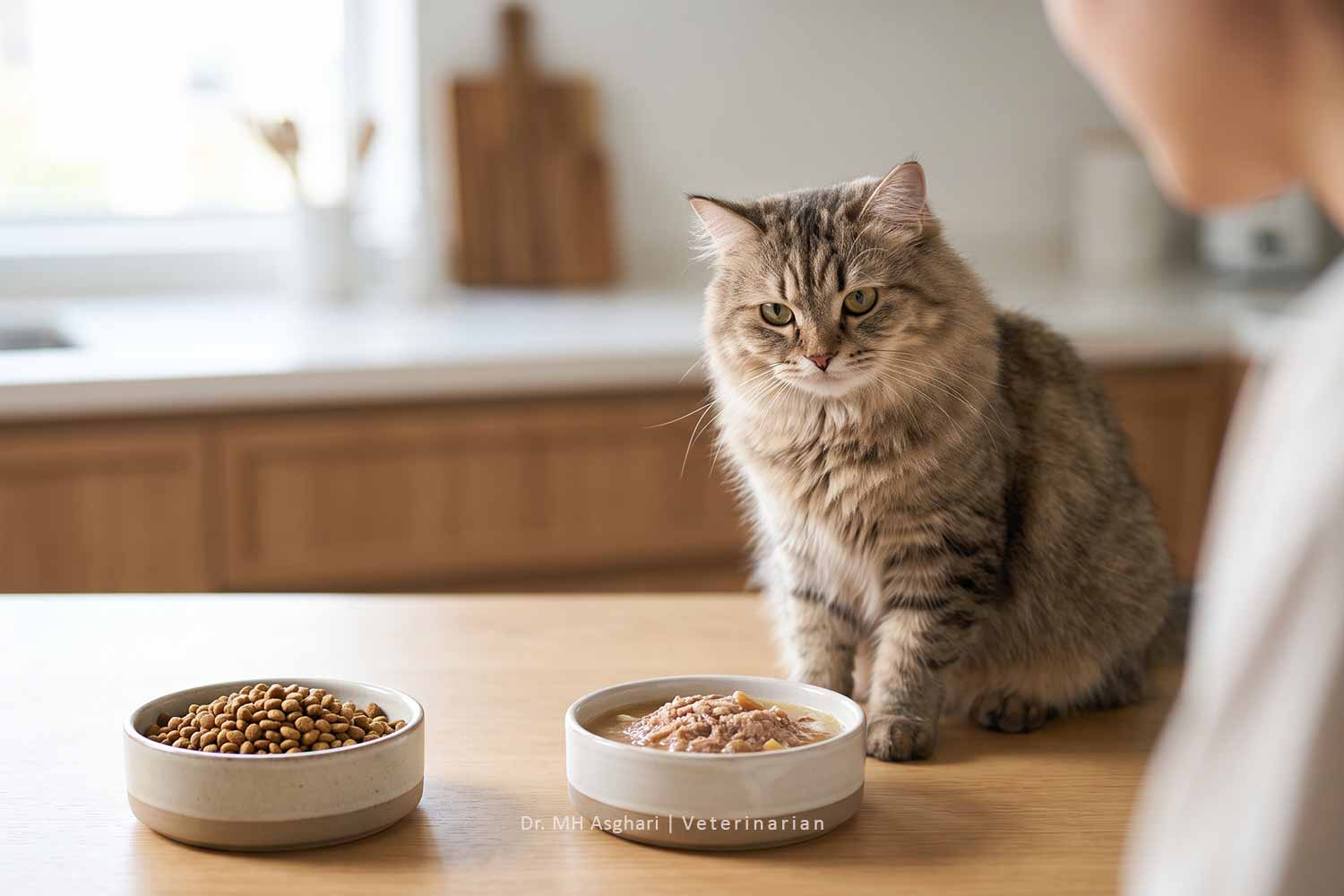
When examining the effect of water on the health of your dog’s and cat’s kidneys, you should also consider the type of diet.
One of the most common questions among pet owners is:
“Does dry food cause kidney disease?”
The short answer is: No, dry food alone does not cause kidney disease.
In fact, examining the effect of water on your dog’s and cat’s kidney health is incomplete without considering the type of diet. The amount of moisture that your pet receives from their daily food, along with their drinking water, plays an important role in maintaining normal kidney function.
But the story doesn’t end there; because the animal’s body works with several different factors, not just one nutrient. I wish the body of a living creature was like a machine with just one screw that could be adjusted to make everything work. But nature has a strange tendency to complicate things.
Dry food usually contains about ۸ to ۱۲ percent moisture, while wet food can provide a much higher proportion of the body’s water needs. So an animal that only eats dry food usually needs to get more water through drinking.
For dogs, who are usually more interested in drinking water, this is often easier to manage. But with cats, the situation is different.
Suppose a cat consumes a certain amount of dry food daily, but does not like to drink water. It may not seem like a problem on the surface, but its body is forced to produce more concentrated urine. Over time, this can be uncomfortable for some cats.
For this reason, one of the solutions that some veterinarians recommend to increase water intake is to use wet food in addition to dry food; of course, depending on the condition of each animal.
For example:
A healthy young cat may do well with a good combination of dry and wet food.
An older cat may need to take a closer look at its diet.
A cat with a history of urinary problems should not change its diet without consulting a veterinarian.
In fact, the main goal is not to completely eliminate dry food or to have all animals eat only wet food. The goal is to provide enough water for pets so that the body can maintain its normal function.
This is one of the most important points in understanding the impact of water on kidney health in dogs and cats.
Can more water prevent kidney stones or urinary problems?
The effect of water on kidney health in dogs and cats is also closely related to the health of the bladder and urinary tract.
One of the most important aspects of the effect of water on kidney health in dogs and cats is its relationship with urinary tract health and reducing urine concentration. Of course, this does not mean that it will definitely prevent the formation of urinary stones or crystals.
One of the reasons that pet owners ask about water is the fear of kidney and urinary diseases. Especially when we talk about cats, terms such as urinary stones, urinary crystals or urinary obstruction cause a lot of concern.
Adequate water intake can play an important role in reducing urine concentration. When urine is more dilute, the likelihood of certain minerals accumulating and forming crystals in some conditions is reduced.
But again, we must emphasize an important point:
Adequate water is a protective factor, not a vaccine against disease.
That is, even a cat that drinks a lot of water may have urinary problems for other reasons. Factors such as:
- Diet type
- Overweight
- Environmental stress
- Genetics
- Age
- Underlying medical conditions
Can all play a role.
On the other hand, some owners, when they notice their cat is not drinking enough water, try to force a lot of water into their pet’s body. This is usually neither necessary nor sensible.
A better approach is to change the environment so that the animal is more likely to drink on its own.
Here are some simple tips that work for many dogs and cats:
- Place several water dishes in different parts of the house
- Routinely wash the water dish
- Use appropriate, odorless dishes
- Try fountain waterers for cats who prefer moving water
- Add a controlled amount of wet food to the diet when appropriate
- Keep the water away from the food dish or litter box in the case of cats
Sometimes the problem is simpler than we think. Some cats don’t like plastic bowls, some don’t like water with their food, and some will only accept fresh water. These little behaviors that seem strange to us make perfect sense to a cat.
For this reason, when discussing the impact of water on kidney health in dogs and cats, it’s important to consider all the contributing factors, such as nutrition, genetics, body weight, and medical conditions.
The difference between kidney disease prevention and kidney disease treatment
Sometimes there are misconceptions about the effect of water on the health of the kidneys of dogs and cats.
Here is one of the most important parts of the discussion;
Sometimes it is thought that the effect of water on the health of the kidneys of dogs and cats is so great that it can replace treatment, while the main role of water is to support the normal function of the kidneys and help maintain balance in the body, not to treat kidney diseases.
A statement like “a lot of water helps the kidneys” may be true, but if it is said without explanation, it can cause a wrong impression.
If a healthy dog or cat receives enough water, this helps maintain the normal function of the kidneys and urinary tract. This is the prevention part.
But if an animal has kidney disease, just increasing water intake will not solve the problem.
Chronic kidney disease (CKD) is a complex condition that may require dietary changes, medication, blood pressure monitoring, periodic testing, and specialized care.
In other words:
Enough water = helps maintain good health
More water = does not cure the disease
This simple distinction can prevent many bad decisions.
For example, if a ۱۲-year-old cat suddenly starts drinking a lot of water, we shouldn’t just be happy and say, “That’s good, he’s drinking more water.” Increased thirst and urination can be signs that need to be investigated.
In veterinary medicine, behavior change is often more important than a fixed behavior.
۵ Signs Your Dog or Cat May Not Be Getting Enough Water
Understanding the impact of water on kidney health in dogs and cats would not be complete without paying attention to the symptoms of dehydration.
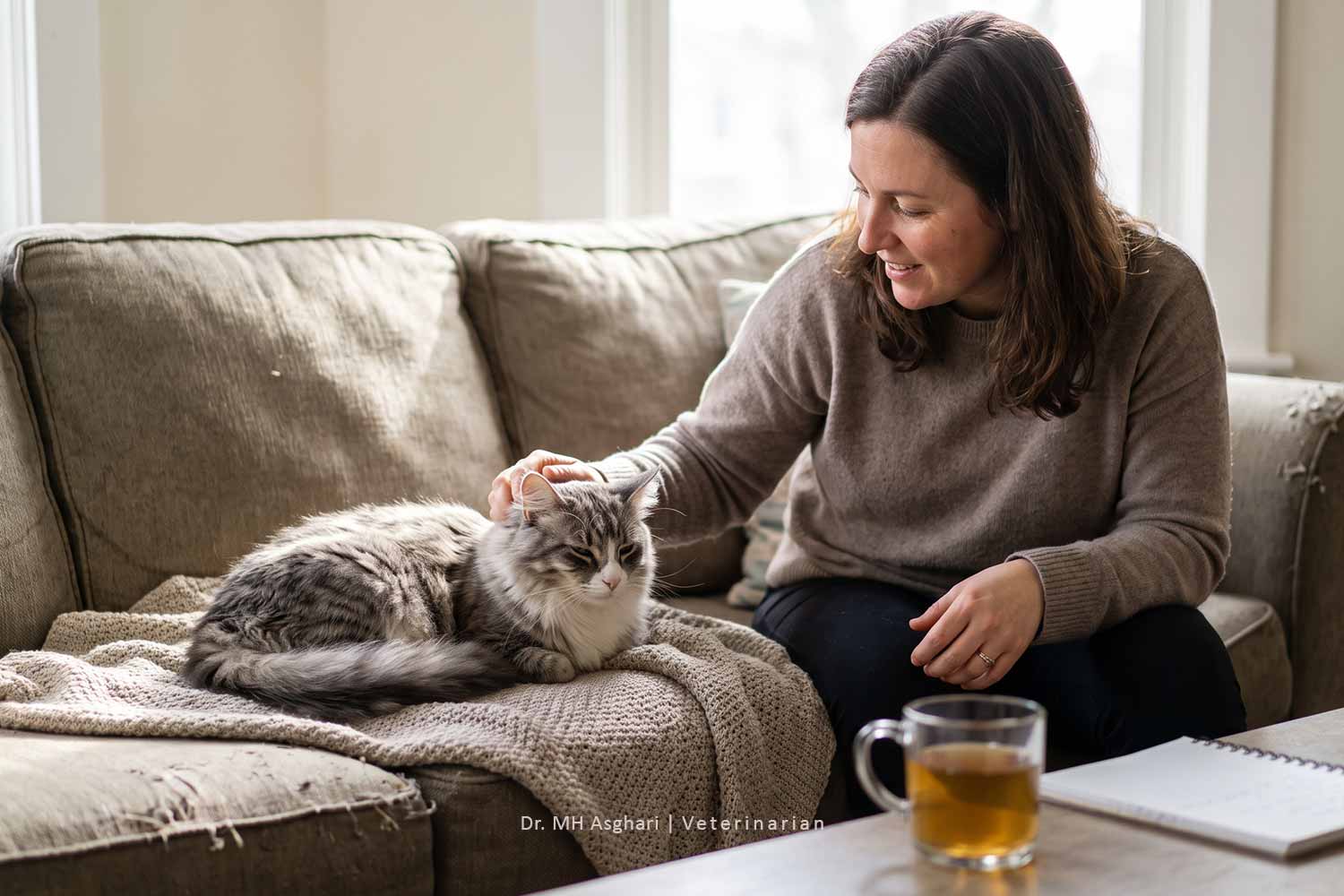
Many pet owners assume that as long as their pet doesn’t sit by the water bowl or is completely lethargic, there’s nothing wrong. But the body usually shows smaller signs before a serious problem develops.
Of course, none of these symptoms alone are a definitive diagnosis of dehydration, but they can be a warning sign that it’s better to check your pet’s water intake more closely.
Understanding the impact of water on your dog’s and cat’s kidney health isn’t just about knowing how much water they’re drinking; paying attention to the early signs of dehydration can also help detect some problems early.
۱. Decreased or very concentrated urine
One of the main functions of water in the body is to help produce proper urine and eliminate waste. When a pet doesn’t get enough water, the body tries to retain water, and the result is usually less and more concentrated urine.
In cats, owners can usually notice this change in the litter box. For example, you may:
Decrease in the number of urine pellets.
Decrease in their size.
In dogs, a decrease in the frequency of urination, especially when accompanied by other symptoms, may also require investigation.
Of course, it is important to consider the differences in normal conditions. For example, a dog after a few hours of sleep or a cat that eats wet food may have a different pattern. What matters is the change from your pet’s usual state.
۲. Dry gums and decreased oral moisture
One of the methods that veterinarians use to assess hydration status is to examine the oral mucosa.
Normally, the gums of dogs and cats should be moist. Significantly dry mouth, sticky saliva, or an abnormal appearance of the gums can be a sign of dehydration.
However, home testing is not always accurate. Some animals may have changes due to stress, oral diseases, or other factors. So don’t make a decision based on just one sign.
۳. Decreased energy and behavioral changes
A dehydrated pet may play less, become more withdrawn, or show less interest in daily activities.
Sometimes owners say,
“I thought he was just getting old, but then I realized he hadn’t had enough water in a few days.”
This can be especially misleading in cats, as cats are masters at hiding their discomfort. The same animal that always sleeps on the couch may show the same behavior when it’s not feeling well, making it harder for the owner to diagnose.
۴. Constipation
Sufficient water isn’t just important for the kidneys; the digestive system needs it too.
Dehydration can cause stool to become drier and harder to pass through the intestines. This is especially important in cats that eat dry food.
If your cat hasn’t gone to the toilet in a few days, is straining when going to the litter box, or is showing signs of discomfort, it’s best to take the matter seriously, as it’s not always just a lack of water and there may be other factors involved.
۵. Decreased Appetite
Severe dehydration can affect your pet’s appetite. A dog that has always been a voracious eater or a cat that suddenly eats less needs attention.
Of course, there are many reasons for a decreased appetite, from dental problems to internal diseases. So, not every change in appetite should be attributed to dehydration.
۵ Signs That Your Dog or Cat’s Excessive Drinking May Need Investigation
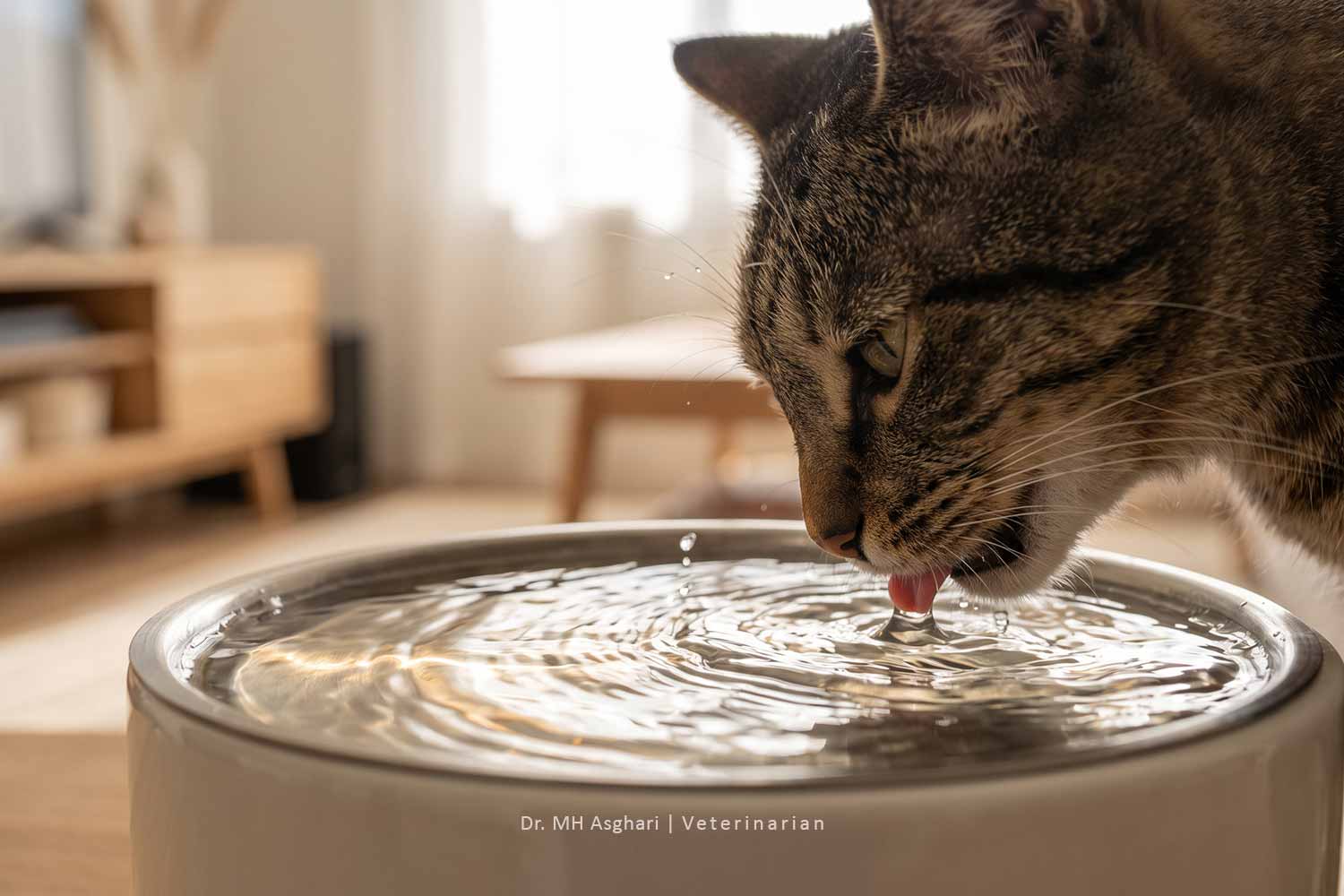
On the other hand, the effect of water on the health of the kidneys of dogs and cats does not mean that the more water the animal drinks, the better it will be. A sudden increase in water consumption can itself be a sign of illness.
Just as dehydration can be a problem, an unusual increase in water consumption is not always good news.
Sometimes pet owners are happy when they see their dog or cat drinking more water, thinking that their pet is better hydrated than before. But the body usually does not change its pattern without reason.
If an animal that previously drank a normal amount of water suddenly increases its water consumption, it is better to be investigated.
۱. Sudden excessive drinking
On the other hand, the effect of water on the health of the kidneys of dogs and cats does not mean that the more water the animal drinks, the healthier it will be. There is a big difference between an animal that has always drunk more water and an animal that has suddenly developed new behavior in the last few weeks.
Increased thirst can be seen in a variety of conditions, including:
Chronic kidney disease
Diabetes
Some hormonal disorders
Urinary tract problems
This does not necessarily mean that there is a medical condition, but it is worth checking.
۲. Increased frequency of urination
When water intake increases, the volume of urine usually increases as well.
In cats, the owner may notice that the litter box is getting dirty more quickly or that the cat is going to the bathroom more often.
In dogs, increased requests to go outside or urinate in the house can also be a noticeable change.
۳. Unexplained weight loss
If a pet is losing weight while drinking more water, it is best not to wait for the problem to resolve on its own.
A combination of several symptoms is more important. Veterinarians usually look at patterns, not just a single symptom.
۴. Appetite Changes
An increase or decrease in appetite along with excessive drinking can provide important information about your pet’s health.
For example, a cat that suddenly starts drinking a lot of water, wants more food, and loses weight needs a closer look.
۵. Lethargy or Behavior Changes
Any noticeable change in your pet’s daily behavior is worth noting.
Pet owners are usually the best at noticing small changes because they see their pet every day. Sometimes a simple statement like:
“I don’t know why, but it’s not the same as usual”
is the first clue to a problem.
How to increase water intake in dogs and cats?
If you notice that your pet is not drinking enough water, the first step is not to force it to drink a lot. It is better to create conditions where it will be more willing to drink on its own.
If your goal is to improve the effect of water on the health of the kidneys of dogs and cats, the best solution is to create conditions where the animal naturally and without forcing it to drink more water.
Some practical solutions:
Place several water dishes in the house
Some cats do not like to travel far to drink water. Especially in large or multi-story houses, having several water points can help.
Keep the water dish clean
Cats are usually sensitive to the smell and freshness of water. Water that is acceptable to us may not be attractive to a cat.
Try a fountain
Some cats prefer moving water. Fountains can be useful for increasing cat water consumption.
Consider Wet Food
In some animals, adding wet food can be a simple way to increase water intake.
Of course, changing the diet should be done according to the animal’s condition, especially if it has a history of kidney or urinary disease.
Summary: Adequate water is one of the foundations of kidney health; not a magic cure
It can now be said with certainty that the effect of water on kidney health in dogs and cats is a scientific fact, but this effect will be beneficial when the amount of water intake is in proportion to the animal’s natural body needs.
When we talk about the effect of water on kidney health in dogs and cats, the most important thing is to maintain balance.
Adequate water helps the kidneys perform their natural functions better, waste products are more easily excreted, and the urinary tract is in better condition. This is especially important in cats who usually drink less water.
But giving more water than the body needs is not going to prevent all diseases or replace veterinary care.
The best thing a pet owner can do is:
Understand their pet’s natural drinking habits.
Take sudden changes seriously.
Choose a proper diet.
Check for unusual symptoms early.
Don’t forget about regular checkups.
Ultimately, kidney health in dogs and cats is not the result of a small behavior; it is a set of daily care. Water is one of the most important parts of this set, but it is not the only one.
If you are looking to maintain the positive impact of water on your dog’s and cat’s kidney health, the best approach is to understand your pet’s natural drinking patterns and take any unusual changes seriously.
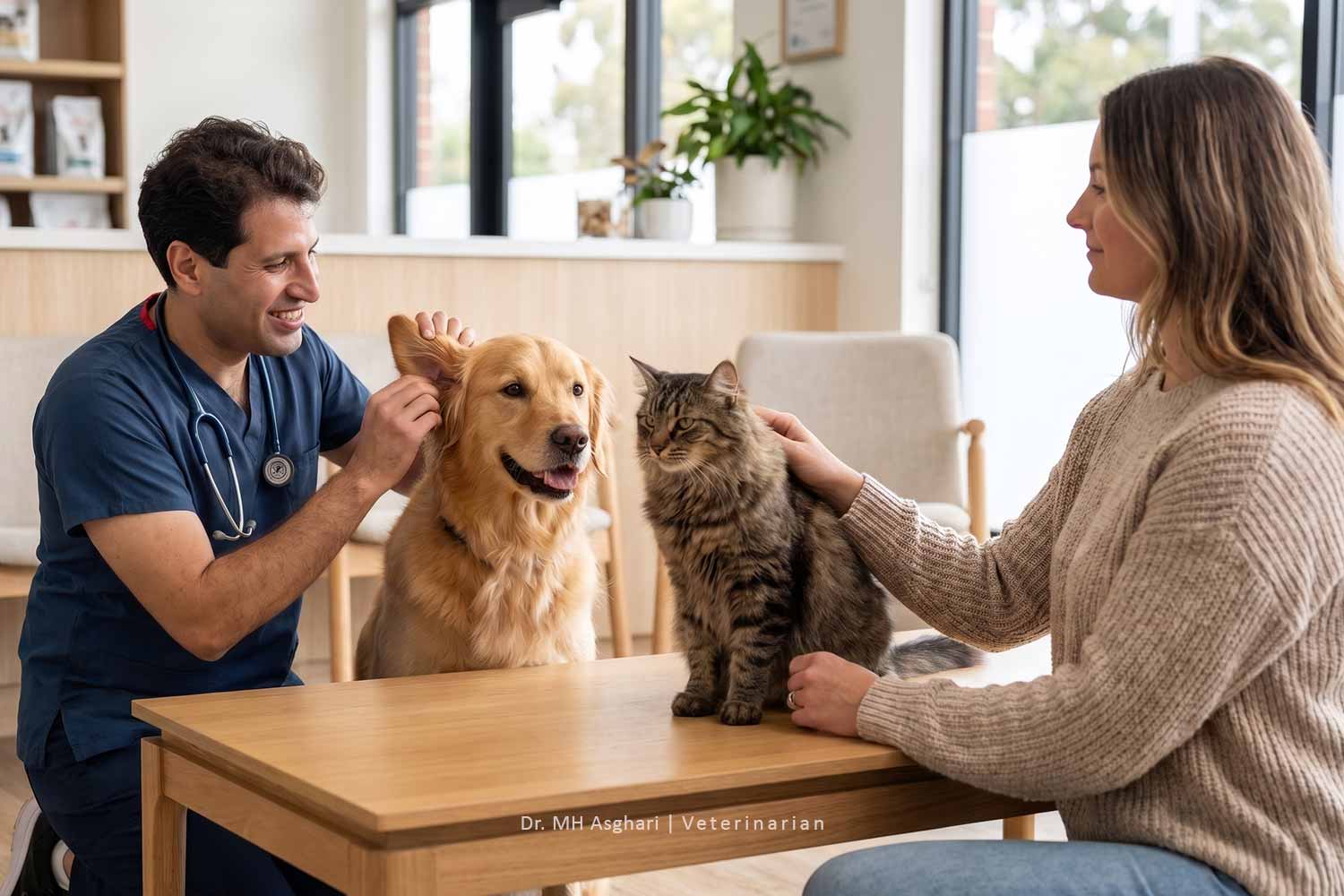
Frequently Asked Questions
۱. Is Too Much Water Good for Cats’ Kidneys?
Adequate water is essential for the health of cats’ kidneys and can help dilute urine and improve urinary tract function. However, drinking more water than the body needs does not provide additional protection for the kidneys, and a sudden increase in water intake may be a sign of a medical problem.
۲. How much water should a dog drink daily?
The amount of water a dog should drink depends on factors such as weight, age, activity, diet, environmental temperature and health conditions. In general, most dogs need about ۵۰ to ۶۰ ml of water per kilogram of body weight per day, but this amount can vary.
۳. Is a cat that drinks too little water at greater risk of kidney disease?
Drinking too little water can be a factor in increasing the risk of some urinary problems, but it does not mean that it will develop kidney disease. Genetic factors, age, nutrition and general health also play an important role.
۴. Does dry food cause kidney disease in cats?
No. Dry food alone does not cause kidney disease, but because it has low moisture content, a cat that only eats dry food should get enough water. In some cats, adding wet food can help increase water intake.
۵. Why is my cat suddenly drinking a lot of water?
A sudden increase in water consumption can have a variety of causes. Sometimes it’s due to heat or a change in diet, but sometimes it can be related to conditions such as kidney problems, diabetes, or hormonal imbalances and should be investigated.
Trusted Sources
- International Renal Interest Society (IRIS) | https://www.iris-kidney.com/
- American College of Veterinary Internal Medicine (ACVIM) | https://www.acvim.org/
- Cornell Feline Health Center – Kidney Disease in Cats | https://www.vet.cornell.edu/departments-centers-and-institutes/cornell-feline-health-center